
- Server
- Components
- Carbon Fibre
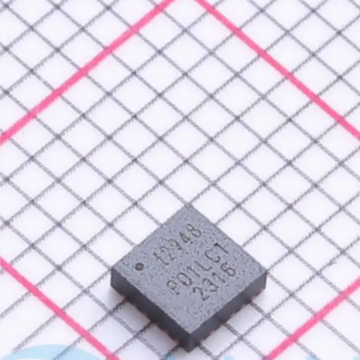
- Analog to digital conversion chip
- power management IC
- storage
- H3C router
- H3C server
- Inspur server
- hard disk
- HART Loop Converter Analog Input
- reader
- Ethernet module
- EDGE Guardmaster
- MAT Guardmaster
- MatGuard Mat Manager
- relay
- power control
- switch
- servo drive
- I/O module
- Bridge connector (jumper plug)
- Human Machine Interface (HMI)
- power monitor
- 1420 power monitor
- 1411 current transformer
- socket
- system
- electric relay
- frequency converter
- Install the GND connector on the board
- transceiver
- Module Option Card
- module


0102030405

Power Edge XE9680
product detail
GPU Density and Interconnection
8 x NVIDIA HGX H100/H200 700W SXM5 (or optional 8 x A100 500W SXM4), fully interconnected through NVLink, GPU-GPU bandwidth up to 900 GB/s, 1.5 times higher than the previous generation
Support NVIDIA MIG multi instance GPU, which can virtually create 7 instances in one card, achieving multi tenant isolation
CPU and Memory
2 x 4th/5th generation Intel Xeon Scalable (such as Platinum 8480+), with a maximum of 56 cores per chip, TDP 350W
32 × DDR5-4800 DIMM, maximum 4TB, bandwidth increased by 50% compared to DDR4, meeting the caching requirements of large model parameters
I/O and Storage
Front window: 8 × 2.5 "NVMe/SAS/SATA+16 × EDSFF E3. S Gen5 NVMe (optional 122.88TB full flash), supports NVIDIA GPUDirect Storage, DMA between GPU and disk bypasses CPU to reduce latency
Motherboard: 10 x PCIe 5.0 slots (x16/x8), can accommodate 400GbE, InfiniBand NDR, DPU, etc; Dual OCP 3.0 network card slots, flexible replacement of 25/40/100/200 GbE
Heat dissipation and power supply
6U cellular duct+6 sets of hot swappable redundant fans, supporting long-term operation in the 35-40 ° C computer room
4 × 2800W 80Plus titanium hot swappable power supply (2+2 redundancy), supporting AC 200-240V or HVDC, with a full load power consumption of approximately 10kW
Management and Security
iDRAC9 Datacenter, Provide RESTful API, telemetry CloudIQ AIOps; Support zero trust architecture: silicon trust root, signed firmware TPM 2.0、 multi-factor authentication
typical scenario
Training/fine-tuning of billions of parameter large models, generation of AIGC content, development of deep learning, HPC computational fluid dynamics, digital twins, metaverse rendering