




AD8034ARTZ ADI Operational Amplifier Chip: What Should Engineers Check Before Selection?
An operational amplifier is often treated as a basic building block in an analog circuit, but the actual choice of amplifier can have a noticeable effect on signal quality, bandwidth, power consumption, and PCB design. For applications involving signal conditioning, buffering, filtering, instrumentation, and other analog functions, engineers need to look beyond the general category of “op amp” and match the device to the electrical conditions of the circuit.
The AD8034ARTZ ADI Operational Amplifier Chip is a useful example of why this selection process matters. The AD8034 belongs to Analog Devices' FastFET amplifier family and combines FET inputs, high speed, low noise, a wide supply-voltage range, and rail-to-rail output capability. Its specifications make it relevant to designs where signal speed and input characteristics need to be considered together rather than separately.
Start With the Signal, Not the Op Amp Name
The first question when selecting an operational amplifier should be what the circuit actually needs to do. A sensor interface, an active filter, a voltage buffer, and a high-speed signal-processing circuit may all use an op amp, but they do not necessarily require the same electrical characteristics.
For example, a slowly changing sensor signal may place more emphasis on offset voltage, input bias current, and low noise, while a high-speed signal path may be more sensitive to bandwidth, slew rate, and stability. Choosing a component simply because it belongs to a familiar op-amp family can therefore lead to unnecessary compromises.
The AD8034ARTZ ADI Operational Amplifier Chip is positioned as a high-speed FET-input voltage-feedback amplifier. Analog Devices specifies an 80 MHz bandwidth under the stated test condition and an 80 V/µs slew rate at the specified gain condition. These characteristics make the device fundamentally different from a general-purpose low-speed amplifier intended for simpler analog tasks.
Input Bias Current Matters in High-Impedance Circuits
One of the reasons to consider a FET-input amplifier is the very low input bias current. When an amplifier is connected to a high-impedance sensor or signal source, input bias current can create an additional voltage error across the source resistance.
The AD8034 has a typical input bias current of around 1 pA according to Analog Devices. This characteristic can be useful when the surrounding circuit contains relatively high source impedance, because the amplifier places less DC loading on the signal source.
However, low input bias current should not automatically be interpreted as better performance in every application. The complete signal path still needs to be considered, including source resistance, resistor tolerances, leakage paths, PCB contamination, temperature, and the required DC accuracy. The useful question is whether the input characteristics of the amplifier match the electrical behavior of the circuit around it.
Bandwidth Should Match the Real Signal
Bandwidth is one of the most visible specifications of a high-speed operational amplifier, but it should be considered together with gain and the required signal frequency.
The AD8034 provides an 80 MHz, -3 dB bandwidth under the manufacturer's specified unity-gain condition. This gives engineers considerably more room for higher-frequency signal processing than many conventional low-speed op amps.
That does not mean an 80 MHz amplifier should automatically be used in every high-frequency design. The required bandwidth depends on the signal itself, closed-loop gain, filter topology, settling requirements, PCB parasitics, and the desired signal integrity. An amplifier with excessive bandwidth can also make layout and stability considerations more demanding.
For this reason, engineers should determine the required closed-loop response first and then evaluate whether the amplifier provides sufficient bandwidth margin.

Slew Rate Is Different From Bandwidth
Bandwidth and slew rate are related to amplifier speed, but they describe different limitations.
Bandwidth describes the small-signal frequency response of the amplifier, while slew rate describes how quickly the output voltage can change. A circuit may have enough small-signal bandwidth but still encounter large-signal distortion if the output needs to change faster than the amplifier can follow.
The AD8034 specifies an 80 V/µs slew rate under the manufacturer's stated conditions. For a signal-processing circuit, the required slew rate should be considered according to both amplitude and frequency. Large-amplitude signals at higher frequencies place greater demands on output transition speed.
This is particularly relevant when the amplifier is used for buffering, filtering, or driving another analog stage where waveform integrity matters.
Supply Voltage Can Affect System Architecture
Power-supply compatibility is another parameter that should be checked before selecting an amplifier. A component that cannot operate within the available supply rails may require additional power circuitry, which can increase design complexity.
Analog Devices specifies a 5 V to 24 V supply-voltage range for the AD8034. The device can operate from a single supply, giving designers flexibility when building analog circuits around a single positive supply rail.
The actual supply configuration still needs to be evaluated against the input signal range and output requirements. Single-supply operation does not automatically mean that every input signal can be placed anywhere between ground and the positive rail. The input common-mode range, output swing, load, and circuit topology must all be checked in the actual design.
Rail-to-Rail Output Can Simplify Output Utilization
The AD8034 provides rail-to-rail output capability, which can be useful when the circuit needs to make better use of the available supply voltage. This characteristic can be particularly relevant in single-supply designs where the available voltage headroom is limited.
However, rail-to-rail output should not be interpreted as meaning that the amplifier can deliver every possible output voltage under every load condition. Output swing depends on supply voltage, load current, temperature, and the specific operating conditions.
For this reason, the datasheet limits and application conditions remain important when determining whether an AD8034ARTZ ADI Operational Amplifier Chip can meet the requirements of a particular circuit.
Noise and Offset Should Be Evaluated With the Signal Chain
Low noise and low offset voltage are valuable characteristics, but their importance depends on the application.
Analog Devices lists a typical low offset voltage of 1 mV and low noise characteristics for the AD8034. These parameters can be useful in signal-conditioning applications where small input signals need to be amplified without introducing unnecessary error.
At the system level, however, the amplifier is only one source of noise and error. Resistors, sensors, power supplies, PCB layout, grounding, electromagnetic interference, and other active components can contribute to the final result.
A better selection process therefore evaluates the complete signal chain rather than choosing an amplifier solely because its individual noise or offset specification looks attractive.
Package Selection Also Affects the PCB
An operational amplifier is not selected only by electrical specifications. The package can influence PCB routing, assembly, thermal behavior, and the physical arrangement of surrounding components.
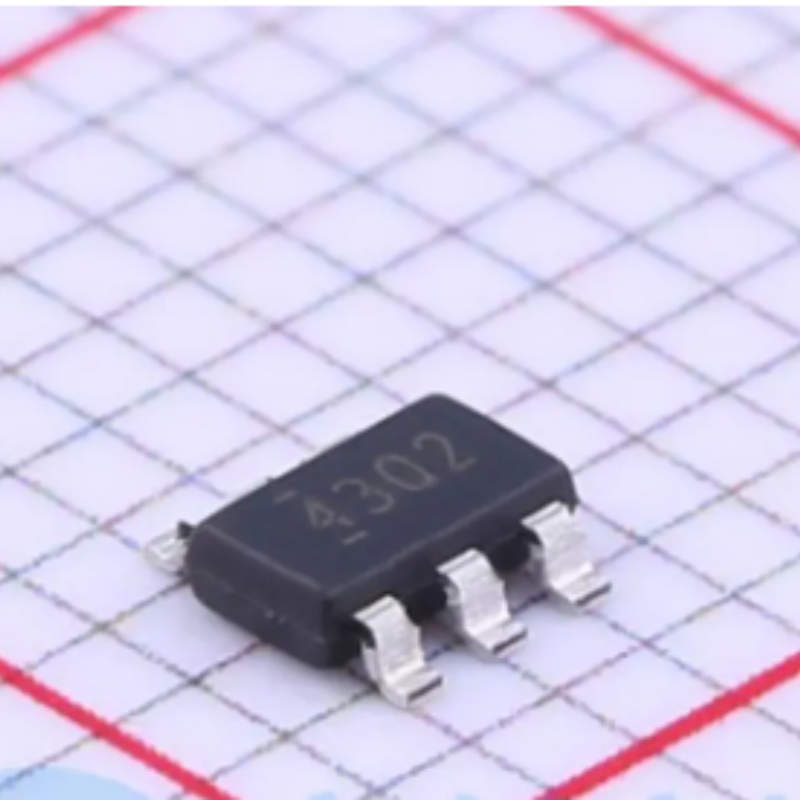
The AD8034 is available in small packages including 8-lead SOIC and 8-lead SOT-23 variants. The exact ordering code should be checked carefully because different suffixes can correspond to different package or ordering configurations.
For a production design, engineers should confirm the exact part number, package, pin configuration, operating temperature range, and supply conditions before finalizing the PCB.
When Does a High-Speed FET Op Amp Make Sense?
A high-speed FET-input amplifier becomes more relevant when several requirements appear together: the signal needs relatively fast response, the source impedance is not negligible, power consumption still matters, and the circuit requires a flexible supply configuration.
Typical applications can include signal buffering, instrumentation, active filtering, level shifting, and other analog signal-conditioning tasks. Analog Devices specifically lists instrumentation, filters, level shifting, and buffering among the application areas for the AD8033/AD8034 family.
The important point is that the amplifier should be selected according to the signal path rather than the application name alone. Two products may both be described as “signal amplifiers” while having very different requirements for input impedance, bandwidth, stability, output drive, and power.
What Should Be Confirmed Before Sourcing AD8034ARTZ?
Once the circuit design has identified the required electrical characteristics, the next step is confirming the exact component being sourced.
For an AD8034ARTZ ADI Operational Amplifier Chip, the technical team should confirm the exact ordering code, package, manufacturer information, electrical specifications, product status, and required quantity. This is particularly important when several variants of the same device family exist.
HSBY's website provides an AD8034ARTZ ADI Operational Amplifier Chip product page and positions the component for high-performance analog applications. For companies sourcing electronic components, confirming the exact model before requesting a quote can reduce the risk of receiving a technically similar but unsuitable variant.
For larger projects, the sourcing process can also consider availability, batch consistency, packaging requirements, and supply continuity rather than evaluating the component only by unit price.
HSBY Electronic Component Supply
Hua Sheng Bo Ye (Shenzhen) Technology Co., Ltd. provides electronic components across several categories, including Integrated Circuits, IC Chips, sensors, power-related components, connectors, Memory products, and other semiconductor devices. The company's website also lists theAD8034ARTZ ADI Operational Amplifier Chip as a product.
For companies looking for an AD8034ARTZ ADI Operational Amplifier Chip supplier, the important step is to provide the exact part number and required configuration. This allows the component specification, package, quantity, and supply requirements to be checked together rather than treating all AD8034 variants as interchangeable.
A clear part-number-based inquiry is also more useful when requesting a quote, checking availability, or comparing supply options for an ongoing production project.
Conclusion
Selecting an operational amplifier is not simply a matter of choosing the highest bandwidth or lowest noise specification. The amplifier has to fit the complete signal chain, including the source impedance, signal frequency, gain, output requirements, supply voltage, noise environment, PCB design, and operating conditions.
The AD8034ARTZ ADI Operational Amplifier Chip illustrates this selection process well. Its FET input, low input bias current, 80 MHz bandwidth, 80 V/µs slew rate, wide 5 V to 24 V supply range, and rail-to-rail output capability make it relevant to a range of high-speed analog applications.
Before sourcing the component, however, engineers should still verify the exact ordering code and package against the final circuit design. Matching the electrical specification with the actual application is more important than choosing a component based on a single headline parameter.
FAQ
1. What is the AD8034ARTZ?
The AD8034 is a dual FastFET operational amplifier from Analog Devices with FET inputs, high-speed performance, low noise, and rail-to-rail output capability. The AD8034ARTZ ordering code corresponds to an AD8034 package variant.
2. What is the bandwidth of the AD8034?
Analog Devices specifies an 80 MHz, -3 dB bandwidth under the stated unity-gain test condition. The actual usable bandwidth in a circuit depends on gain, topology, layout, and operating conditions.
3. Why is the FET input important?
The FET input architecture provides very low input bias current. This can be useful in circuits connected to relatively high-impedance signal sources because the amplifier places less DC loading on the source.
4. What should be checked before ordering an AD8034ARTZ?
Confirm the exact ordering code, package, electrical specifications, supply requirements, operating conditions, quantity, and application requirements. If the component is being sourced for production, availability and batch consistency should also be considered.