Whatsapp:8613480819877
Leave Your Message
0%

You know, IC chips are kind of the unsung heroes powering our everyday lives. They’re tucked inside smartphones, electric cars, medical scanners, factory robots, and data centers—pretty much everywhere you look. Some modern vehicles can have hundreds of these tiny devices working behind the scenes, handling everything from braking and navigation to battery management and safety features. And honestly, the demand for these chips isn’t just a flash in the pan; it’s pretty much a constant now.

Morris Chang, the founder of TSMC, famously said, “Without Semiconductors, there would be no modern world.” And, honestly, that really hits the nail on the head. His words come from decades of industry experience. These chips do a lot—they process data, control power, and connect our physical gadgets with the digital world. But here’s the thing: smaller doesn’t always mean better. It’s not just about making chips tinier; factors like manufacturing capacity, smart design, reliable energy, quality materials, and thorough testing all play a huge role in their performance.

The global market's expanding because computing is spreading into more and more areas. Take AI, for example—those systems need powerful processors and high-speed Memory to work properly. Renewable energy tech also depends on chips for converting and controlling power. Hospitals rely heavily on dependable electronics for imaging and patient monitoring. Even everyday appliances now have tiny computers inside them. Sounds simple, right? But trust me, it’s not quite that straightforward.

Supply chain hiccups have reveaLED some pretty uncomfortable vulnerabilities, though. A factory shutdown can delay products across multiple continents—talk about a domino effect. Plus, making advanced chips requires huge investments, specialized equipment, and engineers with serious skills. Companies like Intel, Samsung, and TSMC are constantly pushing to upgrade their manufacturing, but even then, demand often outpaces supply. That’s why IC chips are so strategically important. The industry is constantly innovating, but it’s not invincible. The key to its future lies in resilience, responsible investments, and more open, transparent collaboration—as challenging as that sounds.

Why Are IC Chips in Global Demand?

What Are IC Chips and How Do They Work?

Why Are IC Chips in Global Demand?

What Are IC Chips and How Do They Work?

An integrated circuit, or IC chip, is a tiny electronic system built on a flat piece of semiconductor material. Silicon is commonly used because its electrical behavior can be controlled precisely. Inside, microscopic transistors act like switches. They turn electrical signals on or off, creating the binary logic used by computers and digital devices.

A chip receives power and input signals through metal connections. Transistors then process those signals according to a designed circuit. Some chips store information, while others calculate, sense temperature, control motors, or convert sound into data. A smartphone may contain several processing sections, each working within fractions of a second. Small size matters.

Global demand comes from communication networks, vehicles, medical equipment, factories, and household electronics. Modern systems need faster processing, lower energy use, and dependable performance. Military Grade Chips may require strict testing, extended operating ranges, and resistance to vibration or temperature changes. However, “military grade” is not a universal technical definition. Buyers should examine test standards and documentation instead of trusting the label alone.

From practical engineering work, reliability often depends on the whole system, not the chip alone. Poor cooling can shorten a chip’s life. Weak connections can create intermittent failures. Even advanced designs can contain trade-offs, and no component is completely immune to manufacturing variation. That detail deserves more attention.

Why Are IC Chips Essential to Modern Technology?

IC chips are essential because they translate electricity into useful decisions. A processor calculates instructions. Memory stores data. Sensors measure light, pressure, temperature, and movement. Power-management chips control voltage inside compact devices. Without these small components, phones, vehicles, medical equipment, and industrial machines would remain mostly passive.

Their importance is visible in market data. The World Semiconductor Trade Statistics organization projected global semiconductor sales at approximately 697 billion dollars for 2025, after 627.6 billion dollars in 2024. The Semiconductor Industry Association reported the 2024 figure in its industry review. These numbers reflect more than consumer demand. They show expanding requirements for cloud computing, automation, electric transport, and connected infrastructure. Still, demand does not guarantee smooth supply. Manufacturing requires advanced equipment, clean rooms, rare materials, and strict quality testing. One microscopic defect can reduce an entire production batch. That detail is easy to overlook.

Tips: When evaluating chip demand, track end-use sectors, not only shipment totals. Compare WSTS forecasts with energy, vehicle, and computing data. Check the measurement year carefully. Forecasts change, sometimes quickly. I may be too confident in long-term growth; efficiency improvements could reduce chip use in some products. Yet new applications may consume even more processing power.

Which Industries Depend on IC Chips?

Electronic Ic Chips are in global demand because they control countless modern systems. Different industries depend on them for sensing, processing, and communication. In healthcare, chips operate patient monitors, imaging equipment, and portable diagnostic tools. A small device may track heart rhythm every second. Its accuracy depends on stable chip performance. Medical engineers also require strict testing, traceable production, and long service life.

Transportation relies on IC chips for braking controls, battery management, navigation, and driver assistance. Electric vehicles need several control units to measure temperature and power flow. Telecommunications equipment uses chips to route data through dense networks. Even a brief failure can interrupt emergency calls or business operations. Industrial facilities use them in robotic arms, pressure sensors, and automated inspection systems. A dusty factory floor can expose weaknesses that laboratory tests miss.

Energy companies use chips to manage solar inverters, storage systems, and electrical protection. Agriculture also depends on them through soil sensors, irrigation controllers, and satellite-guided machinery. Consumer products add further demand, from kitchen appliances to wearable devices. However, demand forecasts are not always accurate. A delayed product launch can leave manufacturers with unused components. A sudden climate event can disrupt raw material supply and delivery schedules. Engineers must therefore balance performance, cost, repairability, and long-term availability. That balance remains difficult.

Why Are IC Chips in Global Demand? — Which Industries Depend on IC Chips?
Industry Key IC-Enabled Applications IC Chip Functions Required Public Demand Indicator Why Demand Continues to Grow Representative Chip Categories
Automotive and Electric Vehicles Advanced driver-assistance systems, battery-management systems, in-vehicle displays, power steering, braking, connectivity and vehicle control. Real-time sensing, safety control, power conversion, battery monitoring, data processing and vehicle networking. Global electric-car sales exceeded 17 million in 2024, according to the International Energy Agency. Vehicle electrification increases semiconductor content through traction inverters, charging systems and battery controls. Software-defined vehicles also require more processing, sensing and connectivity. Microcontrollers, power semiconductors, analog ICs, sensors, system-on-chip devices and memory.
Telecommunications and Smartphones Mobile handsets, wireless infrastructure, optical networks, routers, base stations and satellite communication equipment. Wireless signal processing, high-speed data transfer, power management, radio-frequency control and secure communication. Worldwide smartphone shipments were approximately 1.2 billion units in 2024 based on major industry market-tracking reports. Mobile data traffic, 5G network expansion, device replacement cycles and the addition of cameras, artificial intelligence features and connectivity functions sustain chip demand. Application processors, modem chips, radio-frequency ICs, memory, image sensors and power-management ICs.
Computing, Cloud and Data Centers Servers, cloud platforms, artificial-intelligence systems, storage arrays, networking equipment and personal computers. High-speed computation, parallel processing, data storage, networking, encryption and energy-efficient power delivery. Global data-center electricity consumption was estimated at about 415 TWh in 2024 by the International Energy Agency. Cloud services, generative artificial intelligence, online software and digital storage require continuous investment in processing, memory, networking and power-management hardware. Central-processing units, graphics and accelerator chips, memory, storage controllers, networking ICs and power semiconductors.
Industrial Automation and Robotics Factory robots, programmable controllers, machine vision, motion control, predictive maintenance and process monitoring. Accurate sensing, motor control, deterministic processing, industrial communication and operational safety. More than 540,000 industrial robots were installed worldwide in 2023, according to the International Federation of Robotics. Manufacturers are adopting automation to improve productivity, address labor shortages, increase quality and collect real-time production data. Microcontrollers, motor-control ICs, analog chips, sensors, interface ICs and industrial processors.
Consumer Electronics Televisions, cameras, wearable devices, home appliances, game systems and smart-home equipment. Image and audio processing, wireless connectivity, user-interface control, energy management and compact computing. The global installed base of internet-connected devices is measured in tens of billions, with continued growth in connected household and personal devices. Consumers expect smaller products, longer battery life, higher image quality, intelligent features and seamless connectivity across devices. Processors, memory, display drivers, image sensors, connectivity ICs, audio ICs and power-management ICs.
Healthcare and Medical Equipment Patient monitors, imaging systems, laboratory instruments, hearing devices, wearable health monitors and diagnostic equipment. Signal amplification, precision measurement, image reconstruction, wireless monitoring, data processing and safety control. The World Health Organization reports that the global population aged 60 years and older is growing rapidly, increasing the need for medical monitoring and treatment technologies. Aging populations, remote healthcare, earlier diagnosis and improved clinical measurement increase demand for reliable and high-precision electronics. Analog ICs, sensors, microcontrollers, signal-processing chips, memory and power-management ICs.
Aerospace, Defense and Space Systems Navigation, radar, satellite communications, flight control, secure communications and surveillance systems. High-reliability processing, sensing, timing, communication, encryption and operation under extreme conditions. The global number of active satellites and satellite-based communication services continues to expand, increasing the need for space and ground electronics. Demand is supported by secure communications, navigation services, earth observation, defense modernization and satellite connectivity. Radiation-tolerant processors, high-reliability memory, RF ICs, sensors, converters and power semiconductors.
Energy, Utilities and Renewable Power Solar inverters, wind-turbine controls, smart meters, battery storage, electric grids and charging infrastructure. Power conversion, grid synchronization, energy measurement, protection, monitoring and remote control. Global renewable-power capacity additions reached approximately 585 GW in 2024, according to the International Energy Agency. Solar generation, wind power, battery storage, grid modernization and electric-vehicle charging all require electronic control and power-conversion systems. Power MOSFETs, insulated-gate bipolar transistors, silicon-carbide devices, microcontrollers, sensors and analog ICs.
Banking, Retail and Digital Payments Payment terminals, automated teller machines, secure cards, authentication devices, transaction servers and retail scanners. Encryption, identity authentication, secure data storage, transaction processing and low-power communication. The World Bank reports that digital-payment use has expanded substantially worldwide, particularly through mobile and account-based payment systems. Cashless transactions, e-commerce, contactless payment and fraud prevention require secure, connected and highly reliable integrated circuits. Secure elements, microcontrollers, memory, communication ICs, sensors and cryptographic processors.
Agriculture and Food Technology Precision farming, automated irrigation, livestock monitoring, agricultural drones, sorting equipment and cold-chain systems. Environmental sensing, location tracking, wireless communication, machine control and data analysis. The Food and Agriculture Organization identifies digital agriculture and precision technologies as important tools for improving resource efficiency and agricultural productivity. Water scarcity, labor constraints, climate variability and the need for higher yields are driving the adoption of connected and automated equipment. Microcontrollers, image sensors, positioning chips, wireless ICs, motor-control devices and power-management ICs.
Data note: The figures above are publicly reported industry indicators rather than company or brand data. They show the scale of activities that consume or depend on IC-enabled products; they are not intended to represent the percentage share of global IC sales by industry. Sources referenced include the International Energy Agency, International Federation of Robotics, World Health Organization, World Bank, Food and Agriculture Organization and publicly available semiconductor and device market-tracking reports.

What Factors Are Driving Global IC Chip Demand?

Why Are IC Chips in Global Demand?

What Factors Are Driving Global IC Chip Demand?

Integrated circuit demand is expanding because digital systems now control ordinary physical processes. A warehouse scanner, factory robot, and vehicle safety sensor may each require several specialized chips. The Semiconductor Industry Association reported global semiconductor sales of 627.6 billion dollars in 2024, a 19.1% increase from 2023. That growth reflects stronger computing demand and wider electronics adoption.

Artificial intelligence is a major driver. Data centers need processors, memory, power-management circuits, and high-speed networking components. The World Semiconductor Trade Statistics forecast estimated that the global market could reach 697.2 billion dollars in 2025, rising 11.2%. These figures show momentum, but forecasts remain vulnerable to inventory corrections and weaker business spending. They are not promises.

Electric mobility is adding another layer of demand. The International Energy Agency expected global electric car sales to exceed 17 million units in 2024. Electric vehicles use chips for battery monitoring, charging control, motor management, and driver assistance. Industrial automation also needs sensors that measure heat, pressure, motion, and vibration every second. The physical detail matters: one production line may contain thousands of sensing points. However, demand is uneven. I may be underestimating how quickly local manufacturing capacity and recycled equipment could change future purchasing patterns. Even so, connected infrastructure continues to create new chip requirements.

How Does the IC Chip Supply Chain Operate?

IC chips support vehicles, medical devices, factory controls, phones, and household appliances. Their demand grows because nearly every connected product needs reliable processing or signal control. Even simple equipment may contain several chip types.

The supply chain begins with design specifications and verified circuit layouts. Engineers define speed, power use, heat limits, and packaging requirements. Manufacturers then produce wafers in highly controlled facilities. Tiny defects can reduce usable chips from one wafer. That loss affects schedules and prices.

After wafer testing, machines cut the wafer into individual dies. Each die is packaged, marked, and tested again under temperature and electrical stress. Distributors then coordinate inventory across regions, while equipment makers forecast demand months ahead. A common 7400 Series Logic Chips order may appear simple, yet its delivery depends on materials, testing capacity, transport, and accurate forecasts. Small delays matter.

Procurement teams often compare approved sources, safety stock, and qualification records. In practice, forecasts are imperfect. A sudden product redesign can leave useful chips stranded in storage. Meanwhile, a supplier may prioritize higher-volume orders during limited capacity. That tension requires documented quality checks, transparent communication, and careful contingency planning. One overlooked package defect can stop an entire assembly line. Suppliers should report test results clearly, although reporting practices are not always consistent.

What Challenges Could Affect Future IC Chip Demand?

Why Are IC Chips in Global Demand?

Future IC chip demand may remain strong, but growth will not be smooth. Electronics now support vehicles, factories, medical equipment, and household systems. Yet every application faces pressure from cost, supply, and technical change.

In my experience reviewing embedded hardware projects, engineers worry about availability more than headline performance. A shortage of substrates, packaging capacity, or skilled technicians can delay production for months. Energy costs may also affect fabrication and testing. Older components create another risk. Products using TJA1042 CAN IC Chips may need long-term supply planning, especially when vehicle platforms remain active for many years. Compatibility is not guaranteed forever.

Demand can weaken, too. Economic slowdowns may reduce equipment orders and consumer purchases. New design standards could make existing chips less attractive. Security requirements are becoming stricter, but not every manufacturer can update quickly. That gap deserves more attention. Forecasts are useful, though they are never perfect.

Tips: Check lifecycle status before choosing an IC. Keep approved alternatives documented. Test communication timing on real wiring, not only in simulation. Review supplier capacity twice a year. Small design changes can create unexpected delays.

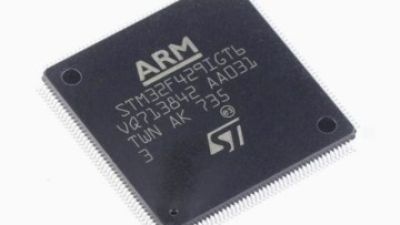
STM32F429IGT6 LQFP-176 ARM Microcontroller: Features, Applications, and Buying Guide

The STM32F429IGT6 is a 32-bit microcontroller designed for embedded systems that require substantial processing capability, memory, and connectivity in a compact package. It integrates 1MB of Flash memory and is supplied in a 176-pin LQFP package, providing extensive I/O resources for sensors, displays, communication interfaces, and control circuits. Its high pin count makes it suitable for feature-rich designs where board space and peripheral flexibility are important.

Industry demand continues to favor advanced microcontrollers. A 2024 Grand View Research study projects the global microcontroller market to grow at approximately 12.7% annually through 2030, driven by industrial automation, smart devices, automotive electronics, and connected equipment. In these applications, a 32-bit architecture can support graphical interfaces, real-time control, data processing, and multiple communication functions more effectively than many entry-level 8-bit solutions. Typical applications include human-machine interfaces, motor-control systems, measurement instruments, building automation, and embedded multimedia equipment.

When buying, engineers should verify Flash requirements, operating temperature, clock performance, peripheral compatibility, development-tool support, and long-term supply conditions. The 176-LQFP package also requires careful PCB footprint design and assembly capability. Buyers should compare authorized distribution channels, documentation quality, lifecycle status, and genuine traceability before placing volume orders.

FAQS

: Why are IC chips essential to modern technology?

: IC chips turn electrical signals into useful actions, calculations, measurements, and stored information. A processor follows instructions. Memory holds data. Sensors detect temperature, pressure, light, and movement. Without chips, many devices would remain largely passive.

Which products depend on IC chips?

Phones, vehicles, medical equipment, factory machines, and household systems use integrated circuits. A vehicle may monitor batteries, motors, charging, and safety functions simultaneously. A factory robot may use several sensors every second.

What is driving global demand for IC chips?

Artificial intelligence, cloud computing, automation, electric transport, and connected infrastructure are increasing chip demand. Data centers require processors, memory, networking circuits, and power-management components. Demand is strong. It is not perfectly predictable.

How do electric vehicles increase chip demand?

Electric vehicles use chips for battery monitoring, charging control, motor management, and driver assistance. These systems constantly measure current, voltage, temperature, and movement. One vehicle can contain many control and sensing functions.

How does industrial automation affect chip demand?

Automated factories use chips to measure heat, vibration, pressure, position, and machine speed. A single production line may contain thousands of sensing points. Small signals can control large mechanical systems.

What do recent market figures suggest about chip demand?

Global semiconductor sales reached about 627.6 billion dollars in 2024, according to the article. A 2025 forecast estimated roughly 697.2 billion dollars. Forecasts can change quickly. They are not guarantees.

What challenges could limit future IC chip supply?

Manufacturing depends on clean rooms, advanced equipment, specialized materials, packaging capacity, and skilled technicians. One microscopic defect can affect an entire production batch. That risk is easy to underestimate.

Can chip demand decline in some markets?

Yes. Economic slowdowns may reduce equipment orders and consumer purchases. Improved efficiency may also reduce chip use in certain products. New applications could offset that decline. I may be too confident about long-term growth.

How should companies plan for component availability?

Check lifecycle status before selecting an IC. Document approved alternatives and test them on real wiring. Review supplier capacity twice each year. Simulation alone may miss timing problems.

Why are older chip designs difficult to manage?

Older products may remain active for many years, but compatible components can become harder to obtain. Changing one part may affect timing, wiring, software, or testing. That assumption can fail.

Conclusion

Ic Chips, also known as integrated circuit chips, are compact electronic components that combine numerous tiny circuits on a single piece of semiconductor material. They process, store, and control electrical signals, allowing modern devices to perform tasks quickly and efficiently. Because of their small size, low power consumption, and reliable performance, Ic Chips are essential in computers, mobile devices, vehicles, communication systems, household appliances, medical equipment, and industrial machinery.

Global demand for Ic Chips is increasing as digital services, automation, artificial intelligence, connected devices, and advanced transportation continue to expand. Their supply chain involves designing circuits, producing semiconductor wafers, packaging finished chips, testing performance, and distributing components to manufacturers worldwide. However, future demand may be affected by production costs, limited manufacturing capacity, raw material availability, energy use, logistics disruptions, and the growing complexity of chip designs. Continued investment, careful planning, and stronger cooperation across the supply chain will be important for meeting the world’s long-term demand.

Amara

Amara

Amara is a dedicated marketing professional at Huasheng Boye (Shenzhen) Technology Co., Ltd., where she plays a crucial role in enhancing the company’s brand presence. With a deep understanding of the technology sector, Amara excels in articulating the unique advantages and innovative solutions......
Previous Top Capacitors And Inductors for Global Buyers in 2026?