Whatsapp:8613480819877
Leave Your Message
0%

Ever wonder why IC chips are in such crazy demand all around the world? Honestly, these tiny components are the silent heroes of our modern lives. They’re the brains behind smartphones, electric cars, medical scanners, cloud Servers, even the robots in factories. And get this — a single advanced chip can have billions of transistors! These tiny switches process data at lightning speed while taking up barely any space. But you know what? Most folks don’t really think much about them — they only notice when a product suddenly becomes super pricey or just isn’t available.

Now, the reason everything’s heating up is because more industries are relying on digital smarts than ever before. Think about Apple; they need powerful processors for their mobile gadgets. Tesla? They’re running chips for vehicle control, Sensors, and automated driving features. Even giants like Amazon and Microsoft are deeply dependent on these chips to keep their massive data centers running smoothly. And it’s not just private companies — governments and manufacturers are pouring resources into building up domestic chip production. Companies like TSMC, Samsung, and Intel are ramping up their research and manufacturing capacity, but let’s be honest — setting up a new plant isn’t quick or cheap. It can take years and costs billions.

Morris Chang, who started TSMC, once said, “Without Semiconductors, there would be no modern electronics industry.” Still so true today. These chips support everything from communication and energy use to computing and industrial safety. And here’s the thing — the demand isn’t just coming from one gadget or product. It’s driven by thousands of connected systems working behind the scenes.

Of course, the market isn’t all smooth sailing. Things like supply shortages, rising costs to produce, water usage, or political tensions can reveal some pretty serious vulnerabilities. Some forecasts are even banking on rapid growth for new digital services, but that might not always happen. Still, the overall trend is pretty clear — as we generate more data in both homes and businesses, having reliable, efficient IC chips isn’t going anywhere. They’re gonna stay essential worldwide.
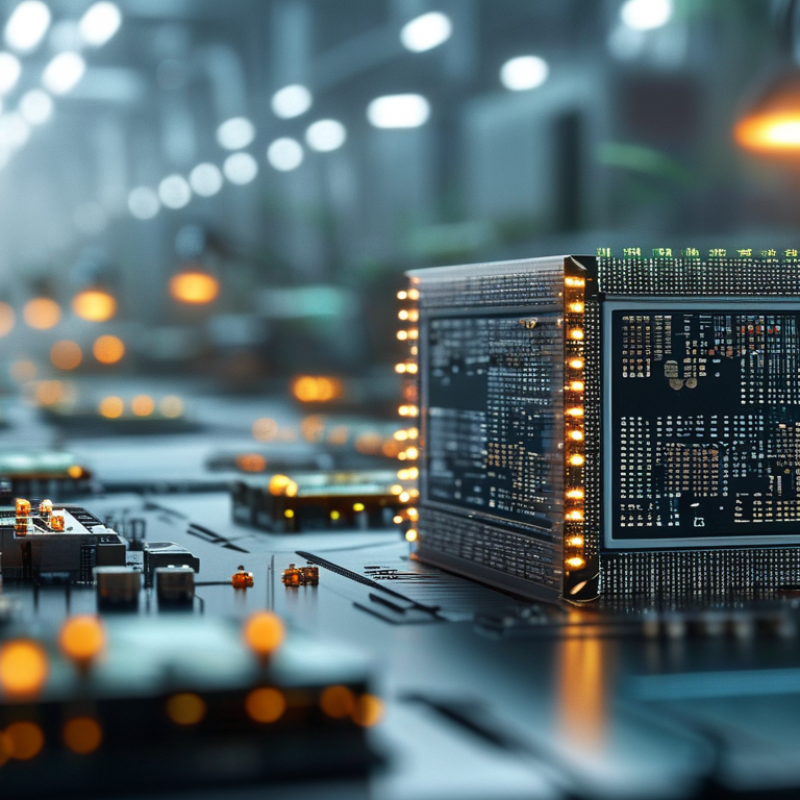
Why Are IC Chips in High Demand Worldwide?

What Are IC Chips and How Do They Work?

An integrated circuit, or IC chip, is a tiny electrical system built on a silicon wafer. It may contain millions or billions of transistors. These transistors act like microscopic switches. They turn electrical signals on or off, creating binary data. Some chips also process continuous signals, regulate voltage, or store information.

Inside a device, power enters through metal contacts. A control signal changes transistor states. Those states move through logic gates, much like traffic through narrow city streets. The chip then produces a result, such as an image, temperature reading, or machine command. Heat is a practical concern. Smaller structures improve performance, but they can make cooling more difficult. The picture is not perfectly neat.

Demand reflects this hidden complexity. The Semiconductor Industry Association reported global semiconductor sales of 627.6 billion dollars in 2024. The World Semiconductor Trade Statistics forecast further market growth in 2025, supported by computing, communications, vehicles, and industrial systems. These figures cover semiconductors broadly, including many IC categories.

Military Grade Chips is a widely used phrase, but it needs careful interpretation. Performance depends on testing, temperature range, radiation tolerance, packaging, and traceability. A rugged chip is not automatically suitable for every harsh environment. Engineers must examine verified specifications and independent qualification data. That detail is easy to overlook. IC technology also remains imperfect: manufacturing defects, supply interruptions, and design errors can still affect reliability.

Which Industries Depend Most on IC Chips?

Why Are IC Chips in High Demand Worldwide?

Which Industries Depend Most on IC Chips?

Automotive manufacturing is one of the strongest drivers of IC chip demand. Modern vehicles use chips for braking, battery control, navigation, lighting, and driver assistance. A single control unit may process sensor data within milliseconds. Small chips, huge systems. Engineers must test these components across heat, vibration, moisture, and electrical noise. A minor failure can stop an entire production line, not merely affect one feature.

Consumer electronics also depends heavily on integrated circuits. Phones, laptops, home appliances, and wearable devices need processors, memory, power controllers, and communication chips. Buyers expect faster performance and longer battery life each year. That pressure pushes manufacturers toward smaller and more efficient designs. However, thinner devices can create heat and repair challenges. The industry still treats convenience as the main goal, which deserves more careful reflection.

Telecommunications, cloud computing, healthcare, and industrial automation require even more specialized chips. Network equipment moves massive data volumes through compact hardware. Medical scanners and monitoring systems depend on accurate signal processing. Factory robots use chips to control motors, cameras, and safety sensors. Energy systems need them for smart meters, inverters, and grid protection. In professional supply reviews, traceability and testing matter as much as speed. A cheaper component may appear attractive, yet inconsistent quality can create expensive delays and difficult safety concerns.

Why Is Global Demand for IC Chips Increasing?

Global demand for Electronic Ic Chips is increasing because digital systems now sit inside ordinary objects. Cars need processors for safety, navigation, and battery control. Hospitals use chips in imaging and monitoring equipment. Factories require sensors that measure heat, pressure, and movement every second. Data centers also consume large quantities of logic and memory devices for artificial intelligence workloads. The demand is physical, not merely online.

The World Semiconductor Trade Statistics Spring 2025 forecast values the global semiconductor market at about 697 billion US dollars in 2025, an 11.2% annual increase. It expects further growth in 2026. Memory products and computing applications are major drivers, while automotive and industrial demand remain important. Manufacturing capacity is also expanding across regions. Still, the picture is not perfectly smooth. Inventory corrections, electricity limits, skilled-labor shortages, and geopolitical restrictions can delay new projects. A forecast can miss reality.

Tips: Buyers should examine lead times, thermal requirements, and long-term supply contracts. Engineers should avoid choosing a chip only by price. A cheaper component may increase redesign costs later. Check operating temperature, lifecycle support, and testing standards before production. The practical lesson is simple: demand is rising, but supply planning remains fragile.

Why Are IC Chips in High Demand Worldwide? - Why Is Global Demand for IC Chips Increasing?
Demand Dimension Measured Indicator Latest Global Data Recent Change or Outlook How It Increases IC Chip Demand Source
Overall semiconductor market Worldwide semiconductor sales Approximately US$526.8 billion in 2023 and US$626.9 billion in 2024 About 19% year-on-year growth in 2024 Rising demand for processors, memory, power-management devices, sensors, and connectivity chips expands the total IC market. WSTS
Artificial intelligence and data centers Electricity consumption by data centers worldwide About 415 TWh in 2024 Projected to reach approximately 945 TWh by 2030 AI servers and data centers require high-performance processors, memory, networking chips, power converters, and thermal-control electronics. IEA
Electric vehicles Global electric car sales More than 17 million vehicles sold in 2024 More than 20% of new car sales worldwide Electric vehicles use substantially more power semiconductors, battery-management ICs, sensors, control processors, and communications chips than conventional vehicles. IEA
Vehicle electrification Power-electronic functions per electric vehicle Includes traction inverters, onboard chargers, DC-DC converters, and battery-management systems Demand rises with electric-vehicle production and charging infrastructure Each vehicle requires multiple high-voltage and low-voltage IC systems to convert, regulate, monitor, and distribute electrical energy safely. IEA
Industrial automation Annual industrial robot installations Approximately 541,000 units installed globally in 2023 More than double the level recorded a decade earlier Robots and automated equipment require motion-control processors, motor drivers, sensors, safety circuits, and industrial communication ICs. IFR
Renewable energy and storage Global solar photovoltaic capacity additions More than 400 GW added in 2023 Continued expansion expected through 2030 Solar inverters, energy-storage systems, charging stations, and grid equipment depend on power semiconductors, control ICs, sensors, and communication devices. IEA
Connected devices and communications Expansion of mobile, broadband, and machine-to-machine connections Billions of connected endpoints worldwide Connectivity is expanding across homes, factories, vehicles, utilities, and healthcare Every connected endpoint can require radio-frequency chips, network processors, microcontrollers, memory, sensors, and power-management ICs. ITU
Smart manufacturing Use of embedded electronics in production equipment Microcontrollers, sensors, memory, and industrial networking are standard components Adoption is increasing with digitalization and factory automation Manufacturers are adding real-time monitoring, predictive maintenance, machine vision, and automated control to improve productivity and reduce downtime. UNIDO
Energy efficiency requirements Demand for electronic power conversion and control Present in appliances, vehicles, buildings, factories, and electricity networks Efficiency standards and decarbonization policies are becoming stricter Efficient power-management ICs help reduce energy loss, improve battery life, and support electrification across multiple industries. IEA
Supply-chain resilience Government investment in domestic semiconductor capacity Public support programs have been established in multiple major economies Capacity expansion is planned across logic, memory, power, and mature-node technologies Strategic investment increases fabrication capacity and creates additional demand for manufacturing equipment, materials, and IC production. OECD
Note: TWh means terawatt-hours, GW means gigawatts, and IC means integrated circuit. Figures are global estimates or rounded values reported by the cited international organizations.

What Factors Limit the Supply of IC Chips?

Why Are IC Chips in High Demand Worldwide?

IC chips support vehicles, medical equipment, factory controls, communication devices, and household electronics. Demand keeps rising because more products now need sensing, computing, and connected functions. However, chip supply cannot expand overnight. A new fabrication facility requires years of construction, specialized equipment, skilled engineers, and strict process validation. Even a small production fault can delay millions of devices.

Supply is also limited by wafer capacity, packaging services, testing equipment, and raw material availability. Mature-node chips, including 7400 Series Logic Chips, may face unexpected shortages when factories prioritize newer products. Packaging can become the bottleneck. Power interruptions, water restrictions, transport delays, and regional policy changes add further pressure. In practical sourcing reviews, engineers often discover that one approved component has no quick substitute. Qualification takes time. A cheaper alternative may perform differently under heat, vibration, or continuous operation. I once underestimated this issue in a planning model; the numbers looked safe, but testing capacity was already full. Forecasts are useful, not perfect.

Tips: Keep approved alternatives ready. Check supplier capacity, not only inventory. Ask about wafer sources, testing locations, lead times, and allocation rules. Review forecasts monthly, and leave room for uncomfortable surprises.

Why Are IC Chips in High Demand Worldwide? What Limits Supply?

Global semiconductor sales increased from approximately US$440.4 billion in 2020 to US$626.9 billion in 2024. This growth reflects rising demand from smartphones, data centers, artificial intelligence, automobiles, industrial automation, communications equipment, and consumer electronics.

Supply is difficult to expand quickly because advanced fabrication plants require extremely high capital investment, long construction and qualification periods, specialized equipment, skilled engineers, ultra-clean facilities, and reliable supplies of high-purity materials. Production is also concentrated in a limited number of manufacturing regions, making the supply chain vulnerable to disruptions.

Data source: World Semiconductor Trade Statistics (WSTS) historical global semiconductor market sales. Values are shown in current US$ billions and represent the overall semiconductor market, used here as a broad indicator of IC-chip demand.

How Do Chip Shortages Affect the Global Economy?

Chip shortages affect the global economy through factories, freight networks, and household prices. When one controller or memory device is missing, an entire vehicle or machine may wait unfinished. A 2022 government industry survey found that median chip inventories fell from 40 days in 2019 to fewer than five days in 2021. That thin buffer made small disruptions feel enormous.

The World Semiconductor Trade Statistics organization forecast global semiconductor sales at about 611 billion dollars in 2024, a 16 percent annual increase. Rising demand does not instantly repair supply. New fabrication capacity requires years, specialized equipment, skilled workers, and stable energy supplies. Automotive and industrial producers often redesign products when specific components disappear. Even searches for TJA1042 CAN IC Chips reflect this pressure around communication components. Higher input costs can reach consumers through delayed deliveries, overtime, and more expensive products. The estimates are useful, but imperfect. Demand changes faster than factories can respond.

Tips: Build supplier visibility beyond the first tier. Keep realistic safety stock for critical components. Validate substitute parts before shortages become urgent. Review electrical specifications, temperature ranges, and certification needs carefully. A cheaper alternative may create testing delays or unexpected field failures. Policymakers can also support diversified production, but subsidies alone cannot solve weak planning. Companies still need transparent forecasts and honest allocation rules. Shortages expose that dependence is often measured poorly, until production stops.

How Is the IC Chip Industry Preparing for Future Demand?

The IC chip industry is preparing for demand that is growing faster than traditional capacity plans. The World Semiconductor Trade Statistics (WSTS) Autumn 2024 forecast valued the global market at 611.2 billion US dollars in 2024. It projected 687.4 billion US dollars for 2025, a 12.5% increase.

More capacity is being built across several regions. The SEMI World Fab Forecast reported that global semiconductor manufacturing capacity could rise by 6% in 2025. New facilities are targeting advanced logic, memory, power devices, and mature-node chips. This broader mix matters because cars, medical equipment, servers, and factory systems need different components. Production teams are also expanding advanced packaging, where several small dies are connected inside one package. That approach can improve performance without relying only on smaller transistors.

The supply chain is changing, too. Companies are increasing local inventories and qualifying more than one supplier for critical materials. The Semiconductor Industry Association has highlighted workforce shortages as a major long-term risk. More engineers and technicians are needed near fabrication plants. Training takes years, not weeks. Forecasts can still miss sudden shifts in computing demand. That is the uncomfortable part. Building too little capacity causes shortages, while building too much creates expensive idle factories. Industry planners therefore need flexible equipment, clearer demand data, and regular review of their assumptions.

FAQS

: Which industry depends most on IC chips?

: Automotive manufacturing is a major chip user. Cars need chips for braking, battery control, lighting, navigation, and driver assistance. Small components manage large systems.

How do IC chips support modern vehicles?

Control units process sensor data within milliseconds. Engineers test chips against heat, vibration, moisture, and electrical noise. One failure can stop a production line.

Why do consumer electronics require many IC chips?

Phones, laptops, appliances, and wearable devices use processors, memory, power controllers, and communication chips. Buyers expect faster performance and longer battery life.

Can thinner electronic devices create new problems?

Yes. Compact designs may increase heat and make repairs more difficult. Convenience remains important, but that priority deserves more careful reflection.

Which professional sectors need specialized IC chips?

Telecommunications equipment moves large data volumes. Medical systems process precise signals. Factory robots control motors, cameras, and safety sensors. Energy systems use chips in meters and grid equipment.

What limits global IC chip supply?

Supply depends on wafer capacity, packaging, testing equipment, and raw materials. A new factory may require years to build and validate. Production cannot expand overnight.

Why can mature chips become difficult to source?

Factories may prioritize newer products. Older components can then face unexpected shortages. Packaging and testing may become the real bottleneck.

What events can interrupt chip production?

Power interruptions, water restrictions, transport delays, and policy changes can reduce supply. Even full warehouses may not solve a testing shortage. That detail is easy to miss.

How should buyers manage uncertain chip supply?

Keep approved alternatives ready. Check manufacturing capacity, wafer sources, testing locations, lead times, and allocation rules. Review forecasts monthly. Forecasts are useful, not perfect.

Why is a cheaper replacement not always suitable?

Qualification takes time. An alternative may behave differently under heat, vibration, or continuous operation. I once trusted a safe-looking forecast, but testing capacity was already full.

Conclusion

Ic Chips, also known as integrated circuit chips, are compact electronic components that combine transistors and other elements to process, store, and control electrical signals. They are essential to computers, smartphones, vehicles, medical equipment, communication systems, industrial machines, and many everyday devices. Global demand is increasing as digital services expand, smart technology becomes more common, and industries adopt automation, artificial intelligence, and connected systems.

However, producing Ic Chips requires highly specialized facilities, advanced equipment, skilled workers, and complex supply chains. Limited manufacturing capacity, material shortages, transportation problems, and sudden changes in consumer demand can restrict supply. Chip shortages may delay production, raise costs, and affect economic activity across multiple industries. To prepare for future demand, the industry is investing in new production facilities, improved manufacturing processes, workforce training, stronger supply networks, and more efficient chip designs. These efforts aim to create a more stable supply while supporting continued technological development worldwide.


Amara

Amara

Amara is a dedicated marketing professional at Huasheng Boye (Shenzhen) Technology Co., Ltd., where she plays a crucial role in enhancing the company’s brand presence. With a deep understanding of the technology sector, Amara excels in articulating the unique advantages and innovative solutions......
Previous Why Are IC Chips in Global Demand?