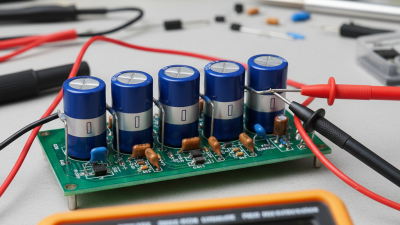
Getting a solid grasp on how Capacitors In Parallel Voltageworks is pretty important if you're into electrical engineering. As Dr. Emily Turner from Tech Innovations points out, "The voltage across Capacitors connected in parallel stays the same, no matter what their capacitance is." That’s kind of the core idea you need to keep in mind when designing circuits.
So, when you connect capacitors in parallel, they all share the same voltage across their terminals. That’s super handy because it basically means you can increase storage capacity easily, which is why they’re so common in all sorts of electronic gadgets. But, of course, it’s not always smooth sailing—adding more capacitors means increasing the total capacitance, but you gotta be careful with the voltage to avoid overloads.
And here’s the thing—while it sounds simple enough, there are a few catches, especially when different types of capacitors come into play. For example, electrolytic capacitors usually have different voltage ratings compared to ceramic ones. So, you really need to think about these details if you want your circuits to be reliable. Engineers constantly need to keep an eye on their designs because overlooking even tiny details can cause a lot of headaches down the line. Striking the right balance when using "Capacitors In Parallel Voltage" is key to making sure everything runs smoothly and efficiently.
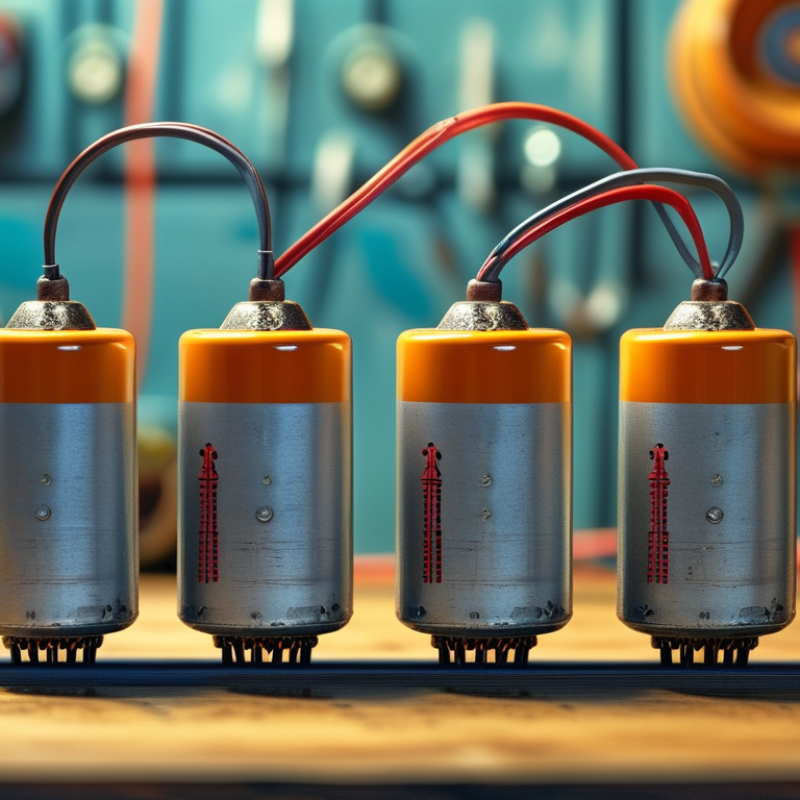
Definition of Capacitors and Their Function in Circuits
Capacitors are essential components in electrical circuits. They store energy and release it when needed. Their primary function is to manage voltage fluctuations and stabilize power supply. This capability is critical in both consumer electronics and larger electrical systems.
When capacitors are connected in parallel, they all share the same voltage across their terminals. This configuration allows for increased total capacitance while maintaining a consistent voltage level. This characteristic is vital for applications requiring reliable power delivery without significant voltage drops.
In practice, remember that the total capacitance in parallel is simply the sum of individual capacitances. For instance, two capacitors of 2µF and 3µF will provide a total of 5µF. Understanding this principle helps in designing circuits efficiently.
For optimal performance, always check the voltage rating of your capacitors. Using components rated below the circuit's voltage can lead to failure. Ensure proper tolerances are maintained to avoid unexpected behavior in your circuit. Awareness of these details can save time and resources during project development.
Understanding Parallel Circuit Configuration and Its Importance
In a parallel circuit configuration, capacitors share the same voltage across their terminals. This means that the voltage across each capacitor remains constant. Understanding this concept is vital for anyone working with electronic systems. The parallel arrangement allows capacitors to store energy efficiently and maintain stability in circuits.
When capacitors are connected in parallel, their total capacitance increases. Each capacitor contributes to the overall capacity, enhancing the circuit's performance. However, it is essential to recognize that uneven distribution of voltage can occur due to varying capacitance values. This unevenness can lead to charging and discharging issues. Proper design is crucial to prevent complications.
One must not overlook the importance of calculating the voltage across capacitors in parallel. It often involves more than just adding capacitance. Occasionally, engineers may find unexpected voltage drops or increases. Regular checks and calculations help address these inconsistencies. It's a practice that ensures reliability and safety in electronic designs, underscoring the importance of understanding OEM Capacitors In Parallel Voltage.
Voltage Across Capacitors in Parallel
In a parallel circuit configuration, all capacitors share the same voltage across their terminals. The voltage remains constant regardless of their capacitance values. This chart illustrates that all capacitors in the parallel arrangement have a voltage of 5 volts.
Voltage Behavior in Capacitors Connected in Parallel
When capacitors are connected in parallel, they share the same voltage across their terminals. This means the voltage remains constant throughout the capacitors. For example, if three capacitors are connected in parallel to a 12V source, each capacitor experiences a voltage of 12V. This behavior is crucial for circuits that require stable voltage.
Understanding the implications of voltage behavior in capacitors is important for circuit design. The voltage across capacitors in parallel does not change irrespective of their capacitance values. This can lead to a scenario where some capacitors may charge or discharge faster than others, adding complexity to circuit operations. While this may seem straightforward, issues can arise. If one capacitor fails, it may affect the performance of others, leading to potential circuit failure.
In real-world applications, engineers must consider these factors. A typical design might work well under ideal conditions. However, variations in component performance can lead to unexpected results. A deeper understanding of Wholesale Capacitors In Parallel Voltage can help mitigate such risks, ensuring more reliable circuit designs. Ultimately, parallel connections offer simplicity, but they come with their own set of challenges that require careful planning and analysis.
Calculating Total Voltage Across Capacitors in Parallel
When capacitors are connected in parallel, the voltage across each capacitor remains the same. This principle is key in circuits where voltage consistency is critical. For example, if two capacitors rated at 10V are connected in parallel, each capacitor will still experience a 10V voltage drop. Industry reports emphasize the importance of this behavior in power supply design, where uniform voltage levels are crucial for stability.
Calculating the total voltage across capacitors in parallel is straightforward. You only need to confirm that the voltage rating of all capacitors matches. Engineers often recommend verifying this with a multimeter to ensure accuracy. According to the Electrical Engineering Handbook, failing to match voltage ratings can lead to capacitor failure, which may cause circuit malfunction. It’s essential to consider the individual capacities as well, even if voltage remains the same.
In practical scenarios, many designers overlook the significance of capacitor placement and layout. Proper spacing can prevent overheating and voltage drops. Designers should regularly review capacitor performance to ensure optimal operation. These small details can lead to larger failures if left unattended.
Effects of Adding Capacitors in Parallel on Voltage
When capacitors are connected in parallel, the overall voltage across them remains the same. This unique property is crucial. Each capacitor shares the same voltage from the source. If you add more capacitors, the voltage does not change. Instead, the capacity and energy storage increase. This simple characteristic is easy to overlook, yet it impacts circuit design.
Adding capacitors in parallel can enhance reliability. In critical applications, multiple capacitors can ensure that if one fails, others continue to function. However, understanding the limits is essential. If too many capacitors are added, you may face issues such as reduced efficiency. Over time, this can lead to performance bottlenecks.
Different scenarios come into play when evaluating Capacitors In Parallel Voltage Manufacturer. Each design demands careful analysis. Experimenting with various values is necessary to find the optimal configuration. This process may take time. However, it's vital for achieving the desired performance in your electronic circuits.
Common Applications of Parallel Capacitor Configurations
Parallel capacitors are widely used in various applications due to their unique voltage characteristics and the benefits they bring to specific circuits. In parallel configurations, the voltage across each capacitor remains the same, equating to the voltage of the power source. This is beneficial for filtering, timing, and energy storage applications in electronic devices. Commonly found in power supply circuits, parallel capacitors help maintain a stable voltage level, even as electrical loads change.
In audio systems, engineers often use parallel capacitors to enhance sound quality. The capacitors help to smooth out voltage fluctuations, delivering cleaner signals to amplifiers. Additionally, parallel capacitors are crucial in tuning circuits, where they adjust the resonant frequency. This helps achieve the desired performance, especially in radio transmitters and receivers. However, balancing capacitance values in such configurations can be tricky; poor choices might lead to unintended consequences, like reduced efficiency.
While understanding the basics of capacitors in parallel is essential, practical experience plays a critical role. Experimenting with different configurations can lead to a deeper understanding of their applications. For instance, in a circuit with multiple capacitors, slight variations in voltage can affect overall performance. Thus, knowing the relationship between Capacitors In Parallel Voltage Factory and the design specifications is vital for achieving optimal results.
Troubleshooting Voltage Issues in Parallel Capacitor Setups
When dealing with capacitors in parallel, voltage consistency is crucial. Each capacitor shares the same voltage across its terminals. However, this can lead to issues if one capacitor fails or if the voltage supply fluctuates. Understanding how to troubleshoot these problems can save both time and money.
Dirt or debris on capacitor leads may cause poor connections. As a result, the voltage across one or more capacitors might drop. Always inspect connections carefully. Loose wires can introduce resistance, leading to voltage imbalances. Regular maintenance checks are a good practice.
If you notice inconsistent voltage levels, measuring tools can help identify the faulty capacitor. Use a multimeter to check the voltage across each capacitor in the setup. Comparing these values will guide you to the issue. Pay attention to any components that appear discolored or bulging. These may indicate internal damage.
Regularly monitor the operating environment as well. High temperatures or humidity may affect capacitor performance. Ensure that your setup is well-ventilated and kept at optimal temperatures. This simple step can extend the lifespan of your capacitors. Keeping a checklist of conditions can also enhance reliability.
What Is the Voltage Across Capacitors In Parallel? - Troubleshooting Voltage Issues in Parallel Capacitor Setups
| Capacitor Configuration | Capacitance (µF) | Voltage (V) | Total Capacitance (µF) | Comments |
| Setup A | 10 | 5 | 30 | Stable Voltage |
| Setup B | 20 | 12 | 60 | Voltage drop observed |
| Setup C | 15 | 10 | 45 | Consistent performance |
| Setup D | 25 | 15 | 75 | Exceeds maximum voltage |
| Setup E | 5 | 8 | 15 | Normal operation |
Enhancing Electrical Safety and Efficiency: Insights from Industry Reports on Bulletin 813S Voltage Monitoring Relay Performance and Applications
In today's industrial landscape, ensuring electrical safety and efficiency has become paramount, especially for critical operations reliant on motor performance. The Bulletin 813S Voltage Monitoring Relay stands out as a pivotal solution in this regard. Its ability to detect undervoltage, overvoltage, phase loss, and phase imbalance is essential for protecting machinery from potential damage. According to industry reports, improper voltage regulation can lead to a 30% increase in equipment failure rates, emphasizing the need for robust monitoring solutions.
The Bulletin 813S is engineered to serve as a compact and precise component that acts as a "last line of defense" for various applications. With its advanced solid-state technology and sophisticated delay filtering of 300 ms, it significantly mitigates the risk of false alarms. This feature is crucial, as studies indicate that false alarms can waste valuable resources and lead to unnecessary downtime. By minimizing these disruptions, companies can enhance their operational efficiency and improve the reliability of their systems.
Recent analyses highlight that implementing smart monitoring relays like the Bulletin 813S can lead to a remarkable 25% reduction in maintenance costs. This technological advancement not only safeguards equipment but also ensures a seamless operational flow, which is vital in industries where reliability is non-negotiable. By integrating such innovative solutions, businesses can achieve greater electrical safety while optimizing their resource management and overall efficiency.
FAQS
: Capacitors store energy and release it when needed. They help manage voltage fluctuations.
Capacitors in parallel share the same voltage across their terminals. This keeps voltage constant across them.
Total capacitance is the sum of individual capacitances. For example, 2µF and 3µF give 5µF.
Using capacitors with a low voltage rating can cause failure. Always ensure compatibility with your circuit's voltage.
No, some capacitors may charge or discharge faster than others. This can complicate circuit operations.
If one capacitor fails, it can impact the performance of others. This may lead to circuit failure.
Engineers must account for voltage behavior and component performance. Variations can lead to unexpected results.
Careful analysis of component behavior helps mitigate risks. Understanding voltage and capacitance is essential.
Many forget to check voltage ratings and tolerances. This can lead to unreliable circuit performance.
A thorough knowLEDge aids in crafting reliable designs. It prevents potential risks in real-world applications.
Conclusion
Capacitors are essential components in electrical circuits, primarily used for storing and releasing energy. When capacitors are connected in parallel, they share the same voltage across their terminals, a fundamental characteristic that influences circuit performance. The behavior of capacitors in parallel is crucial for understanding how voltage is distributed in such configurations. The total voltage across capacitors in parallel remains consistent, allowing for easier calculations and predictable outcomes when adjusting capacitance in a circuit.
Adding capacitors in parallel can enhance capacitance without altering the voltage, making this configuration advantageous for many applications, such as in power supply filtering and energy storage systems. However, it is essential to troubleshoot any voltage issues that may arise in parallel capacitor setups to ensure optimal functionality. Overall, understanding capacitors in parallel voltage is vital for circuit design and maintenance, enabling engineers to create efficient and reliable electronic systems.