Looking ahead to 2026, the world of Integrated Circuits is really starting to shake things up. Industry experts like Dr. Emily Chen from MicroTech have been saying that the future of ICs is all about advancements in AI and sustainability—kind of like the industry’s new driving forces. It’s pretty clear that priorities are shifting, and everyone’s paying attention.
Recent trends show that energy efficiency and making devices smaller are gonna be the big topics of conversation. The idea of packing more punch into tiny circuits isn’t new, but it’s definitely gaining momentum and could lead to some pretty awesome breakthroughs across different fields. That said, there are definitely some hurdles to jump over. Sometimes, trying to shrink down everything that much can risk reliability, which gives folks in the industry a bit of a headache. Most experts agree that finding that sweet spot between pushing the envelope and keeping things dependable is super important.
These changes are gonna have a wide-reaching impact too. From consumer gadgets to cars, pretty much every industry will feel these shifts. ICs need to evolve to meet these new demands without sacrificing performance, which is no small feat. All in all, it’s an exciting but somewhat intimidating time for everyone involved. As we inch closer to 2026, I think people will be paying more and more attention to these developments—they really signal the start of a whole new era for Integrated Circuits.

Key Integrated Circuit Technologies Shaping 2026
Integrated circuits (ICs) are crucial in shaping the future of technology. As we approach 2026, several key technologies stand out. One significant trend is the move towards advanced Semiconductor processes. These include 3nm and smaller nodes, which promise greater energy efficiency and performance. The ever-increasing demand for AI and machine learning applications demands these advancements.
Moreover, there is a noticeable shift towards integrated photonics. This technology combines optical components with ICs to enhance communication speeds. By utilizing light, integrated photonics can transmit data faster with lower power consumption. It plays a vital role in data centers and telecommunications, responding to global data traffic growth.
Tip: Always keep an eye on market trends. Engaging with emerging technologies helps professionals stay relevant.
Additionally, the rise of flexible and printed electronics is transforming industries. They offer versatility and lower production costs. These innovations might disrupt traditional manufacturing processes in electronics. While exciting, it also raises questions about environmental impacts and recycling.
Tip: Explore the implications of new technologies on sustainability. Discussing these can unveil potential ethical dilemmas.
The Rise of AI-Optimized Integrated Circuits
The year 2026 is poised to witness a significant shift in the world of integrated circuits, especially with the emergence of AI-optimized designs. These circuits are being tailored to enhance the performance of artificial intelligence applications. Their specific architectures enable processing vast amounts of data more efficiently. As Digital Integrated Circuits evolve, they're not just making tasks faster; they're enabling machines to learn from data patterns.
However, the development of AI-optimized integrated circuits isn't without challenges. Integrating such circuits requires a deep understanding of both AI algorithms and hardware capabilities. Many engineers face obstacles in balancing power consumption and processing speed. Moreover, these circuits demand high precision in design, which can lead to potential errors if not done carefully. The future may hold immense possibilities, but the journey involves navigating complex engineering hurdles.
As industries shift towards automation, the demand for Digital Integrated Circuits tailored for AI applications will increase. Yet, companies must prioritize reliability and sustainability in their designs. Failure to do so could stall innovation. The focus must remain on creating circuits that not only drive performance but also aim for longevity and efficiency in production. Embracing this duality will redefine the landscape of integrated circuits in the coming years.
Advancements in Power Efficiency for ICs by 2026
The race for power efficiency in integrated circuits (ICs) is accelerating as we approach 2026. Industry experts predict that power-efficient designs will dominate the market. According to a recent report by IC Insights, the demand for low-power ICs will grow by over 20% annually. Engineers are focusing on reducing power consumption. This effort is crucial for mobile devices, where battery longevity is paramount.
Innovations in manufacturing processes are driving these advancements. For instance, the shift to 5nm and smaller nodes allows for reduced power leakage and improved performance. However, achieving power efficiency isn't without challenges. Engineers often face trade-offs between energy savings and processing speed. The implementation of advanced materials, like graphene and silicon carbide, shows promise but requires further research.
As we head towards 2026, the integration of AI in design processes could offer solutions. AI algorithms can optimize layouts for reduced power consumption. Yet, this also raises concerns about reliability and scalability. The balance between innovation and practicality remains a pivotal aspect of IC development. The industry's focus on power efficiency will shape the future of technology.
Top Integrated Circuits Trends to Watch in 2026: Advancements in Power Efficiency for ICs
Trends in Miniaturization and Packaging of Integrated Circuits
As we look ahead to 2026, the trends in miniaturization and packaging of integrated circuits stand out. The industry is pushing the boundaries of size and efficiency. Reports suggest that the global market for miniaturized integrated circuits is expected to grow at a CAGR of 8.5% through 2026. This growth mirrors the increasing demand for compact electronic devices. Smaller components lead to lighter devices, which is essential in sectors like consumer electronics and automotive.
Power Management Integrated Circuits are a crucial focus in this trend. These circuits help optimize energy usage, making devices more efficient. The demand for efficient power management is projected to drive a significant portion of the market. However, reducing size often leads to challenges, especially with heat dissipation. Engineers must balance miniaturization with functionality. Finding effective materials and designs to manage heat is an ongoing concern.
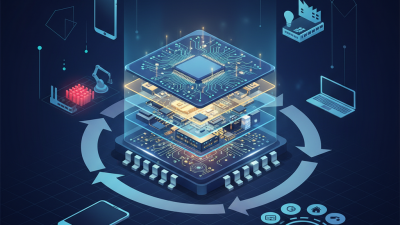
The packaging of integrated circuits is also evolving. Advanced packaging techniques, like 3D stacking, enable higher performance despite smaller sizes. Yet, these innovations come with their own set of complications. Reliability must be ensured amid heat and stress. As the industry pushes forward, continuous research and development are vital. Addressing these challenges will determine the future success of miniaturized and packaged integrated circuits.
Emerging Materials Revolutionizing Integrated Circuit Design
The landscape of integrated circuit design is rapidly evolving, driven by emerging materials. These advancements are not just enhancements; they are transforming the capabilities of devices. According to a recent industry report, the global market for advanced materials in semiconductor manufacturing is projected to grow by 8% annually, reaching $68 billion by 2026.
New materials like graphene and transition metal dichalcogenides are being explored for their superior electrical properties. These materials may enable the creation of 3d Integrated Circuits, which promise higher performance and better energy efficiency. The unique characteristics of these materials could revolutionize how we think about circuit architecture. However, challenges remain, such as scalability and the integration of these materials into existing processes.
In addition, innovative fabrication techniques must be developed to take full advantage of these materials. Researchers are facing hurdles in sourcing high-purity materials consistently. Moreover, the industry must address the potential environmental implications of using new materials. Close collaboration across sectors will be crucial to overcome these challenges and fully leverage advanced materials in integrated circuit design.
The Role of 5G in Future Integrated Circuit Development
The advancement of 5G technology is poised to revolutionize integrated circuits (ICs) by 2026. As data speeds increase, the demand for faster, more efficient ICs escalates. According to a recent report by MarketsandMarkets, the global integrated circuit market is expected to reach $1 trillion by 2026, driven largely by 5G applications. This technology will require ICs capable of processing vast amounts of data with minimal latency.
IC manufacturers are under pressure to innovate. For instance, 5G demands low power consumption alongside high performance. This might seem contradictory, as high performance usually requires more energy. A careful balance is essential. Notably, a study by the International Data Corporation indicates that 5G will account for 30% of total IC production by 2026. This statistic underscores the growing significance of 5G in shaping the future of IC designs.
Despite the excitement, challenges remain. Developing efficient cooling solutions for high-performance ICs is crucial. Thermal management will be a critical focus as 5G applications proliferate. Additionally, the supply chain needs to adapt quickly to support the surge in demand for specialized components. The integration of AI in IC design tools may provide some relief, but the transition is fraught with uncertainties.
Top Integrated Circuits Trends to Watch in 2026 - The Role of 5G in Future Integrated Circuit Development
| Trend | Description | Impact of 5G | Projected Growth (%) |
| Integration of AI | Enhanced capabilities for real-time processing and decision making. | 5G enables ultra-low latency and high bandwidth, improving AI performance. | 25% |
| Edge Computing | Data processing closer to the source for lower latency. | 5G supports more devices at the edge, enhancing computational capabilities. | 30% |
| Miniaturization of Circuits | Shrinking physical size while increasing functionality. | 5G requires more compact and efficient ICs for devices. | 20% |
| Increased Connectivity | More devices connected to the network, expanding functionalities. | 5G facilitates a massive increase in connected devices. | 35% |
| Sustainability | Focus on energy-efficient designs and materials. | 5G technology can optimize energy usage across networks. | 15% |
Sustainability Practices in Integrated Circuit Manufacturing
Sustainability is taking center stage in integrated circuit manufacturing. The industry faces growing pressure to reduce its environmental impact. Practices such as energy-efficient production methods can significantly lessen carbon footprints. Manufacturers are exploring renewable energy sources to power their facilities. The shift toward sustainable materials also shows promise, with eco-friendly substrates gaining traction.
Tips: Consider implementing green technologies in your operations. Regularly assess energy use and explore ways to minimize waste.
Another interesting trend involves the recycling of Electronic Integrated Circuits. As electronic waste rises globally, innovative techniques are being developed for reclaiming critical materials. Companies are also focusing on designing circuits for easier recycling. This can lead to substantial resource savings.
Tips: Create a plan for recycling old electronics. Encourage customers to return unused devices. Engage with organizations that specialize in e-waste management.
FAQS
: Graphene and transition metal dichalcogenides are being explored for their superior electrical properties.
They may enable the creation of 3d Integrated Circuits with higher performance and improved energy efficiency.
Major challenges include scalability and integrating new materials into existing production processes.
There is growing pressure to reduce environmental impact and lower carbon footprints in manufacturing.
Energy-efficient production methods and renewable energy sources can significantly lessen environmental impacts.
Innovative recycling techniques are being developed to reclaim critical materials from electronic waste.
Encourage customer returns of unused devices and engage with e-waste management organizations.
Yes, potential environmental implications of using new materials must be carefully considered.
Regular assessments of energy use should be implemented to minimize waste effectively.
Close collaboration across sectors is crucial to fully leverage advanced materials in integrated circuit design.
Conclusion
As we look ahead to 2026, several key trends are poised to shape the future of Integrated Circuits (ICs). One significant development is the rise of AI-optimized ICs, which are designed to enhance performance and efficiency in artificial intelligence applications. In parallel, advancements in power efficiency will revolutionize how ICs function, enabling more sustainable technology ecosystems.
Miniaturization and innovative packaging techniques will continue to drive the compactness of ICs, allowing for more powerful devices in smaller formats. Additionally, emerging materials are set to transform IC design by improving performance and reducing costs. The ongoing rollout of 5G technology will also play a pivotal role in IC development, facilitating faster and more reliable communication. Finally, sustainability practices in the manufacturing of Integrated Circuits will become increasingly important, reflecting a growing industry commitment to environmental responsibility.