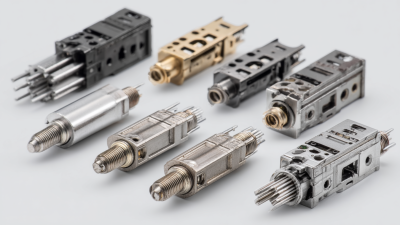
Picking the right Molex Connectors isn't just a tiny detail—it can actually make or break a product's reliability worldwide. Folks often look at things like terminal size, current rating, sealing, pitch, materials, and supply stability. But here’s the thing: even if a connector looks perfect on paper, it might fail after exposure to vibrations, humidity, repeated plug-and-unplug cycles, or thermal swings.
Joe Nelligan, who used to be the President and CEO of Molex, once said, “Our customers depend on us to tackle their toughest connectivity challenges.” That really hits home when you’re checking out the 10 best Molex connectors for global buyers. Remember, the most expensive or newest model isn’t always the best choice. It’s gotta match your specific application, how you’re putting it together, certification requirements, and regional availability.
This guide walks through practical options for all sorts of applications—think automotive, industrial controls, consumer electronics, data centers, and wire-to-board setups. We’ll talk about contact reliability, housing durability, locking mechanisms, ease of installation, and how easy it is to source these parts long-term. Tiny details matter a lot here. A weak latch can cause flaky signals, or an incorrect plating might increase contact resistance. And don’t forget, if you ignore the proper cable bend radius, even the best connector can end up damaged.
Sure, comparing options is helpful, but it’s not the whole story. Data from suppliers can change, and manufacturing conditions vary. Even seasoned engineers sometimes pick a connector without fully considering the environment it’ll be used in—that’s a mistake worth paying attention to. Global buyers should always double-check drawings, samples, test reports, and make sure they buy through authorized channels before placing big orders.
So, this overview aims to give a fair look at Molex connectors—focusin’ on real-world practicality rather than hype or overpromising. It’s about making smart, informed choices that really work in the field.
Molex Connector Basics and Key Product Families
Connector basics begin with the contact system, housing, pitch, and locking method. These details determine fit, safety, and service life. Common families include wire-to-board, wire-to-wire, board-to-board, and seaLED automotive connectors. Each family solves a different installation problem.
Wire-to-board connectors suit control panels and compact equipment. Board-to-board types support stacked circuit boards with limited space. Wire-to-wire designs help join harness sections during assembly or repair. Sealed connectors resist moisture, dust, and vibration, but sealing does not fix poor cable preparation. Check current rating, voltage rating, temperature range, mating cycles, and available terminals. A small pitch saves space. It can also make inspection harder. My experience suggests that buyers often focus on price first, then discover tooling and replacement costs later.
Tips: Request drawings, samples, and terminal specifications before placing a large order. Confirm conductor size, insulation diameter, plating, and locking direction. Test the connector with the actual wire and enclosure. Do not rely only on catalog photos. Supplier data may omit important tolerances. For global purchasing, verify traceability, packaging quality, and consistent batch performance. A connector may look correct but fail after repeated vibration. Leave room for inspection, because a perfect design on paper can still be awkward to assemble.
How to Evaluate Molex Connectors for Different Applications
Selecting connectors for global applications requires more than matching pin count and housing shape. MarketsandMarkets valued the global connector market at approximately USD 84.5 billion in 2024. This scale reflects demand from vehicles, industrial controls, medical devices, and data equipment. Start with electrical load. Check continuous current, peak current, voltage, and allowable temperature rise. A compact connector may fit the enclosure but fail under sustained heat. It happens more often than buyers expect.
Mechanical conditions matter just as much. Review mating-cycle ratings, cable retention, vibration resistance, and sealing requirements. For outdoor equipment, verify an appropriate IP rating under IEC 60529. For crimp terminals, inspect pull force and conductor placement, not only appearance. IPC/WHMA-A-620 provides widely used workmanship guidance for cable and wire-harness assemblies. The 2024 Bishop & Associates connector industry analysis also highlights automotive and industrial equipment as major demand areas, where vibration and thermal cycling can expose weak contacts. Request test reports, material declarations, and traceability records from suppliers. Do not rely on a catalog image. A real assembly test is better. Still, published ratings may reflect ideal laboratory conditions, so derating for altitude, contamination, and repeated flexing deserves careful review. One overlooked variable can change the entire selection.
10 Best Molex Connectors for Global Buyers? - How to Evaluate Molex Connectors for Different Applications
| No. | Connector Type | Typical Pitch | Typical Circuits | Typical Current | Typical Voltage | Main Application | Key Evaluation Factors | Best Fit |
| 1 | Compact Wire-to-Board Connector | 1.00–2.00 mm | 2–20 | 1–3 A/contact | 50–250 V AC/DC | Consumer electronics, sensors, compact control boards | Board space, terminal retention, mating cycles, automatic assembly compatibility | Space-limited PCB designs |
| 2 | 2.54 mm Wire-to-Board Connector | 2.54 mm | 2–36 | 2–3 A/contact | 250 V AC/DC | Industrial controls, appliances, instrumentation | Standardized spacing, keying, polarization, wire-size range and serviceability | General-purpose equipment |
| 3 | 3.00 mm Automotive Wire Connector | 3.00 mm | 2–24 | 5–15 A/contact | 12–48 V DC | Vehicle body electronics, lighting, actuators and control modules | Vibration resistance, secondary locking, temperature rating and terminal sealing | Automotive environments |
| 4 | 4.20 mm Power Connector | 4.20 mm | 2–24 | 5–9 A/contact | 250–600 V AC/DC | Power supplies, appliances, LED systems and industrial equipment | Current derating, contact heating, wire gauge, creepage and clearance | Medium-power distribution |
| 5 | 5.70 mm High-Current Connector | 5.70 mm | 2–12 | 10–13 A/contact | 300–600 V AC/DC | Server power, industrial machinery and high-load appliances | Thermal performance, contact force, polarization and mechanical robustness | Higher-load cable assemblies |
| 6 | 6.35 mm Power Connector | 6.35 mm | 2–8 | 15–23 A/contact | 300–600 V AC/DC | Industrial power modules, battery systems and motor controls | Cable cross-section, temperature rise, touch protection and locking strength | High-current applications |
| 7 | FFC/FPC ZIF Connector | 0.50–1.00 mm | 4–60 | 0.5–1 A/contact | 30–50 V AC/DC | Displays, cameras, printers, medical devices and compact electronics | Cable thickness, actuator reliability, contact alignment and insertion force | Flat-flex signal connections |
| 8 | Board-to-Board Mezzanine Connector | 0.40–1.27 mm | 10–160 | 0.3–1.5 A/contact | 30–100 V AC/DC | Embedded computing, telecommunications and modular control systems | Stacking height, impedance control, alignment tolerance and contact wipe | Dense board interconnection |
| 9 | Sealed Wire-to-Wire Connector | 2.50–5.00 mm | 2–24 | 3–20 A/contact | 12–600 V AC/DC | Outdoor equipment, vehicles, agricultural machinery and industrial sensors | Ingress protection, seal material, cable diameter, latch security and temperature range | Moisture and dust exposure |
| 10 | Circular Industrial Connector | Not pitch-based | 2–30 | 2–25 A/contact | 30–600 V AC/DC | Factory automation, robotics, instrumentation and harsh-environment equipment | Mating mechanism, shell size, shielding, ingress rating, cable clamp and EMC performance | Rugged field connections |
Note: Electrical ratings shown are typical design ranges for each connector category. Actual ratings depend on the selected housing, terminals, wire size, contact spacing, ambient temperature, insulation system, sealing method and applicable safety standard. Always verify the manufacturer’s current datasheet before final selection.
Top Molex Wire-to-Wire Connectors for Global Buyers
For global buyers, Molex Connectors should be evaluated as wire-to-wire systems, not isolated parts. These connectors join harnesses inside vehicles, appliances, lighting units, and industrial controls. A good selection begins with current rating, wire size, pitch, operating temperature, and locking strength. Do not trust catalog appearance alone. A compact housing may still need strong crimp retention.
MarketsandMarkets estimated the electronic connectors market at about USD 84.9 billion in 2024, with continued growth through 2029. Grand View Research also reports steady expansion, driven by automotive electronics, factory automation, and data infrastructure. These figures explain rising demand for reliable wire-to-wire connections. However, market estimates vary by scope. That difference deserves attention.
In practical sourcing, buyers should request mating-cycle data, terminal plating details, and sample crimp results. A harness should not loosen when pulled by hand. It should remain stable near motors, heat sources, and repeated vibration. Sealed versions can help in dusty or humid equipment, but sealing alone does not fix poor assembly. Check keying, polarization, and service access before approving volume orders. I have seen small pitch choices create expensive rework later. Sometimes, the cheapest connector becomes the costliest decision.
Best Molex Board-to-Board and FFC Connectors
Board-to-board and FFC connectors support compact devices where space, alignment, and signal stability matter. A reliable selection begins with the board layout, not the connector catalog. Check pitch, stack height, contact count, and mating direction against the actual PCB drawing. Even a small height mismatch can create enclosure pressure.
For board-to-board designs, review current capacity, contact resistance, and retention force. Gold-plated contacts may suit repeated servicing, while stronger housings help equipment exposed to vibration. FFC connectors need careful attention to cable thickness, exposed contact direction, locking style, and bend radius. A cable that folds sharply near the connector may fail earlier than expected. I have seen this overlooked during early prototypes. The result was intermittent power loss after thermal cycling.
Tips: Request dimensional drawings and electrical test data before ordering. Confirm samples with the finished PCB and cable. Inspect the latch after several mating cycles. Search phrases such as Te Connectivity Amp Connectors may help compare specifications, but never choose by keyword alone. Supplier consistency, traceability, and packaging quality also matter. Moisture, dust, and loose reels can damage contacts before assembly. One practical improvement is labeling each connector position on the prototype board. It reduces assembly mistakes, though it does not replace a formal inspection. Temperature range deserves another check. Laboratory performance can differ from field conditions.
Molex Power and High-Performance Connector Solutions
Power and high-performance connector solutions must survive more than a successful factory test. They face heat, vibration, dust, moisture, and repeated mating cycles. For global buyers, the right connector begins with a clear load profile. Check voltage, current, wire size, contact plating, and operating temperature before comparing prices.
Small details matter. A power connector with secure locking can prevent accidental separation inside machinery. A properly selected crimp terminal reduces resistance and limits heat buildup. For outdoor equipment, sealing performance should match the enclosure rating and expected exposure. Buyers should also review derating curves, because maximum current at room temperature may not reflect real installation conditions.
Testing should include thermal cycling, vibration, pull force, and repeated connection trials. Ask for traceable inspection records and material declarations. Regional compliance requirements may differ, so documentation must be easy to verify across markets. Field evaluations often reveal problems that laboratory tests miss. A cable may bend sharply near the housing. A technician may use gloves. The design should allow that.
Real projects are rarely perfect. A connector can meet every headline specification yet remain awkward to assemble. That weakness deserves attention before purchase. Selective sourcing, sample testing, and supplier communication help expose these gaps early. Performance is not only electrical. It is also mechanical, practical, and consistent.
Connector Selection by IEC Ingress Protection Rating
A practical reference for global buyers comparing connector protection levels in industrial, transportation, and outdoor applications.
The chart uses the two digits defined by IEC 60529: the first digit indicates protection against solid objects and dust, while the second indicates protection against water. Higher values represent a higher protection classification within each category; they are not a universal performance score.
Global Sourcing, Compliance, and Compatibility Considerations
Global sourcing changes how buyers should judge the 10 Best Molex Connectors for Global Buyers. A low unit price is not enough. The WTO’s World Trade Statistical Review 2024 reported a 1.2% decline in global merchandise trade volume during 2023. UNCTAD’s Review of Maritime Transport 2024 recorded 2.4% maritime trade growth in 2023. Freight delays can therefore reshape the real purchase cost. Compare regional inventory, approved distributors, minimum order quantities, and replacement availability before choosing a connector series.
Compatibility requires more than matching pitch. Check contact spacing, wire gauge, current rating, voltage, mating cycles, locking force, and temperature limits. Review IEC 60512 test methods for electrical and mechanical performance. For automotive or industrial equipment, inspect vibration, moisture, salt spray, and flame-rating requirements. Search terms such as Te Connectivity Connectors may identify alternatives, but never assume cross-brand interchangeability. Housing dimensions and terminal retention often differ by fractions of a millimeter. That small gap can stop production.
Tips: Build a compliance file for every part number. Include RoHS, REACH, material declarations, conflict-minerals information, and country-of-origin records. Request dated test reports, not marketing claims. I have seen clean-looking spreadsheets hide obsolete revisions. Recheck drawings against physical samples. Also, keep two qualified sources where possible. It costs more upfront. Still, one missing terminal can cost far more than the connector itself. Industry reports guide decisions, but your machine’s actual mating test remains essential.
Conclusion
This guide introduces the fundamentals of Molex Connectors and explains how to select the right product family for different electrical and mechanical requirements. It covers key evaluation factors such as current and voltage capacity, contact density, wire size, locking design, environmental resistance, installation method, and long-term reliability. Readers will also learn how wire-to-wire, wire-to-board, board-to-board, and flexible flat cable connectors support applications ranging from compact electronics to industrial equipment.
The article further reviews power and high-performance connector solutions for demanding operating conditions, emphasizing secure mating, thermal management, vibration resistance, and efficient signal or power transmission. For global buyers, it highlights the importance of sourcing consistency, documentation, certification, regional availability, compatibility with existing systems, and supply-chain planning. By comparing connector structures and performance needs, purchasing teams can make informed choices that balance safety, durability, cost, and application-specific requirements.