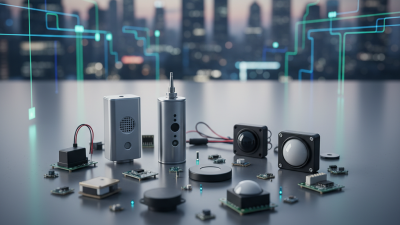
As the global market for Iot Sensorscontinues to grow and expand, more and more buyers are finding themselves looking towards China for innovation and reliability. Dr. Lisa Chen, who's pretty much recognized as an expert in IoT tech, mentioned that “China’s Iot Sensors really strike a nice balance between cutting-edge technology and affordability.” That really shows how China is uniquely positioned in the world of IoT sensors right now.
Over the past few years, China has definitely become a hotspot for developing some of the most advanced IoT Sensors out there. Companies like Huawei and Xiaomi are leading the charge, pushing new innovations all the time. Their products are pretty versatile, designed to cover a wide range of needs across different industries. But, honestly, navigating this market can be pretty overwhelming for international buyers. There are tons of options, but figuring out which ones are actually good quality and compatible can be a challenge.
So, if you're in the game, it’s essential to do more than just skim the specs. Understanding how you’re actually planning to use these sensors is key. Many IoT Sensors sound amazing in brochures but end up underperforming in real-world situations. Be cautious when choosing suppliers — working with experienced partners can really make a difference and help avoid headaches down the line. Taking this careful route means you're more likely to find sensors that fit your specific needs and work like a charm in your operations.

Overview of IoT Sensors Market in China
The IoT sensors market in China has seen rapid growth in recent years. With advancements in technology, these sensors are becoming more sophisticated. Factors like increased urbanization and industrial automation drive their demand in various sectors. The range of applications spans smart cities, healthcare, agriculture, and logistics. Each application presents unique challenges and opportunities.
China's approach to IoT sensors emphasizes quality and innovation. Local manufacturers focus on developing low-cost yet reliable sensors. However, domestic players face fierce competition. Global buyers should be aware that the market is evolving steadily. Recent investments in research and development indicate that improvement is underway. Buyers must assess long-term reliability over immediate cost benefits. There are instances of inconsistent quality, prompting a thorough evaluation process.
While the potential is enormous, some issues need addressing. Integration with existing systems can be challenging. Interoperability can pose significant hurdles for buyers. Solutions often require customization, which can be time-consuming. As the market matures, trustworthiness and quality assurance will become crucial factors. Understanding these dynamics will help global buyers make informed decisions.
Key Features of Top IoT Sensors for Global Buyers
When exploring the Types Of Sensors In Iot, global buyers should focus on several key features. Accuracy is critical. Sensors must reliably capture data, whether measuring temperature, humidity, or motion. A slight error can lead to significant consequences, especially in sensitive environments like health care or agriculture. Additionally, response time matters. Fast data transmission ensures timely actions based on sensor readings. Slow sensors can hinder operational efficiency.
Connectivity options are also essential. IoT sensors can utilize various protocols, such as Wi-Fi, Zigbee, or LoRaWAN. Buyers should evaluate which connectivity methods best suit their needs. Moreover, durability plays a role. Sensors often need to withstand harsh conditions, like extreme temperatures or humidity. A sensor's casing and materials can determine its longevity in challenging environments.
Cost is an area worth scrutinizing. Higher price tags do not always guarantee better performance. Some cost-effective sensors deliver great results. Potential buyers need to balance quality and budget. Furthermore, vendors vary in customer support and service. Reliable after-sales support ensures smooth operation and maintenance. A sensor with great features might fall short without adequate technical assistance.
Leading Manufacturers of IoT Sensors in China
China has become a prominent hub for IoT sensor manufacturing. Industry reports indicate that the IoT sensor market in China is expected to reach $6.3 billion by 2025, with a compound annual growth rate (CAGR) of over 20% from 2020 to 2025. This growth reflects the increasing demand for smart devices across various sectors, including healthcare, agriculture, and smart cities.
Several manufacturers are leading the charge in the Chinese IoT sensor landscape. The industry landscape reveals a mix of established firms and innovative startups. These manufacturers focus on developing cost-effective solutions, yet some may struggle with quality control. The diversity of products ranging from temperature sensors to environmental monitoring devices showcases advancements in technology. However, buyers must critically assess the reliability of these sensors, as varying standards can lead to inconsistent performance.
Despite the rapid advancements, many manufacturers still face challenges, especially regarding international standards compliance. Concerns over data security and sensor reliability persist. As global buyers navigate this dynamic market, thorough research is essential. The need for partnership with credible and experienced manufacturers ensures that buyers can make informed decisions.
Applications of IoT Sensors Across Various Industries
IoT sensors are transforming industries across China. These devices capture real-time data, enhancing decision-making in various sectors. For instance, in agriculture, moisture and temperature sensors help optimize crop conditions. This ensures better yield and efficient resource usage.
In manufacturing, IoT sensors monitor machinery health. They detect anomalies early, reducing downtime. Smart factories rely on these systems for predictive maintenance. They connect seamlessly to automated processes, enhancing productivity. However, implementing such technologies can be challenging. Companies need to assess their existing infrastructure.
For global buyers, understanding OEM Types Of Sensors In Iot is crucial. Not all sensors fit every situation. Ensure compatibility with existing systems to avoid disruptions.
Embracing IoT sensors boosts efficiency but requires careful planning. Assess your operational needs before purchasing. Explore multiple options to find the best fit for your requirements. The wrong choice could lead to inefficiencies and wasted resources.
Market Trends Shaping the Future of IoT Sensors in China
The IoT sensor market in China is rapidly evolving. Research from Statista indicates that the market is expected to grow at a CAGR of 27.7% from 2023 to 2030. This remarkable growth signifies an increased demand across various sectors. One significant trend is the integration of AI capabilities into IoT sensors. Smart devices equipped with AI can analyze data more efficiently, enabling real-time decision-making.
Additionally, the push for sustainability shapes the market. Companies are seeking more eco-friendly sensors. According to a report by Market Research Future, the green IoT sensor market is expected to reach $70 billion by 2025. This shift reflects a growing awareness of environmental issues. Nevertheless, challenges persist. Issues like data privacy and connectivity remain significant concerns for buyers.
Lastly, urbanization and smart city initiatives fuel the demand for advanced sensors. The rise of smart homes also contributes to this trend. A Deloitte study estimated that smart home devices could reach 500 million units in China by 2025. However, the inconsistent quality of sensors could pose risks. Buyers should be cautious and well-informed when selecting products in this dynamic landscape.
Top IoT Sensors in China for Global Buyers
Challenges Faced by Global Buyers When Sourcing from China
Sourcing IoT sensors from China presents unique challenges for global buyers. Understanding the complexity of supply chains is crucial. A report from Research and Markets highlights that about 45% of global IoT device manufacturers face difficulties in finding reliable suppliers in China. The diversity of components and technologies can overwhelm many buyers.
Logistical barriers also contribute to the struggle. Shipping delays often occur due to strict customs regulations. According to a recent survey, 30% of respondents reported significant delays affecting project timelines. This can lead to increased costs and frustration. Buyers must be prepared for these potential setbacks.
Tip: Establish clear communication with suppliers to address any concerns promptly. Regular updates can help mitigate delays.
Quality assurance is another critical area. Ensuring products meet specific standards can require extra effort. A study indicates that nearly 25% of imported IoT sensors do not meet safety certifications. Buyers should insist on detaiLED quality reports.
Tip: Consider performing on-site inspections or using third-party quality control services to ensure compliance.
Navigating these challenges effectively is essential for successful sourcing in the competitive landscape of Wholesale Types Of Sensors In Iot.
Recommendations for Selecting IoT Sensors for International Use
When selecting IoT sensors for international use, understanding local environments is crucial. Different countries have varying standards, technologies, and needs. For instance, agricultural sensors suitable for China may not perform effectively in Europe. Buyers should assess the operational context and environmental conditions before making decisions.
**Tips**: Consider the team’s technical expertise. Engaging professionals familiar with IoT sensor technologies can lead to more informed choices. Evaluate the adaptability of the sensors across different climates and industries.
Buyers should also examine certifications and compliance. Sensors must meet international quality standards to ensure reliability. Types Of Sensors In Iot Manufacturer can vary in functionality and design. This diversity offers options, but it also requires thorough evaluation to avoid compatibility issues down the line.
**Tips**: Make a checklist of essential features. Identify the specific features that suit your application, whether detecting temperature or monitoring humidity. Taking time to analyze each sensor's capabilities is vital for avoiding future complications.
FAQS
: Urbanization and industrial automation are key factors driving demand across various sectors.
Integration with existing systems can be complex and time-consuming due to customization needs.
Quality assurance is crucial, as inconsistent quality can lead to performance issues.
Applications include smart cities, healthcare, agriculture, and logistics, each with unique needs.
Many local manufacturers focus on cost-effective solutions but face fierce competition regarding quality.
Buyers should assess long-term reliability rather than just immediate cost savings.
Yes, data security and sensor reliability remain significant concerns for global buyers.
The market is projected to reach $6.3 billion by 2025, with a CAGR of over 20%.
Different manufacturing standards can lead to inconsistent sensor reliability and performance.
Conducting thorough research and partnering with experienced manufacturers can lead to more informed choices.
Conclusion
The IoT sensors market in China is rapidly expanding, offering a diverse range of products tailored for global buyers. Key features of leading IoT sensors include enhanced connectivity, energy efficiency, and advanced data analytics capabilities, making them suitable for various applications across industries such as healthcare, agriculture, and smart cities. However, global buyers face challenges such as quality control, regulatory compliance, and supply chain logistics when sourcing these sensors from China.
Market trends indicate a growing demand for innovative IoT sensors, driven by advancements in technology and increased adoption of smart systems. To navigate this landscape effectively, international buyers are advised to carefully assess manufacturers, prioritize suppliers with a proven track record, and stay informed about market dynamics to ensure optimal selection for their specific needs in IoT applications.