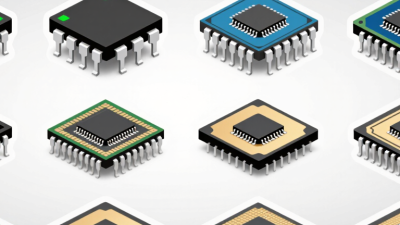
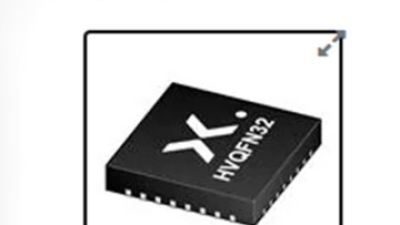
So, China’s Digital Integrated Circuitssupply chain includes foundries, design houses, and packaging specialists. In this guide, we'll take a quick look at some of the big names in that space—like Semiconductor Manufacturing International Corporation, Hua Hong Semiconductor, GigaDevice Semiconductor, and UNISOC. Each company’s serving different application needs, you know—anything from consumer electronics and automotive systems to industrial control equipment. It really varies.
When you're sizing up a supplier, don't just rely on revenue rankings. That only tells part of the story. You'll want to compare the stuff that really matters: process technology, wafer capacity, yield performance, packaging options, quality systems, and how stable their delivery is. Semiconductor Manufacturing International Corporation, for instance, offers broad foundry capabilities across both mature and advanced process platforms. And Hua Hong Semiconductor? It's known for specialty processes, especially embedded non-volatile Memory and power-related technologies. GigaDevice Semiconductor is all about memory and microcontroller products, while UNISOC builds chip platforms for mobile and connected devices. And honestly? The little details really do matter.
Honestly, it pays to double-check what a supplier tells you—compare it with the technical datasheets, product qualification reports, and customer references. Things like where the factory is, how long samples take, the level of engineering support, and how responsive they are after the sale can affect a project just as much as the chip specs themselves. And keep in mind that public info doesn’t always show current utilization rates or what the real production capacity looks like. Rankings can shift fast, too—especially when market demand, export controls, or investment plans change. So, this intro doesn't try to crown one permanent winner. Instead, it gives you a practical framework for comparing China's top Digital Integrated Circuits suppliers with a bit more confidence—while keeping in mind that what actually fits depends on your design requirements, production volume, budget, and risk tolerance. Mistakes can still happen, of course, especially when company disclosures are limited or translated inconsistently.
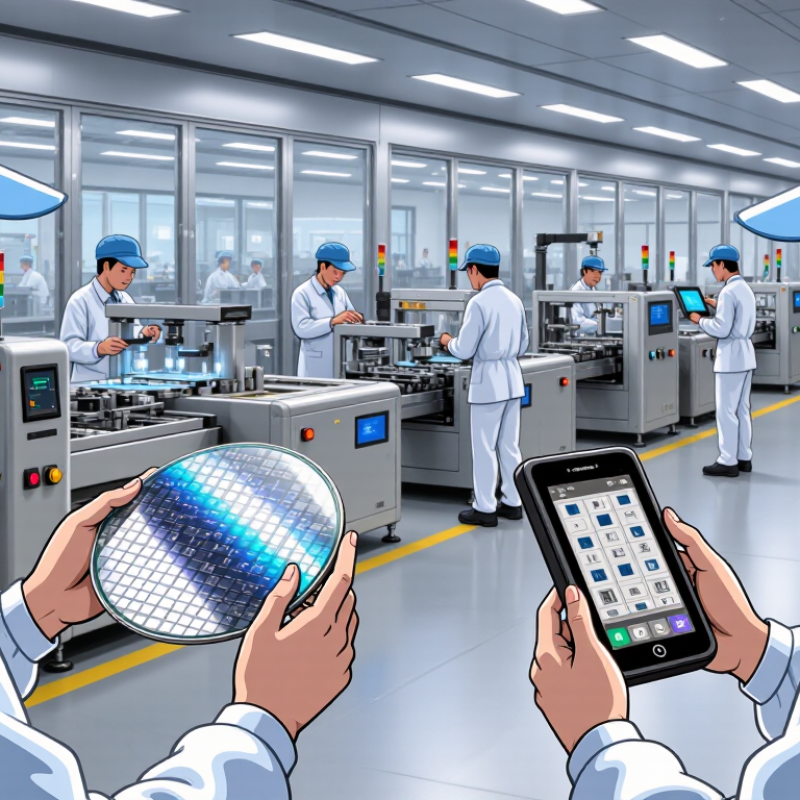
China’s digital IC landscape is large, diverse, and still difficult to measure precisely. The China Semiconductor Industry Association reported 3,626 IC design firms in 2023. These companies develop processors, memory controllers, connectivity chips, display drivers, and industrial logic devices. Many operate with small teams and narrow product portfolios. Their offices may serve local factories, medical equipment makers, or vehicle electronics suppliers.
The number matters, but it needs careful reading. Some firms may be counted through different business structures or overlapping categories. This creates room for error. CSIA industry statistics also showed China’s IC design sector remained a major part of the domestic integrated circuit market in 2023. Meanwhile, the World Semiconductor Trade Statistics forecast global semiconductor growth of 16.0% in 2024, after an 8.2% decline in 2023. That recovery can improve demand, but it does not guarantee stable profits. Engineering capability still depends on verification, process access, packaging, and long-term customer testing.
Tips: When evaluating a Chinese digital IC supplier, check tape-out history, documented shipments, quality systems, and failure-analysis records. Ask for measurable evidence, not only product brochures. Technical references such as Rabaey Digital Integrated Circuits can help buyers compare timing, power, and circuit-design fundamentals. Field experience suggests one overlooked detail: support response after delivery often matters more than a promising specification.
China Top Digital Integrated Circuits Suppliers?
China’s digital IC suppliers cover processors, microcontrollers, memory interfaces, display drivers, connectivity chips, and automotive logic. Product selection should match the actual workload, not only the advertised specification. A control board may need stable 110nm or 55nm logic, while edge computing equipment may require 28nm performance and lower power consumption. Engineers should check operating temperature, package type, voltage range, and documented lifecycle support.
Process node affects cost, capacity, and delivery risk. Mature nodes often provide stronger supply continuity and easier qualification. Advanced nodes can improve density, but their availability may vary by application and production schedule. Wafer traceability matters. Request lot records, electrical test limits, reliability reports, and representative samples before approving a supplier. Public information is sometimes incomplete, and technical documents may not reflect the newest production status. That deserves caution.
Business models also differ. Fabless suppliers design chips and depend on external manufacturing. Integrated manufacturers control more production stages, while foundries provide wafer processing for design companies. Packaging and testing partners may handle final assembly, inspection, and shipment. Each model creates different communication and quality risks. In practical sourcing work, I would compare engineering response time, change-notification procedures, failure-analysis capability, and second-source options. Price is useful, but it rarely explains the full procurement risk. Mistakes still happen when buyers treat a lower quotation as proof of better value.
China’s digital integrated circuit supply chain is gaining attention from electronics manufacturers. One leading mainland Chinese foundry reported US$6.32 billion in 2023 revenue. That figure reflects substantial demand for mature and advanced production services.
Its 14nm FinFET process is an important technical milestone. FinFET transistors improve control over current leakage and switching performance. This node can support processors, networking chips, automotive electronics, and other high-density designs. Production reliability matters as much as transistor size. Customers usually examine yield trends, wafer capacity, testing support, and delivery consistency before choosing a supplier. The cleanroom environment also requires strict process control, from lithography alignment to metal-layer inspection.
Results can vary by product. A process that performs well for one chip may need adjustment for another. That is where engineering experience becomes valuable. Design teams must review power targets, thermal limits, packaging choices, and long-term supply plans. Revenue alone does not prove technical leadership. It is useful evidence, but not the whole picture. Public information may also leave gaps around yield, utilization, and customer concentration. Careful buyers should verify those details through technical audits and production samples. The path is promising, but not effortless.
China’s digital integrated-circuit supply chain is gaining scale through mature-node manufacturing. The featured foundry reported approximately US$2.3 billion in 2023 revenue, according to its annual financial disclosure. That figure reflects strong demand for power-management chips, display drivers, microcontrollers, and automotive components.
Its 12-inch foundry capacity is strategically important. Larger wafers produce more dies per run and can reduce unit costs when yields remain stable. A 2024 global foundry report estimated mature processes would represent nearly 70% of worldwide foundry capacity. That supports demand beyond smartphone processors. Industrial electronics, vehicles, and energy systems need reliable chips too. The 12-inch model also improves automation and process consistency, especially across high-volume production lines.
For OEM Rabaey Digital Integrated Circuits sourcing, revenue alone should not decide supplier selection. Buyers should examine monthly wafer output, utilization, defect rates, process certifications, and delivery resilience. A cleanroom may look impressive, yet unused capacity creates financial pressure. This is the uncomfortable point. Expansion does not automatically prove competitiveness. Industry equipment-spending data for 2024 also showed continued investment in fabrication capacity, but utilization remains uneven across applications. Technical audits, sample testing, and transparent capacity records therefore matter more than promotional claims.
Company-neutral reference table covering market scale, wafer manufacturing specifications, process capabilities, and operating indicators relevant to digital integrated-circuit foundries in China.
| Data Dimension | Reference Value | Unit / Definition | Industry Relevance | Reference Basis |
|---|---|---|---|---|
| 2023 Revenue Benchmark | US$2.3 billion | Annual revenue | Represents the scale of a major China-based specialty foundry operating in the digital integrated-circuit supply chain. | Public 2023 company-reporting benchmark; presented without company identification. |
| 12-Inch Wafer Diameter | 300 mm | Nominal wafer diameter | Larger wafers provide more die per wafer and can improve manufacturing efficiency for suitable products. | International semiconductor manufacturing standard. |
| 8-Inch Wafer Diameter | 200 mm | Nominal wafer diameter | Widely used for mature-node, analog, power-management, embedded, and specialty integrated circuits. | International semiconductor manufacturing standard. |
| 12-Inch Foundry Capability | Available | 300 mm wafer production | Indicates the ability to support higher-throughput production for selected digital and specialty products. | Publicly reported manufacturing capability in China’s foundry sector. |
| Mature-Node Process Range | Approximately 55 nm–180 nm | Process technology range | These nodes remain important for display drivers, connectivity chips, microcontrollers, consumer electronics, and industrial applications. | Commonly disclosed process range across China’s specialty-foundry market. |
| Advanced Mature-Node Segment | Approximately 40 nm–65 nm | Process technology segment | Supports higher-density digital logic, embedded non-volatile memory, display-related chips, and connectivity devices. | Public industry process-node classification. |
| China Integrated-Circuit Output, 2023 | Approximately 351.4 billion units | Finished integrated-circuit units | Shows the scale of China’s broader integrated-circuit manufacturing ecosystem, including both domestic and foreign-invested production. | China National Bureau of Statistics, 2023 industrial output data. |
| Global Semiconductor Sales, 2023 | Approximately US$526.9 billion | Worldwide annual sales | Provides a global market context for evaluating the scale and growth potential of digital integrated-circuit suppliers. | World Semiconductor Trade Statistics, 2023 market estimate. |
| Primary Customer Segments | Consumer, industrial, automotive, communications, and display | Application categories | Diversified end markets can reduce dependence on a single product cycle and support stable foundry utilization. | General segmentation used in semiconductor industry analysis. |
| Key Capacity Indicator | Monthly wafer starts | Wafers started per month, commonly reported in 8-inch-equivalent units | Enables comparison of manufacturing scale across facilities using different wafer diameters. | Standard foundry capacity-reporting convention. |
| Main Competitive Factors | Yield, utilization, process stability, cycle time, and customer qualification | Operational and technical factors | These factors influence profitability, delivery reliability, and long-term customer retention more directly than nominal capacity alone. | Standard semiconductor foundry evaluation criteria. |
China’s digital integrated circuit market is gaining strength through memory and microcontroller demand. One leading domestic supplier reported RMB5.7 billion in 2023 revenue from NOR Flash, DRAM, and MCUs. This figure signals meaningful commercial scale, not merely laboratory progress.
NOR Flash supports boot code and firmware storage in vehicles, meters, and industrial equipment. DRAM handles fast working data, while MCUs control motors, sensors, and power systems. These products serve different timing and reliability needs. Buyers should examine endurance, operating temperature, package options, and long-term supply records. A low unit price can hide testing or compatibility costs.
For teams researching Wholesale Rabaey Digital Integrated Circuits, revenue data offers useful market context, but it should not replace technical checks. I would request sample lots, documented qualification results, and failure-rate information before making a purchasing decision. That is practical experience, not a guarantee. Revenue alone does not prove every product is mature. Some specifications may also vary between batches or application conditions. Careful comparisons remain necessary, especially for industrial and automotive designs where a small memory error can stop a complete system.
China’s digital integrated circuit sector is gaining attention through memory interface technology. One leading domestic supplier reported RMB2.3 billion in 2023 revenue from memory interface ICs. This figure shows strong demand for components that connect processors, memory modules, and high-speed data channels.
Memory interface ICs are small, but their role is critical. They help manage signal timing, improve data integrity, and support reliable server performance. In a modern data center, these chips operate beside dense memory modules and powerful processors. Heat, bandwidth, and latency must remain under control. That requires careful circuit design and disciplined validation.
For buyers evaluating OEM Digital Integrated Circuits, revenue alone is not enough. Engineering teams should examine process maturity, product roadmaps, failure rates, and technical support. Compatibility testing also matters across different memory generations and server platforms. The RMB2.3 billion figure is meaningful, but its scope should be checked against audited financial disclosures and reporting definitions. That detail is easy to overlook.
The sector still faces pressure. Advanced manufacturing capacity remains expensive, and international supply chains can shift quickly. Some domestic suppliers may need deeper software tools and broader overseas support. Progress is visible, though not perfectly uniform. Cost advantages do not automatically guarantee stable field performance. Careful sampling is essential.
Selecting China’s top digital integrated circuit suppliers requires more than comparing quoted prices. Review verified wafer capacity, equipment uptime, and allocation flexibility. Capacity should match your forecast, not only the supplier’s best month. Ask for yield data by product family, process node, and package type. A high average yield can hide unstable performance on a new design.
Intellectual property ownership deserves careful checking. Request patent ownership records, license boundaries, design security controls, and engineering change procedures. Confirm whether the supplier supports mature nodes or advanced nodes that your product actually needs. In practice, factory visits and production records reveal more than polished presentations. A glossy capacity slide can mislead. I would also examine export exposure, including overseas equipment, materials, customers, and shipping routes. Legal screening should cover applicable trade rules, end-use controls, data handling, and documentation quality. This area is easy to underestimate.
Tips: Build a weighted scorecard before requesting quotations. Give yield and IP control higher weight than marketing claims. Ask for three years of capacity and quality records. Compare promised lead times with actual delivery history. Keep a second source qualified, even when the primary supplier appears reliable. No evaluation is perfect; local support, communication gaps, and sudden policy changes can still affect production.
The OL2381AHN/C0B is a highly integrated, single-chip RF transceiver designed for wireless communication below 1 GHz. It supports the universal ISM bands at 315 MHz, 434 MHz, 868 MHz, and 915 MHz, allowing developers to adapt the same solution to different regional requirements. With output power of up to 11 dBm and a maximum data rate of 20 kbps, it is well suited to reliable, low-speed data transmission over extended distances. Its integrated design can also help simplify circuit layouts and reduce the number of external components.
Designed with energy efficiency in mind, the transceiver typically consumes about 14 mA during transmission and 16.5 mA during reception. This makes it a practical choice for battery-powered equipment where operating time and compact design are important. Typical applications include wireless sensors, remote monitoring devices, smart metering systems, home automation equipment, industrial control nodes, and low-power alarm systems. Support for several sub-1 GHz frequency bands enables flexible deployment in products operating across different markets, while the moderate data rate is appropriate for transmitting status information, measurement results, control commands, and other small data packets.
Their products include processors, microcontrollers, memory interfaces, display drivers, connectivity chips, and automotive logic.
Match the node to the workload. Control boards may use stable 110nm or 55nm logic. Edge systems may need 28nm performance.
Not always. Advanced nodes can improve density and power efficiency. Mature nodes may offer steadier supply and easier qualification.
Review operating temperature, package type, voltage range, and lifecycle support. Request samples, lot records, electrical limits, and reliability reports.
Traceability connects each chip to production records. It supports quality reviews, failure analysis, and shipment investigations. Missing records create uncertainty.
Fabless suppliers rely on external manufacturing. Integrated manufacturers control more stages. Foundries process wafers for design companies. Packaging partners complete assembly and testing.
No. Price may hide weak support, limited testing, or supply interruptions. Compare response time, change notices, failure analysis, and backup sources.
Memory interface chips manage signal timing and data integrity. One domestic supplier reported RMB2.3 billion in 2023 revenue from this category.
No. Check audited disclosures, failure rates, product roadmaps, compatibility, and technical support. Revenue scope can be unclear. That deserves review.
Advanced manufacturing is costly, and supply conditions can shift quickly. Software tools and overseas support may still be uneven. Progress is real, but not perfectly uniform.
China’s Digital Integrated Circuits industry has developed into a broad and increasingly specialized ecosystem, supported by thousands of design firms and a growing range of domestic manufacturing capabilities. Suppliers serve markets including memory, microcontrollers, interface chips, display drivers, communications, and consumer electronics. Their competitiveness varies according to product focus, process technology, wafer capacity, packaging resources, and business model, from fabless design to integrated manufacturing and foundry services.
Leading suppliers demonstrate strengths in mature-node production, advanced FinFET development, 12-inch wafer capacity, NOR Flash, DRAM, MCU, and memory-interface solutions. When evaluating potential partners, buyers should consider production scale, yield stability, technology-node suitability, intellectual-property resources, quality systems, delivery reliability, and exposure to export restrictions or other supply-chain risks. A balanced assessment of technical capability, financial performance, application experience, and long-term capacity planning can help customers select reliable suppliers for different project requirements.