Whatsapp:8613480819877
Leave Your Message
0%

More and more global buyers are turning to China for RF Capacitors—the kind used in communications, aerospace, automotive, and industrial electronics. There’s a good reason for that: China’s manufacturing base gives you broad capacity, competitive pricing, and some pretty specialized ceramic technologies. But here’s the catch—supplier quality isn’t uniform. A rock-bottom quote can sometimes hide limited testing, inconsistent materials, or technical support that’s, well, not really there.

So reliable sourcing takes more than skimming a product catalog. You need to dig into dielectric materials, capacitance tolerance, voltage ratings, Q factor, and self-resonant performance. Production controls matter too. Ask for traceable inspection records, sample test data, and clear failure-analysis procedures. Factory audits often reveal things websites conveniently leave out.

Practical evidence matters.

This guide takes a look at China’s leading RF capacitor manufacturers for global buyers. We focus on engineering capability, customization, export experience, and quality consistency. We also consider lead times, packaging protection, communication efficiency, and after-sales response. Those things really start to matter when Capacitors are running inside compact, high-frequency assemblies.

A polished datasheet isn’t proof.

Even experienced suppliers can miss how a buyer actually operates the part. Temperature cycling, vibration, humidity, and assembly processes can all shift performance. So sample validation is still a must before big-volume purchasing. And buyers should compare several manufacturers—not just jump at the first tempting offer.

The strongest suppliers tend to explain technical limits clearly. They won’t promise perfect results without testing. That’s why this guide balances manufacturer strengths with practical cautions. It’s not trying to crown a universal winner. It’s meant to help global purchasing teams build a shorter, safer, and more evidence-based supplier list.
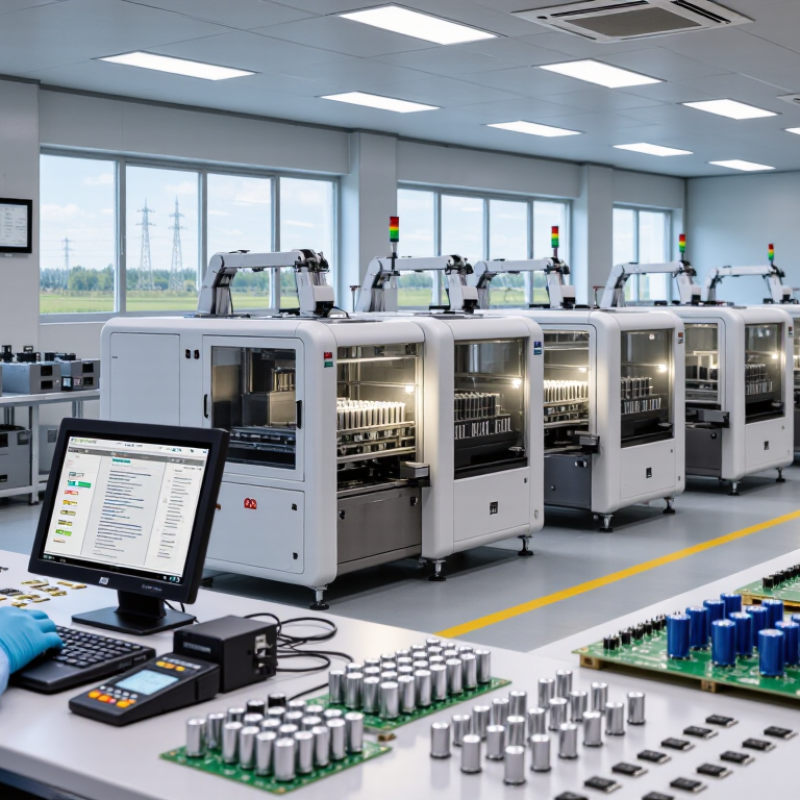
China Top RF Capacitors Manufacturers for Global Buyers

RF Capacitors: Definition, Structure, and Core Functions

RF Capacitors: Definition, Structure, and Core Functions

Rf Capacitors are passive components designed to control high-frequency signals, usually from megahertz to gigahertz ranges. They store electrical charge briefly, then release it as circuit conditions change. UnlikeSuper Capacitors, they are not built for bulk energy storage. Their value lies in low loss, stable capacitance, and predictable behavior at high frequencies.

A typical RF capacitor contains ceramic dielectric layers, internal metal electrodes, and conductive end terminations. Multilayer construction creates high capacitance in a small package. C0G or NP0 ceramics are often selected when temperature stability matters. Engineers also check quality factor, equivalent series resistance, self-resonant frequency, and parasitic inductance. A tiny lead or pad can become significant above 1 GHz.

Grand View Research estimated the global ceramic capacitor market at roughly USD 13 billion in 2023, with continued growth expected through 2030. Industry reports differ because RF and general-purpose capacitors are often counted separately. In practical circuits, RF capacitors support impedance matching, signal coupling, DC blocking, filtering, and supply decoupling. Placement matters. A capacitor mounted several millimeters from an active device may perform worse than its datasheet suggests. That detail is easy to overlook. Engineers should validate the part on the actual PCB, under temperature, frequency, and voltage conditions. Even careful designs can reveal unexpected losses during testing.

Key Types of RF Capacitors Made by Chinese Manufacturers

Chinese manufacturers produce several RF capacitor types for wireless infrastructure, test equipment, automotive radar, and satellite electronics. Multilayer ceramic capacitors remain common because their compact bodies support high-frequency mounting. C0G/NP0 dielectric versions offer stable capacitance across temperature changes. They are suitable for matching networks and filters. Class 2 ceramics provide higher capacitance, but their voltage and temperature behavior requires closer evaluation.

Single-layer ceramic capacitorsserve high-Q circuits where low loss matters. Porcelain and mica designs can support demanding RF environments, including transmitters with visible heat near the Connector. Variable and trimmer capacitors help engineers tune antennas, oscillators, and impedance networks during production. Feedthrough capacitors are also used for noise suppression at power and signal entry points.

Small parts matter. The 2024 Grand View Research ceramic capacitor report estimated the global ceramic capacitor market at more than USD 15 billion in 2023, reflecting strong demand for compact passive components. Yole Group’s 2024 RF industry analysis also identified growing pressure from 5G infrastructure and higher-frequency systems. These reports do not isolate Chinese RF capacitor output, so direct comparisons can mislead.

Buyers should request Q-factor curves, ESR data, thermal-aging results, and lot traceability. A datasheet alone is not enough. In practical audits, solder geometry and test fixtures can change measured performance. That detail is easy to overlook.

Technical Standards for Evaluating RF Capacitor Quality

For global buyers, RF capacitor quality starts with measurable electrical behavior, not a polished datasheet. IEC 60384-1 defines general requirements for fixed capacitors, while IEC 60384-21 and IEC 60384-22 address multilayer ceramic types. Buyers should verify capacitance tolerance, rated voltage, insulation resistance, ESR, and dissipation factor. At 1 GHz, a small ESR increase can reduce circuit efficiency. That detail matters.

Professional testing should include self-resonant frequency, quality factor, temperature coefficient, and RF power handling. A 2024 report from Grand View Research estimated the global ceramic capacitor market at over USD 13 billion, with high-frequency electronics supporting continued demand. Market growth does not prove quality. Each supplier should provide test conditions, equipment accuracy, and calibration records. Ask for samples from different production lots.

Look closely at mechanical reliability. IEC qualification commonly includes temperature cycling, humidity exposure, voltage testing, and endurance testing. For surface-mount parts, solderability and termination strength deserve equal attention. Guitar Capacitors follow different performance priorities, so their specifications should not be used for RF selection. I would also question unusually tight tolerances without supporting data. It may be an honest mistake, or a testing gap. Experienced buyers should compare incoming inspection results against the supplier’s certificate, especially after storage, shipment, and reflow.

China Top RF Capacitors Manufacturers for Global Buyers - Technical Standards for Evaluating RF Capacitor Quality

Evaluation Dimension Key Test or Metric Common Technical Reference Practical Acceptance Guidance Importance for RF Applications
Capacitance Value and Tolerance Measured capacitance at the specified test frequency, temperature, and AC level IEC 60384-1; IEC 60384-8 for ceramic fixed capacitors The measured value should remain within the ordered tolerance, such as ±0.1 pF, ±0.25 pF, ±1%, or ±5%, depending on the component type Controls impedance, matching-network accuracy, filter response, and resonant frequency
Dielectric Class and Temperature Coefficient Temperature coefficient, capacitance change over temperature, and dielectric stability IEC 60384-8; IEC 60068 environmental test methods where applicable Class 1 ceramics such as C0G/NP0 are normally preferred for stable RF circuits; verify the specified temperature range and capacitance drift Reduces frequency drift in oscillators, filters, antennas, and impedance-matching networks
Quality Factor and Dissipation Factor Q factor or dissipation factor measured at the intended RF frequency Manufacturer RF test method; IEC 60384-1 electrical measurement principles For high-Q RF capacitors, compare results at the actual operating frequency; Q values above 500 or 1,000 may be required for some high-frequency designs, but no single value applies to every application A higher Q generally means lower RF loss and improved circuit efficiency
Equivalent Series Resistance and Impedance ESR, impedance magnitude, and phase angle across the operating-frequency range RF impedance-analyzer or vector-network-analyzer procedure defined by the manufacturer Use a frequency-specific limit; lower ESR is normally preferred, but the acceptable value depends on capacitance, package, frequency, and current Determines insertion loss, heating, voltage ripple, and matching-network performance
Self-Resonant Frequency Frequency at which the component transitions from capacitive to inductive behavior Vector network analyzer measurement using a defined fixture and calibration method The self-resonant frequency should be comfortably above the intended operating frequency; request measured S-parameters or impedance curves for critical designs A capacitor may lose effective capacitance at frequencies above its self-resonance
Rated Voltage and RF Voltage Stress DC rated voltage, peak RF voltage, dielectric breakdown, and voltage derating IEC 60384-1; application-specific RF voltage and power calculations The applied voltage should remain below the rated limit with an engineering safety margin; RF peak voltage and temperature rise must also be considered Prevents dielectric failure, arcing, capacitance shift, and accelerated aging
Insulation Resistance and Leakage Current Insulation resistance after charging and leakage-current measurement at the specified voltage IEC 60384-1 and the applicable product specification The result should meet the product specification; high insulation resistance is particularly important for DC-blocking and bias-isolation circuits Limits unwanted DC loss and protects sensitive RF bias networks
Insertion Loss and S-Parameters S21 insertion loss, S11 return loss, and impedance over the specified frequency band Customer-defined VNA method; calibrated fixture and traceable reference standards Require test data at the actual frequency band, mounting pattern, and power level; fixture design should be documented Provides a realistic view of component behavior after package and mounting effects are included
Power Handling and Temperature Rise RF power capability, current capability, and temperature rise under continuous operation Manufacturer application data; IEC 60384 reliability and endurance principles Evaluate at the actual frequency, duty cycle, ambient temperature, and cooling condition; do not rely only on a DC voltage rating RF dielectric and conductor losses can create heating even when DC current is very low
Aging and Long-Term Stability Capacitance change, Q change, insulation resistance, and leakage after endurance testing IEC 60384-1 endurance tests; product-specific reliability plan Request pre-test and post-test data, test duration, applied voltage, temperature, and failure criteria; Class 1 ceramic dielectrics generally offer strong stability Ensures repeatable RF tuning throughout the product service life
Environmental Reliability Temperature cycling, damp heat, vibration, mechanical shock, and high-temperature exposure IEC 60068 series; IEC 60384 reliability tests where applicable Choose test severity according to the end-use environment and verify that electrical parameters remain within specification after testing Detects cracking, delamination, moisture ingress, solder-joint weakness, and parameter drift
Solderability and Assembly Compatibility Solder wetting, resistance to soldering heat, termination adhesion, and reflow compatibility IEC 60068-2-20; IEC 60068-2-58; applicable assembly process requirements Confirm compatibility with lead-free reflow or wave soldering, peak temperature, dwell time, pad geometry, and moisture handling requirements Poor solderability or excessive thermal stress can cause intermittent RF performance and mechanical failure
Dimensional and Termination Quality Case dimensions, terminal geometry, coplanarity, plating thickness, and visual defects Applicable IEC product specification; customer drawing and incoming-inspection plan Dimensions and termination finish should conform to the approved drawing; inspect for cracks, chips, exposed ceramic, and plating discontinuities Controls assembly yield, parasitic inductance, mechanical fit, and repeatability between production lots
Traceability and Quality Documentation Lot identification, certificate of conformance, test records, change notification, and material declarations ISO 9001 quality-management practices; customer-specific documentation requirements Require lot-level traceability, controlled drawings, inspection records, and formal notification before changes to materials, process, or production location Supports consistent supply, root-cause analysis, regulatory compliance, and reliable qualification of alternative lots

Note: Acceptance limits must be agreed with the supplier for the exact capacitance value, package, dielectric, operating frequency, RF power, temperature range, and mounting configuration. Generic standards provide test principles, while the approved product specification defines the final pass/fail criteria.

Leading China-Based RF Capacitor Manufacturing Regions

China Top RF Capacitors Manufacturers for Global Buyers

China’s leading RF capacitor regions serve different engineering needs. Guangdong, especially Shenzhen and Dongguan, offers fast prototyping, dense PCB supply chains, and flexible export support. Jiangsu, including Suzhou and Wuxi, is stronger in automated ceramic processing, testing, and stable volume production. Zhejiang adds capable precision-machining and passive-component suppliers around Ningbo and Hangzhou.

Mordor Intelligence’s 2024 RF components research expects the market to grow at roughly 6% annually through the decade, with Asia-Pacific remaining the largest production and consumption base. Grand View Research also identifies telecommunications, automotive electronics, and aerospace systems as major demand areas. These figures explain China’s regional specialization, but they do not guarantee equal quality. A factory’s dielectric formulation, electrode control, and high-frequency test method matter more than its location. That point is easy to overlook.

Tips: Request S-parameter data, voltage derating curves, and lot traceability. Compare Q factor at your actual operating frequency, not only at 1 MHz. Ask for humidity, thermal-shock, and soldering test results. Guangdong may shorten communication cycles, while Jiangsu may offer stronger process consistency. Still, every supplier deserves an on-site or third-party audit. Reported capacity can be impressive. Real yield may be less clear.

How Global Buyers Can Select Suitable RF Capacitor Suppliers

Global buyers selecting Rf Capacitors should examine more than price and catalog range. The supplier must provide impedance curves, quality-factor data, equivalent series resistance, and self-resonant frequency. These details matter at operating frequencies where a small parasitic inductance can change circuit performance. The IEC 60384 series offers a useful reference for fixed capacitors, including electrical testing and reliability expectations.

Market evidence also supports stricter supplier screening. Grand View Research estimated the global radio-frequency components market at about USD 19 billion in 2023, with continued growth driven by wireless infrastructure and connected devices. This expansion increases sourcing choices, but it may also increase inconsistent specifications. Ask for lot-level inspection records, traceability, and samples from current production, not only engineering prototypes.

Check the supplier’s thermal testing range, humidity results, solderability, and change-control process. A component rated for 125°C may still fail when mounting stress, voltage peaks, and cooling limits combine. Request test conditions in writing. Compare the same capacitance at the same frequency and temperature. Otherwise, the comparison is weak. An ISO 9001 certificate helps, but it does not replace factory audits or independent verification. I would also review delivery history, corrective-action records, and technical response times. A polished datasheet can hide gaps. One practical warning: some buyers approve a supplier after one successful batch, then discover unstable dielectric performance later. Supplier selection should remain a continuing engineering decision.

Certification, Customization, and Export Support for International Buyers

China Top RF Capacitors Manufacturers for Global Buyers

International buyers often evaluate RF capacitors through documents, samples, and factory communication. Reliable manufacturers should provide traceable test records, material declarations, and clear production controls. Certification may include ISO 9001 systems, RoHS compliance, REACH information, and applicable safety reports. However, certificates should match the exact product and production site. A generic file is not enough.

Customization usually begins with operating conditions, not a catalogue number. Buyers may specify capacitance, voltage, tolerance, temperature range, package size, and high-frequency performance. Engineers can review circuit drawings and recommend suitable dielectric materials or terminal designs. Some projects may also compare Paper In Oil Capacitors for specialized insulation and stability requirements. Prototype samples should be tested under realistic temperature, vibration, and frequency conditions. Small details matter. A loose terminal can create costly field failures.

Export support should cover commercial invoices, packing lists, certificates of origin, product labels, and protective packaging. Moisture barriers and shock-resistant cartons help protect delicate components during long-distance transport. Experienced teams can confirm lead times, minimum order quantities, and inspection points before shipment. Communication is not always perfect, especially across time zones. That weakness should be acknowledged and controlled with written specifications, approval samples, and regular production updates. A dependable supplier explains limitations instead of promising every performance target.

FAQS

What is an RF capacitor?

An RF capacitor controls high-frequency electrical signals, usually from megahertz to gigahertz ranges. It stores charge briefly. It is not intended for bulk energy storage.

What materials are commonly used inside RF capacitors?

Many RF capacitors use ceramic dielectric layers, metal electrodes, and conductive end terminations. Multilayer construction provides high capacitance in a small package. Temperature stability often influences material selection.

Which specifications matter at high frequencies?

Engineers examine capacitance, tolerance, quality factor, equivalent series resistance, and self-resonant frequency. Parasitic inductance also matters. A tiny lead can become significant above 1 GHz.

What functions can RF capacitors perform?

They support impedance matching, signal coupling, DC blocking, filtering, and supply decoupling. Their function depends on the circuit position. Placement is critical.

Why does PCB placement affect performance?

A capacitor several millimeters from an active device may perform worse than expected. Trace length adds unwanted inductance. Datasheets cannot fully represent every PCB layout.

How should engineers validate an RF capacitor?

Test the actual part on the intended PCB. Check temperature, frequency, voltage, and vibration conditions. A careful design can still surprise you.

What documents should international buyers request?

Buyers should request traceable test records, material declarations, production controls, and applicable compliance documents. Certificates must match the exact product and factory. A generic file is not enough.

How can buyers manage customization and shipping risks?

Define capacitance, voltage, tolerance, temperature range, package size, and high-frequency targets. Approve samples before production. Use moisture barriers and shock-resistant cartons during transport.

How can communication problems be reduced during international orders?

Use written specifications, approval samples, inspection points, and regular production updates. Confirm lead times and minimum quantities early. Communication is not always perfect. That weakness needs control.

Conclusion

Rf Capacitors are essential passive components used in radio-frequency communication, wireless systems, radar, medical equipment, and other high-frequency applications. Their structure typically combines carefully selected dielectric materials, conductive electrodes, and protective packaging to provide stable capacitance, low loss, high insulation resistance, and reliable performance under demanding conditions. Chinese manufacturers produce various types, including ceramic, multilayer, high-voltage, surface-mount, and customized RF capacitors, serving different frequency, power, size, and environmental requirements.

Global buyers should evaluate suppliers through key technical standards such as capacitance tolerance, quality factor, equivalent series resistance, temperature stability, voltage rating, aging performance, and consistency between batches. Major production regions in China offer strong manufacturing networks, material access, engineering resources, and export infrastructure. When selecting a supplier, buyers should review technical capability, quality-control systems, production capacity, certifications, customization services, sample support, packaging, lead times, and international logistics. Reliable suppliers should also provide clear documentation, testing reports, compliance assistance, and responsive after-sales support for smooth global procurement.
Lila

Lila

Lila is a distinguished marketing professional at Huasheng Boye (Shenzhen) Technology Co., Ltd., where she showcases her extensive expertise in the tech industry. With a keen understanding of the company's innovative products, Lila plays a pivotal role in enhancing the brand's visibility through......
Previous Top 10 TTL Integrated Circuits for Global Buyers