China’s TE Connectors market? These days it’s pretty much a go-to sourcing base for automotive, consumer electronics, industrial equipment, and communication systems. The top manufacturers don’t just get by—they compete on things like terminal precision, stable plating, automated assembly, and delivery you can actually count on. And yeah, a connector can look tiny, but one loose crimp? That’s enough to stop an entire vehicle harness.
So, this introduction looks at ten manufacturers that stand out — names like TE Connectivity China, Luxshare Precision, AVIC Jonhon Technology, Molex China, and Amphenol. When choosing them, I weighed things like production capacity, how deep their engineering goes, quality systems, export experience, and customer support. Honestly, factory audits, sample testing, and traceable material records count for more than a slick website. It's the little things that matter.
So, Terrence Curtin, president and CEO of TE Connectivity, described the company’s mission like this: “We are a global industrial technology leader creating a safer, sustainable, productive, and connected future.” And honestly? That idea gives us a pretty useful way to look at TE Connectors suppliers. Because at the end of the day, reliable products should support safety, efficiency, and a long service life.
Still, let’s be real—no ranking is perfect. A big factory might not be the right fit for a small custom order. And a cheaper price? Sometimes it just hides tooling delays, uneven plating, or barely any engineering help. So before locking in a partner, buyers should really compare the drawings, tolerance data, test reports, and production samples. That’s why this overview treats “top” as a practical call, not some absolute title. It points you toward manufacturers that might be worth a closer look. That said, things like regional capabilities and what the application actually needs can still shift the final call.
China’s TE connector market has grown through dense supplier networks and strong electronics manufacturing demand. The leading ten manufacturers are not defined by size alone. They compete through tooling accuracy, stable materials, and dependable production control.
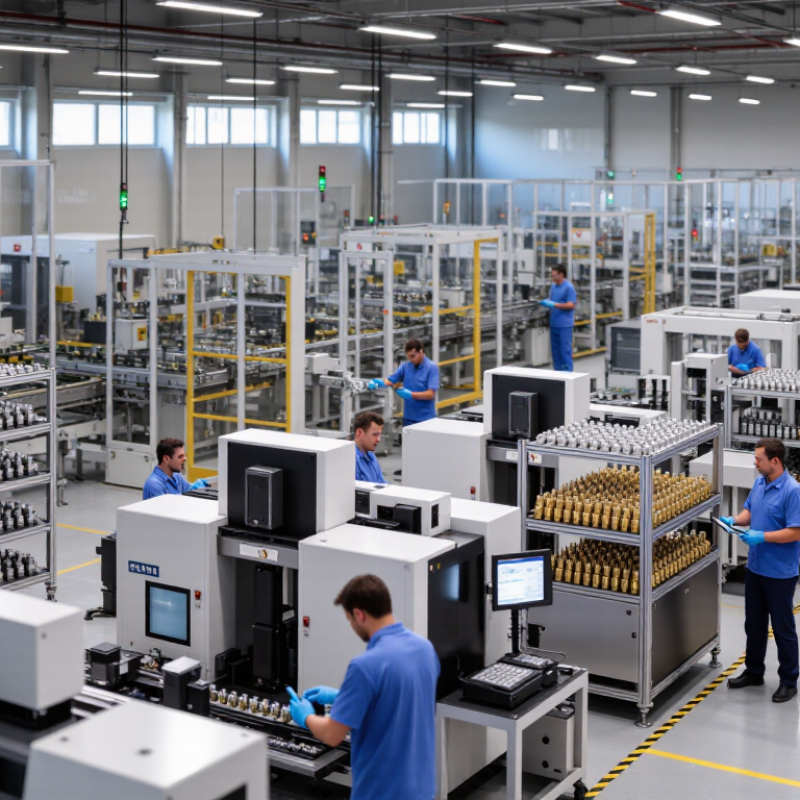
Factories commonly use automated stamping presses, injection molding machines, and selective plating lines. A terminal may look simple, yet its contact force can change after repeated insertion cycles. Small details matter. Experienced buyers should inspect mold maintenance, copper alloy certificates, plating thickness, and batch traceability. In factory evaluations, I would also check whether operators record defects immediately or only prepare polished reports for visitors.
When comparing ten leading manufacturers, request samples from regular production batches. Test crimp height, retention force, insulation resistance, and resistance to vibration. Ask for salt-spray and temperature-cycle data when the connector serves vehicles or outdoor equipment. A serious supplier should provide inspection records and clear corrective-action reports. Price alone misleads. Low quotes may reflect thinner plating, weaker resin, or limited testing. However, supplier presentations can exaggerate capability, so independent verification remains necessary.
China’s market includes large integrated plants and smaller specialists focused on custom terminals. Regional clusters often shorten tooling and logistics cycles. Export experience may improve documentation, but it does not guarantee consistent quality. Buyers should review capacity during peak seasons, not only during scheduLED audits. Some evaluations remain too dependent on samples. That gap deserves attention. A reliable ranking should measure repeatability, communication, and production evidence over time.
Understanding the Chinese TE Connector Manufacturing Market through automotive production demand
China’s annual vehicle production is used as a measurable demand indicator for connector manufacturing, because automotive wiring systems, Sensors, power distribution units, and charging systems are major connector applications. Production increased from approximately 23.72 million vehicles in 2014 to 30.16 million in 2023, supporting continued demand for high-reliability connector supply chains.
Source: China Association of Automobile Manufacturers (CAAM); annual vehicle production, rounded to millions of units.
Criteria for ranking the top 10 TE connector manufacturers in China should begin with verified manufacturing experience. A supplier must show stable production records, skilled engineers, and practical knowledge of automotive, industrial, or communication applications. Factory audits should examine stamping presses, injection machines, clean assembly areas, and mold maintenance. A strong candidate can explain how it controls contact force, terminal alignment, insulation distance, and heat resistance. Samples should be tested under vibration, humidity, salt spray, and repeated mating cycles.
Quality systems also require close attention. Ranking should consider documented process controls, material traceability, inspection equipment, and corrective-action records. Certifications matter, but certificates alone cannot prove daily performance. Reviewers should compare defect rates, delivery consistency, engineering response time, and customization capability. A supplier handling Molex Connectors or similar products should provide clear drawings, dimensional reports, and controlled samples. Transparent communication builds trust.
Cost still matters. However, the lowest quotation may hide weak tooling or unstable materials. Customer references, export experience, and after-sales support offer useful evidence. I would also inspect packaging, label accuracy, and warehouse conditions before final scoring. No ranking is perfect. Some data may come from limited audits or self-reported claims. That limitation should remain visible when selecting China’s top 10 connector manufacturers.
China’s top ten TE connector manufacturers differ in scale, specialization, and engineering depth. This profile examines their practical strengths rather than relying on promotional rankings. The comparison considers tooling capability, material control, testing equipment, production experience, and customer support.
Several manufacturers focus on automotive connector systems, where vibration, heat, and moisture demand strict process control. Their plants commonly use automated crimping lines, optical inspection, and traceable batch records. Others serve industrial controls, renewable energy equipment, medical devices, and communication hardware. These suppliers often provide custom housings, terminals, seals, and cable assemblies. One detail matters: stable contact resistance after repeated insertion. A polished sample proves little without endurance data.
Some companies specialize in high-volume molding and can maintain tight dimensional tolerances across long production runs. Others are more flexible, handling small batches and rapid tooling revisions. Engineers evaluating Te Connectivity Amp Connectors should verify compatibility, plating thickness, temperature ratings, and test documentation. Factory audits can reveal practical differences, such as calibration habits, warehouse humidity control, and operator training. Certificates help, but they are not enough.
A ranking is never perfect. Pricing changes, capacity shifts, and export experience can alter a supplier’s position quickly. One manufacturer may excel at prototypes but struggle with volume delivery. Another may offer excellent testing yet communicate slowly during design changes. Buyers should request current samples, inspection reports, and failure analysis records before approving production. The strongest profile is not always the largest factory. It is the supplier that can repeat quality under pressure.
Anonymized comparison of major connector manufacturing profiles operating in China
| Rank | Anonymized Manufacturer Profile | Main China Manufacturing Base | Primary Product Focus | Major End Markets | Typical Production Capability | Quality and Compliance Systems | Export Orientation | Key Competitive Strength |
|---|---|---|---|---|---|---|---|---|
| 1 | Profile A | East China coastal manufacturing cluster | Automotive, industrial and sealed wire-to-wire connectors | Automotive, industrial automation, energy and transportation | High-volume stamping, injection molding, plating and automated assembly | ISO 9001; automotive programs commonly aligned with IATF 16949 and environmental controls | High; serves multinational and domestic OEM supply chains | Broad product range and strong process standardization |
| 2 | Profile B | South China electronics manufacturing belt | Board-to-board, wire-to-board and fine-pitch connectors | Consumer electronics, telecom equipment and computing hardware | Precision tooling, micro-stamping, high-speed molding and automated inspection | ISO 9001 and ISO 14001; product approvals vary by application | Very high; established export and contract-manufacturing channels | Miniaturization and fast design transfer |
| 3 | Profile C | Central China industrial production zone | Heavy-duty, circular and industrial control connectors | Rail transit, factory automation, power equipment and machinery | Metal machining, die casting, cable assembly and environmental sealing | ISO 9001; selected products tested for ingress protection, vibration and temperature resistance | Medium to high; project-based international sales | Durability in harsh industrial environments |
| 4 | Profile D | Pearl River Delta production network | Custom cable assemblies, terminal blocks and wire harnesses | Consumer devices, appliances, lighting and industrial equipment | Automated crimping, overmolding, testing and high-mix assembly | ISO 9001; RoHS and REACH material-control programs commonly available | High; flexible OEM and ODM fulfillment | Customization, rapid sampling and cost efficiency |
| 5 | Profile E | Yangtze River Delta technology cluster | High-speed data, coaxial and RF connectors | Telecommunications, networking, test equipment and data centers | Precision turning, impedance-controlled assembly and electrical performance testing | ISO 9001; controlled testing for insertion loss, return loss and shielding performance | High; products are frequently integrated into global equipment platforms | Signal integrity and precision manufacturing |
| 6 | Profile F | Southwest China electronics and automotive zone | Electric-vehicle, battery and high-voltage connectors | New-energy vehicles, charging systems, energy storage and power electronics | High-voltage molding, shielding, terminal assembly and end-of-line testing | Automotive quality systems; electrical safety, thermal-cycle and vibration testing | Growing; increasingly linked to international EV supply chains | High-voltage safety and new-energy applications |
| 7 | Profile G | East China automotive supply-chain region | Automotive terminals, sensors and sealed harness connectors | Passenger vehicles, commercial vehicles and vehicle electronics | Progressive stamping, terminal plating, molding and harness integration | IATF 16949-oriented controls; traceability and automated inspection | Medium to high; supports tiered automotive sourcing | Automotive reliability and production traceability |
| 8 | Profile H | Northern China industrial and aerospace corridor | Aerospace, defense, rail and ruggedized connectors | Aerospace systems, rail vehicles, defense electronics and instrumentation | Precision machining, hermetic sealing, plating and environmental qualification | ISO 9001 or sector-specific quality systems; qualification depends on the application | Selective; frequently project and specification driven | Reliability, ruggedization and engineering support |
| 9 | Profile I | South China precision-electronics cluster | Micro connectors, FFC/FPC connectors and mezzanine systems | Mobile devices, wearables, medical electronics and smart hardware | Fine-pitch tooling, micro-molding, automated assembly and optical inspection | ISO 9001; dimensional, mating-cycle and electrical testing programs | High; serves global electronics and device assemblers | Miniaturized design and high-density interconnection |
| 10 | Profile J | Multi-site China manufacturing network | Standard terminals, commercial connectors and custom interconnect assemblies | Appliances, lighting, industrial controls and general electronics | Stamping, injection molding, cable processing and semi-automated assembly | ISO 9001; material compliance and customer-specific validation available | Medium; combines domestic distribution with overseas customers | Competitive pricing and broad customization options |
Note: Manufacturer names and brand identifiers have been intentionally omitted. Certifications, testing requirements and production capabilities may vary by facility, product family and customer program.
China’s top 10 TE connector manufacturers compete through products, process control, and application knowledge. Their portfolios commonly include wire-to-board, board-to-board, circular, automotive, waterproof, and high-voltage connectors. MarketsandMarkets estimates that the global connector market could grow from about US$84.5 billion in 2024 to US$114.7 billion by 2029. This growth is increasing demand for compact terminals, stronger locking systems, and lower-contact resistance.
Key technologies include precision stamping, injection molding, automated assembly, and laser inspection. Leading factories also use salt-spray testing, thermal cycling, vibration testing, and electrical continuity checks. IEC 60512 procedures help verify connector performance, while ISO 9001 and IATF 16949 systems support stable production. Small details matter. A poorly controlled plating thickness may cause heating, corrosion, or intermittent signals after months of field use.
The main applications are electric vehicles, industrial automation, telecommunications, consumer electronics, renewable-energy equipment, and medical devices. Automotive suppliers increasingly require high-voltage connectors with orange insulation, touch-safe structures, and sealing against dust and water. Mordor Intelligence reports strong expansion in China’s electric-vehicle ecosystem, which is pushing demand for battery, motor, charging, and sensor connectors. However, a low quotation can hide weak tooling maintenance or limited validation data. Ranking the top 10 is therefore imperfect. Buyers should compare test reports, material traceability, mold life, delivery records, and engineering support rather than relying only on production capacity.
When evaluating the top 10 TE connector manufacturers in China, quality systems deserve close attention. ISO 9001 shows controlled production, but it does not guarantee excellent connectors. For automotive projects, IATF 16949 indicates stronger process discipline and traceability. ISO 14001 can also reflect responsible environmental management. Certificates should be verified with issuing bodies.
Look for factories that control stamping, molding, plating, assembly, and testing internally. A capable manufacturer should provide material certificates for copper alloys, insulation plastics, and surface coatings. Its laboratory may perform contact resistance, insulation resistance, vibration, temperature cycling, and salt-spray tests. Crimp terminals need pull-force testing. Small details matter.
Production evidence is more useful than polished claims. Ask for process flow charts, inspection records, gauge calibration dates, and batch traceability samples. Suppliers serving searches for Te Connectivity Connectors should explain compatibility carefully, without implying unauthorized equivalence. Tooling accuracy also matters; worn dies can create loose terminals and unstable contact pressure. Visit the facility when possible.
Some factories report impressive equipment but subcontract critical plating. That risk deserves attention. A strong audit should examine subcontractor controls, corrective-action records, and actual shipment consistency. No system is perfect. Even certified suppliers may overlook a recurring defect when production pressure rises. Clear technical drawings, sample approval, and independent testing reduce that uncertainty.
China has many connector factories, but the largest supplier is not always the safest choice. Grand View Research estimated the global electrical connectors market at about USD 84.6 billion in 2023, with continued growth through 2030. This expansion attracts capable manufacturers and weaker imitators. Buyers should verify production evidence, not rely on polished websites. Search terms such as “Molex Connectors” may help define performance expectations, but they should not replace technical evaluation.
Request ISO 9001 and, for automotive projects, IATF 16949 certificates. Check the certificate number with the issuing body. Ask for PPAP records, material certificates, cavity traceability, and recent inspection reports. A reliable factory should explain contact resistance, insulation resistance, mating cycles, and temperature limits in measurable terms.
Sample ten connector pieces from different cavities. Inspect plating thickness, terminal retention, locking force, and housing flash under magnification. Small defects matter.
Visit the molding and stamping areas when possible. Observe moisture control, mold maintenance, and barcode tracking. Ask how the supplier handles engineering changes and nonconforming batches. The 2024 IPC Electronics Industry Survey highlighted continuing pressure from supply-chain risk, cost, and quality consistency. That pressure is real on the factory floor.
A spreadsheet can still lie. I would also compare two production lots, not one perfect sample. Delivery history deserves attention, although forecasts remain imperfect. Select the manufacturer that documents limitations clearly, supports validation testing, and accepts corrective-action responsibility without vague promises.
Competitive factories combine accurate tooling, stable materials, and controlled production. Automated stamping and molding improve repeatability. Small details matter.
Inspect stamping presses, injection machines, plating lines, and assembly areas. Check mold maintenance records and operator defect logs. Do not accept polished reports alone.
Request material certificates, plating measurements, dimensional reports, and batch traceability records. Corrective-action reports should explain causes and fixes. Clear evidence matters.
Test crimp height, retention force, insulation resistance, and vibration performance. Repeated mating cycles reveal contact-force changes. Samples can mislead.
No. A low quote may involve thinner plating, weaker resin, or limited testing. Compare total quality evidence, not price alone.
Request salt-spray and temperature-cycle data. Also check humidity resistance and vibration results. Test conditions should match the real application.
No. Export experience may improve documents and packaging, but it cannot prove stable production. Review recent batches and peak-season capacity.
Rankings should measure quality, delivery, communication, customization, and repeatability. Certificates help, but daily performance matters more. No ranking is flawless.
China’s TE connector manufacturing market has developed into a diverse and competitive sector, serving automotive, industrial automation, telecommunications, consumer electronics, energy, and transportation applications. This overview explains how leading manufacturers can be evaluated through product consistency, engineering expertise, production capacity, material control, customization services, delivery reliability, and customer support. It also presents a structured look at the top ten manufacturers without focusing on brand promotion, highlighting the capabilities that distinguish experienced suppliers from less established competitors.
The discussion covers key products, including wire, board, automotive, waterproof, high-speed, and high-temperature Te Connectors, along with relevant design and manufacturing technologies. It also reviews quality systems, testing procedures, international certifications, tooling resources, and scalable production capabilities. Finally, the article provides practical guidance for selecting a suitable Chinese manufacturer by considering technical requirements, application conditions, compliance expectations, order volume, lead times, communication efficiency, and long-term cooperation potential.