In today’s fast-moving world of industry, getting the most out of your operations is basically essential. One of the biggest enablers of this is, no surprise, Sensors. If you’ve kept an eye on the latest trends, you’ll know that the global sensors market is expected to hit around $63 billion by 2026. That’s largely thanks to rapid tech advancements and the increasing buzz around Internet of Things (IoT) solutions that are popping up everywhere — from manufacturing floors to smart homes. The cool thing about sensors? They provide real-time data that can seriously boost efficiency and give you those all-important insights into how your systems are performing. This kind of info can really help businesses hit their targets and stay competitive in this crazy-fast market.
An industry pro, Dr. Robert High, who’s the CTO of IoT at Intel, sums it up nicely: “Sensors are basically the eyes and ears of a smart environment,” he says, “and they’re opening doors to levels of automation and analytics we couldn’t imagine before.” That’s a pretty powerful way to look at it, especially when you understand how these tiny devices help in making smarter decisions and better managing resources. As we get into the top 10 sensors everyone should know about, it’s good to remember that these range from basic temperature sensors to advanced biometric gadgets. They’re changing the game across all kinds of sectors, like manufacturing, healthcare, and even your smart home. Taking the time to understand these essential sensors means businesses can unlock their full potential — and keep that competitive edge sharp in a rapidly changing landscape.

The Importance of Sensors in Modern Technology
In today's rapidly evolving technological landscape, sensors play a pivotal role in enhancing efficiency and performance across various industries. According to a recent report by MarketsandMarkets, the global sensor market is projected to reach $250 billion by 2026, growing at a CAGR of 10.4% from 2021. This surge underscores the increasing reliance on sensor technology to optimize processes, improve safety, and augment data collection capabilities.
Sensors are integral to advancements in automation, IoT, and smart devices, enabling real-time monitoring and control. For instance, in manufacturing, the deployment of pressure and temperature sensors in smart factories has LED to a notable20% reduction in operational costs, as highlighted in an industrial research paper.
Furthermore, the integration of Environmental Sensors in smart cities improves resource management, with studies indicating potential energy savings of up to30% when employing smart lighting based on occupancy and ambient light levels. This strategic use of sensor technology not only maximizes efficiency but also drives innovation in energy conservation and sustainable practices across sectors.
Types of Sensors: An Overview of Key Categories
When discussing sensors essential for efficiency and performance, it's crucial to understand the various categories they encompass. Sensors can be broadly classified into several key types based on their functionalities and applications. Among the most common categories are temperature sensors, which monitor thermal conditions; pressure sensors, which measure force exerted by fluids; and proximity sensors, which detect the presence or absence of objects without physical contact. Each type plays a significant role in automating processes across different industries, ensuring optimal operational conditions.
Another important category is motion sensors, used widely in security systems and automated lighting. These sensors detect movement and trigger responses, enhancing safety and energy efficiency. Additionally, chemical sensors are vital in monitoring environmental quality, detecting pollutant levels, and ensuring compliance with safety standards. Understanding these categories helps in selecting the appropriate sensors for specific applications, ultimately driving operational effectiveness and innovation in various technological fields.
Understanding How Sensors Enhance Efficiency and Performance
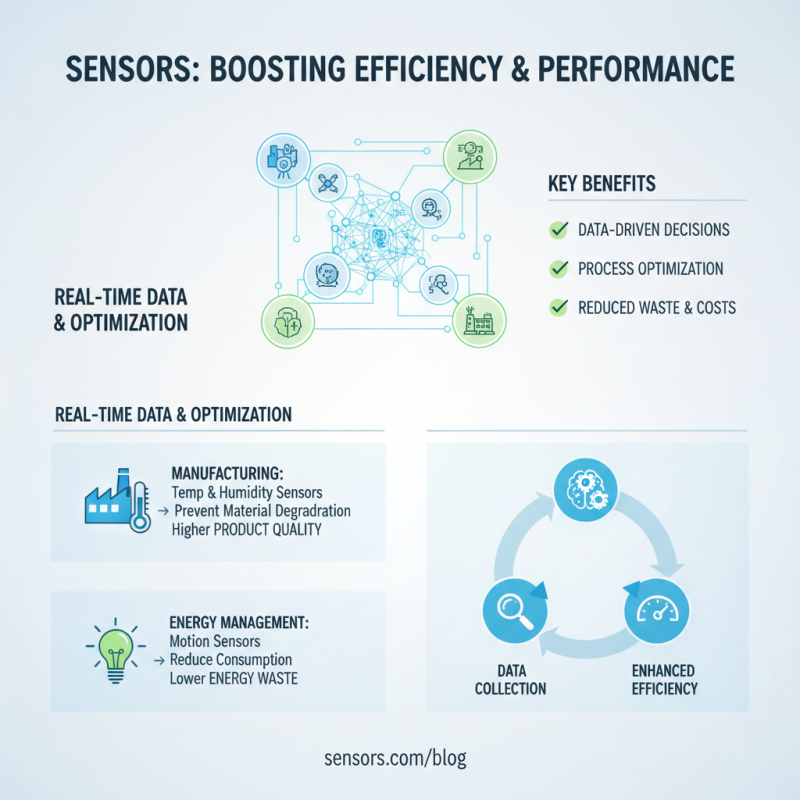
Sensors play a pivotal role in enhancing efficiency and performance across various industries by enabling real-time data collection and analysis. By capturing environmental conditions, operational metrics, and equipment performance, sensors allow organizations to make data-driven decisions that optimize processes. For instance, temperature and humidity sensors in manufacturing lines can adaptively manage conditions to prevent material degradation, leading to higher product quality and reduced waste. Similarly, motion sensors in energy management systems can significantly cut energy consumption by ensuring that lighting and heating are used only when necessary.
Furthermore, the integration of sophisticated sensors into smart systems paves the way for proactive maintenance and operational insights. For example, vibration sensors in machinery can detect anomalies early, signaling maintenance needs before catastrophic failures occur. This predictive capability not only minimizes downtime but also extends the lifespan of equipment, enhancing overall operational efficiency. As industries increasingly embrace automation and the Internet of Things (IoT), understanding the functionality of these sensors becomes essential for leveraging their full potential to drive performance gains and resource efficiency.
Top 10 Essential Sensors and Their Applications
Sensors play a pivotal role in enhancing efficiency and performance across various industries. According to a recent market research report by Mordor Intelligence, the global sensor market is projected to reach USD 250 billion by 2026, reflecting an annual growth rate of over 10%. This growth is primarily driven by the increasing demand for automation in manufacturing, smart homes, and connected devices. Essential sensors, such as temperature sensors, pressure sensors, and proximity sensors, are widely used for real-time monitoring and control, facilitating improved operational efficiency and safety.
Temperature sensors are crucial in industries such as HVAC, automotive, and food processing, ensuring products remain within desired temperature ranges. For instance, thermocouples and thermistors are extensively utilized in monitoring systems, helping to prevent equipment failures and maintain quality control. Meanwhile, pressure sensors are essential in applications ranging from hydraulic systems to environmental monitoring, providing data that assists in optimizing processes and reducing energy consumption. Lastly, proximity sensors are vital in automation, enabling machines to detect the presence of objects or people, thus enhancing workplace safety and streamlining production processes. As industries continue to evolve towards more automated and data-driven operations, understanding these essential sensors and their applications becomes critical for achieving maximum efficiency and performance.
Top 10 Sensors for Maximum Efficiency and Performance
Factors to Consider When Selecting Sensors
When selecting sensors for optimal efficiency and performance, there are several factors to consider that can significantly impact your overall system effectiveness. First and foremost, accuracy is critical. Choose sensors that offer high precision to ensure reliable data collection. This is especially important in applications where small variations can lead to major consequences. Additionally, consider the sensor's response time; faster response times enable real-time monitoring and control, which is essential in dynamic environments.
Another key factor to assess is the environment in which the sensor will operate. Sensors have varying tolerances to temperature, humidity, and other operational conditions. Understanding the specific environmental challenges can help inform your selection. For instance, if your application is in a harsh environment, look for sensors that are ruggedly constructed and sealed to withstand such conditions.
Tips: Always review the specifications and testing standards of potential sensors to ensure they meet your operational needs. Also, consider the integration capabilities with your existing systems. Compatibility can save time and reduce costs during implementation, streamlining the path to maximizing your system’s performance.
Future Trends in Sensor Technology
The future of sensor technology is poised to revolutionize numerous industries by enhancing efficiency and performance through advanced innovations. One prominent trend is the integration of artificial intelligence (AI) with sensor systems, allowing for real-time data analysis and decision-making capabilities. This combination enables sensors to not only collect data but also interpret it, leading to smarter solutions that can adapt to changing conditions dynamically. As a result, industries such as manufacturing and logistics can achieve unprecedented levels of automation and accuracy.
Another notable trend is the increasing miniaturization of sensors, which facilitates their deployment in a wider array of applications. These smaller, more efficient sensors are not only cost-effective but also enable the development of Internet of Things (IoT) ecosystems, where vast networks of interconnected devices can communicate seamlessly. This connectivity paves the way for comprehensive monitoring and management systems, ultimately driving productivity and performance. As we look ahead, the ongoing development of flexible and wearable sensors will further expand possibilities, especially in healthcare and environmental monitoring, providing insights that were previously unattainable.
Top 10 Sensors You Need to Know for Maximum Efficiency and Performance
| Sensor Type | Primary Application | Key Features | Future Trends |
| Temperature Sensors | HVAC Systems | High accuracy, quick response time | Smart homes, IoT integration |
| Pressure Sensors | Automotive applications | Wide range of pressure measurement | Wearable technologies, electric vehicles |
| Proximity Sensors | Industrial automation | Non-contact detection, instant response | Robotics, smart factories |
| Light Sensors | Smart lighting systems | Automatic brightness adjustment | Energy-efficient buildings, agricultural tech |
| Gas Sensors | Environmental monitoring | Detection of various gases | Air quality improvement solutions |
| Accelerometers | Mobile devices | Motion detection, orientation detection | Augmented reality applications |
| Magnetic Sensors | Navigation systems | High sensitivity, small size | Drone technology, autonomous vehicles |
| Ultrasonic Sensors | Obstacle detection | Non-contact measurement | Smart parking solutions |
| Tilt Sensors | Construction machinery | Angle detection, high reliability | Safety monitoring systems |
| Vibration Sensors | Predictive maintenance | Real-time monitoring, data logging | Industry 4.0 solutions |
Best Practices for Integrating Sensors into Systems
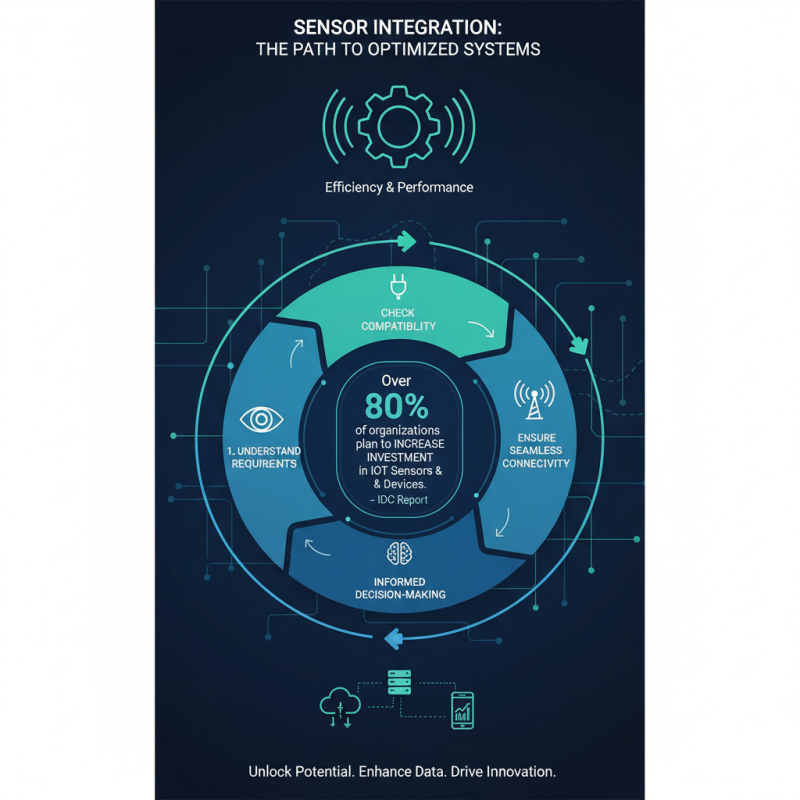
Integrating sensors into various systems is crucial for achieving maximum efficiency and performance. The best practice begins with understanding the specific requirements of your application. A report by the International Data Corporation (IDC) estimates that over 80% of organizations plan to increase their investment in IoT sensors and devices, indicating a growing acknowledgment of their significance. To effectively integrate these sensors, it is essential to ensure compatibility with existing systems. Achieving seamless connectivity can enhance data collection and processing capabilities, leading to informed decision-making.
Additionally, it is important to prioritize data security and management when integrating sensors. According to a survey conducted by Deloitte, 61% of organizations cited data breaches as one of their top concerns when adopting sensor technology. Implementing robust encryption and access controls can help mitigate these risks. Moreover, maintaining a clear framework for data analytics and visualization can enable businesses to leverage sensor data efficiently, thus driving operational excellence. Consideration of environmental factors, such as temperature and humidity levels, can further optimize sensor performance, ensuring that the data collected is both accurate and actionable.
Conclusion
Sensors play a critical role in modern technology, driving efficiency and enhancing performance across various applications. This article outlines the importance of sensors, categorizing them into key types while delving into how they improve operational effectiveness. By exploring the top 10 essential sensors and their applications, readers gain insight into the practical uses of these devices and the factors to consider when selecting the right sensors for specific needs.
Furthermore, the article discusses future trends in sensor technology, highlighting the advancements that will shape their development. It also offers best practices for integrating sensors into systems, ensuring optimal functionality and seamless operation. Understanding these elements is crucial for leveraging sensors to achieve maximum efficiency in diverse industries.