In our digital age, Electronic IC Chipsare really at the core of all the innovation happening around us. These tiny little things are what make smartphones, computers, and so many other gadgets tick. Dr. Lisa Chen, an expert from Tech Innovations, puts it nicely: "Getting a good handle on how Electronic Ic Chips work is pretty much essential for the tech of tomorrow."
Honestly, though, the design and inner workings of these chips can seem pretty overwhelming at first glance. They pack multiple functions into a tiny space, which can sometimes cause performance hiccups or heat issues that slow down progress. Plus, manufacturing these chips isn’t exactly a walk in the park—it’s a pretty complex process.
But you know what? There’s still a kind of beauty in how these things come together. Every part plays its role, and together, they push technology forward, making it more advanced and things more accessible to everyone. As we keep breaking new ground, it’s worth taking a moment to think about what all these advances really mean for society. Diving into the world of Electronic IC Chips isn’t just geeky—it actually makes you reflect on the bigger picture of tech’s role in our lives.
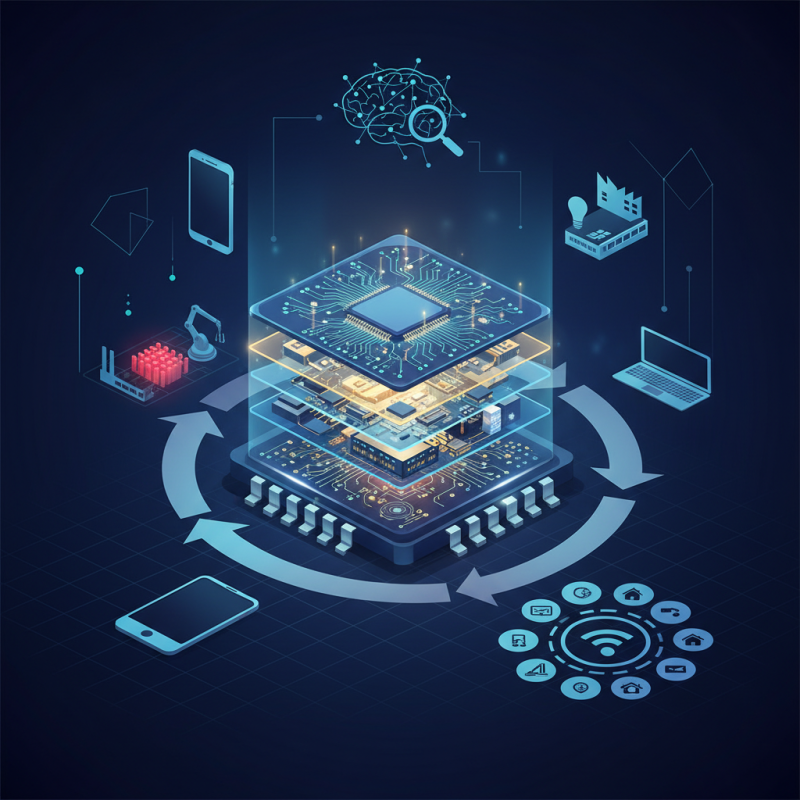
Definition of an Electronic IC Chip
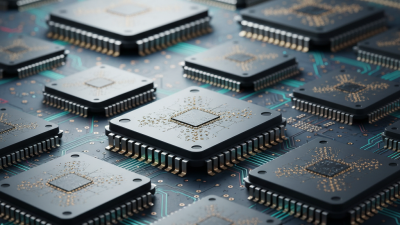
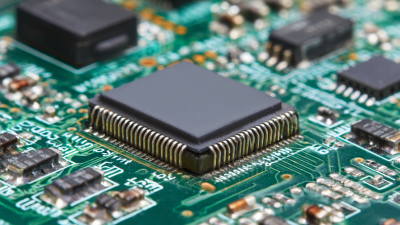
An electronic IC chip, or integrated circuit chip, is a compact device crucial for modern technology. It combines various electronic components into a single unit, allowing for efficient operations in devices like smartphones and computers. According to a report by Research and Markets, the global integrated circuit market is projected to reach $1 trillion by 2026, reflecting the growing dependence on such technology.
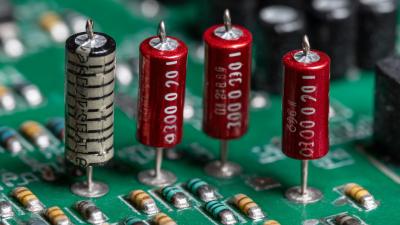
IC chips function by processing inputs and generating outputs through complex operations. They contain transistors, resistors, and Capacitors which help in switching and amplifying signals. These components work together, but their efficiency can vary. Some manufacturers face challenges in optimizing chip performance, leading to inefficiencies.OEM Electronic Ic Chips can sometimes struggle with integration in specialized applications, reflecting the need for constant improvement.
Despite advancements, not every IC chip performs flawlessly. Designers often overlook thermal management and power consumption metrics. Inadequate planning can lead to overheating and inefficient energy use. Balancing performance and cost remains a concern in chip design. This ongoing challenge highlights the intricate balance required in developing effective electronic components.
Historical Development of IC Chips
The historical development of integrated circuit (IC) chips is a fascinating journey. In the late 1950s, the concept of miniaturizing circuits emerged. Engineers aimed to create smaller, more efficient electronics. The first successful IC was developed by Jack Kilby in 1958. This breakthrough changed how devices operated. Soon after, other innovators followed suit, enhancing the design and production processes.
By the 1960s, the demand for IC chips soared. They became crucial components for everything from calculators to computers. As technology progressed, the complexity of the chips increased. More transistors fit into smaller spaces, leading to faster and more powerful devices. The impact was monumental. In today's world, IC chips are essential for our smartphones and other electronics.
Tips: When exploring options for IC chips, consider factors like compatibility and performance. Researching "Wholesale Electronic Ic Chips" can yield valuable suppliers. Find a balance of quality and cost for your projects. The evolution of IC chips shows promise but challenges remain. As technology advances, so does the need for improvement and adaptation in chip manufacturing.
Types of Electronic IC Chips and Their Applications
Electronic IC chips come in many types, each designed for specific applications. Analog chips manage continuous signals. They handle sound and temperature. Digital chips, on the other hand, focus on binary data and logic operations. Microcontrollers fall into this category, controlling devices like washing machines and microwaves.
Another key type is the power management IC. These chips regulate voltage and current in devices. They ensure efficient energy use in smartphones and tablets. High-frequency ICs are vital for communication systems. They enable functionality in radio and wireless devices.
While these chips serve crucial roles, challenges exist. For instance, designing chips that are both compact and powerful can be tough. Power efficiency and heat dissipation are often at odds. Legacy systems may not fully utilize advanced IC capabilities. As technology advances, the need for continuous improvement and adaptation remains.
Basic Structure and Components of an IC Chip
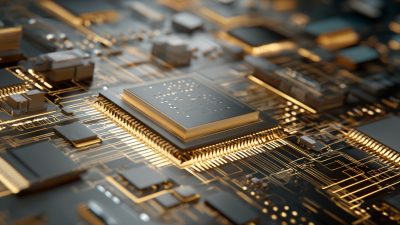
An integrated circuit (IC) chip consists of various components that work together. The basic structure includes a semiconductor material, typically silicon. This acts as a foundation for the chip. On this base, transistors, resistors, and capacitors are added. Each element has a unique role, contributing to the chip's overall functionality.
Transistors serve as switches, controlling the flow of electricity. Resistors limit the current, ensuring that components operate safely. Capacitors store and release energy when needed. Together, these elements form complex circuits. A well-designed IC can perform multiple functions within a tiny space. However, the intricacies of the manufacturing process can lead to imperfections. Even minor flaws can result in failures.
Electronic IC chips are widely used in devices today. Yet, not all manufacturers achieve the same level of precision. Some components may not function as intended. In the quest for efficiency, it is crucial to reflect on the quality of these chips. A reliable Electronic Ic Chips Manufacturer pays great attention to detail, hoping to minimize errors during production.
What is an Electronic IC Chip and How Does it Work? - Basic Structure and Components of an IC Chip
| Component | Function | Material | Typical Size |
| Transistor | Acts as a switch or amplifier | Silicon | 10-50 µm |
| Capacitor | Stores electrical energy | Dielectric materials | 10-100 µm |
| Resistor | Limits current flow | Carbon or metal film | 10-50 µm |
| Diode | Allows current to flow in one direction | Silicon or germanium | 10-30 µm |
| Interconnections | Connects all components | Copper or aluminum | 1-5 µm |
How IC Chips Function: The Working Principle
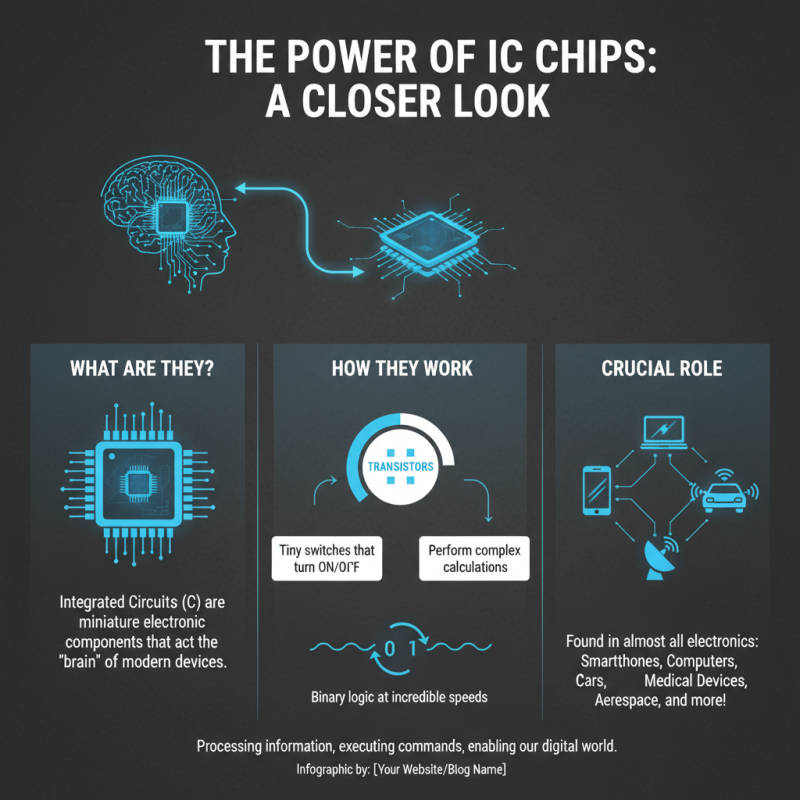
IC chips play a crucial role in modern electronics. They act as the brain of devices, processing information and executing commands. Each chip is made up of tiny components, called transistors, which can switch on and off. This switching capability allows chips to perform complex calculations at incredible speeds.
The working principle of IC chips lies in their ability to control electrical signals. When a signal enters the chip, it travels through a network of transistors. These transistors amplify or alter the signal as needed. Different arrangements create various functions, from simple logic operations to intricate data processing tasks.
It’s fascinating to see how these tiny components work together. However, designing an IC chip is challenging. A minor error in layout can lead to malfunction. Moreover, as technology advances, maintaining efficiency becomes harder. Future chips need to balance performance with energy consumption. This is a significant area for improvement.
Fabrication Process of Electronic IC Chips
The fabrication process of electronic IC chips is both intricate and fascinating. It begins with silicon wafers that serve as the substrate for the chips. These wafers are sliced from pure silicone and undergo a rigorous cleaning process. They must be free of any contaminants, as even a tiny particle can compromise the integrity of the final product.
Once cleaned, the wafers are ready for photolithography. This step involves applying a light-sensitive photoresist to the wafer. Light then exposes the photoresist pattern, creating intricate circuit designs. After exposure, the wafer undergoes etching to remove the unprotected areas. This process shapes the chip’s features and electronic pathways.
Recent industry reports indicate that the global semiconductor industry is projected to exceed $500 billion by 2024, emphasizing the growing importance of efficient manufacturing processes in factories.
Tips: Pay attention to cleanroom conditions. Chips require a dust-free environment to avoid defects. Additionally, inspect silicon wafers regularly. Flaws at this initial stage can lead to costly failures later. Machine calibration is critical. Regular checks can ensure consistent quality in an Electronic Ic Chips Factory.
Future Trends in IC Chip Technology
The future of IC chip technology looks promising. Emerging trends indicate a shift towards smaller, more efficient chips. These advancements aim to enhance performance while reducing energy consumption. For instance, researchers are exploring 3D stacking techniques. This design could allow more components to fit in a smaller space.
One exciting area is quantum computing. It offers a new frontier for IC chips. Quantum chips could solve complex problems much faster than traditional chips. However, challenges remain. Developing stable quantum chips is crucial. The technology is still in its infancy. A lot of experimentation is needed.
Tips: Always stay updated on IC technology trends. Follow new research papers and industry reports. Networking with professionals in the field can provide insights. Attend conferences for firsthand information.
As we look ahead, AI and machine learning are shaping chip design. They optimize layouts and predict performance better. However, reliance on AI also presents a risk. What happens if the AI makes a mistake? There is still much to learn and improve. Balancing innovation with caution is essential.
Exploring the Features and Applications of STM32F429IGT6 LQFP-176 ARM Microcontroller in Modern Electronics
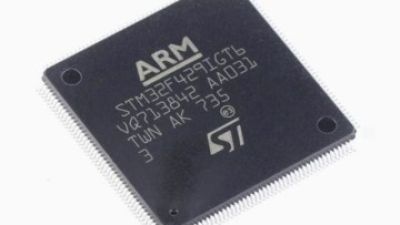
The STM32F429IGT6 LQFP-176 ARM Microcontroller, developed by STMicroelectronics, stands out in the integrated circuits category, particularly due to its robust performance and wide-ranging applications in modern electronics. This 32-bit microcontroller features a substantial 1 MB of flash memory, making it exceptionally suitable for applications that require efficient processing and memory storage. Its 176-pin LQFP package facilitates easier integration into complex designs, which is crucial in modern electronics, where space and efficiency are paramount.
In recent years, markets have seen a surge in the demand for microcontrollers like the STM32F429IGT6 owing to the proliferation of IoT devices and smart technology. According to a report by Mordor Intelligence, the global microcontroller market is projected to reach USD 28.5 billion by 2028, growing at a CAGR of approximately 10.24% during the forecast period. This growth is largely attributed to the expanding need for automated systems across various industries, including automotive, consumer electronics, and healthcare. The STM32F429IGT6 is particularly beneficial for applications that require real-time data processing, such as smart home devices and industrial automation systems.
Moreover, the STM32F429IGT6 microcontroller supports a wide array of features including high-speed connectivity options and advanced graphical capabilities, enabling developers to create rich user interfaces without compromising on performance. As the trend towards more sophisticated electronic devices continues, the capability of the STM32F429IGT6 to deliver high processing power while ensuring energy efficiency makes it an ideal choice for developers looking to innovate in the competitive electronics landscape.
FAQS
: It aims to enhance user experience and provide practical solutions.
Follow the instructions provided. Ensure you understand each step clearly.
Some users report confusion during setup. Others have concerns about usage limits.
Yes, customer support is available. Reach out for assistance when needed.
Yes, many users share their experiences. Reading reviews can provide valuable insights.
Double-check your setup. If issues persist, contact support for troubleshooting.
Regular cleaning and updates are recommended. Neglect can lead to problems later.
Longevity varies. Proper care can extend its useful life significantly.
Yes, excessive use might lead to wear. Balance is key in usage.
Additional features may require separate setups. Explore all functionalities for best results.
Conclusion
Electronic IC Chips, or integrated circuits, are essential components of modern electronic devices, characterized by their compact design that integrates numerous electronic functions into a single chip. Their historical development has marked a significant technological evolution, moving from large, discrete components to miniaturized circuits that enable remarkable processing capabilities. Various types of electronic IC chips serve distinct applications, ranging from simple logic functions to complex microprocessors.
The basic structure of an IC chip consists of semiconductor materials and various components such as transistors, resistors, and capacitors that work together to perform electrical functions. Understanding how IC chips function involves exploring their working principles, which are rooted in the behavior of electrical signals in semiconductor materials. The fabrication process utilizes advanced techniques to create intricate patterns at a microscopic level. Looking ahead, future trends in IC chip technology are likely to focus on enhanced performance, lower power consumption, and integration with emerging technologies like AI and IoT.