Whatsapp:8613480819877
Leave Your Message
0%

Picking the right solar Modules for a business isn’t just about comparing prices. You’ve got to think about the building’s energy needs, the shape and condition of the roof, local weather patterns, and how long you want the system to last. Something that does great in a lab might not work so well on a shaded warehouse roof, so all those small details matter—like how easy it is to access the roof, cable routes, and space around the equipment.

Did you know that the International Energy Agency said that in 2023, solar capacity actually hit a new record? That’s awesome, but it also means being extra careful when choosing your gear. According to NREL, the typical solar module loses about 0.5% of its efficiency each year—that’s a good ballpark figure. But keep in mind, this isn’t a guarantee for your specific site. Factors like heat, humidity, how well it was instalLED, and ongoing maintenance all play a big role in real-world performance. So, don’t just rely on the labels—look at independent test results, warranty details, temperature ratings, and the manufacturer’s support history.

When you're comparing options, it helps to follow the lead of NREL researcher Dirk Jordan. His research points out that the 0.5% degradation rate is an average across many modules, not a crystal ball for your project. Instead, use site-specific yield estimates and realistic assumptions about operation. And don’t hesitate to ask your suppliers how they came up with those numbers. If their answers seem vague, it’s worth taking a step back.

Now, about modules like INFINION—sure, they come up in broader tech talks, but when it comes down to choosing, focus on each product’s specs and what it’s actually meant to do. The most impressive datasheet doesn’t automatically mean it’s the best fit. The real key is finding a module that matches your site, your budget, and the team responsible for keeping everything running smoothly.
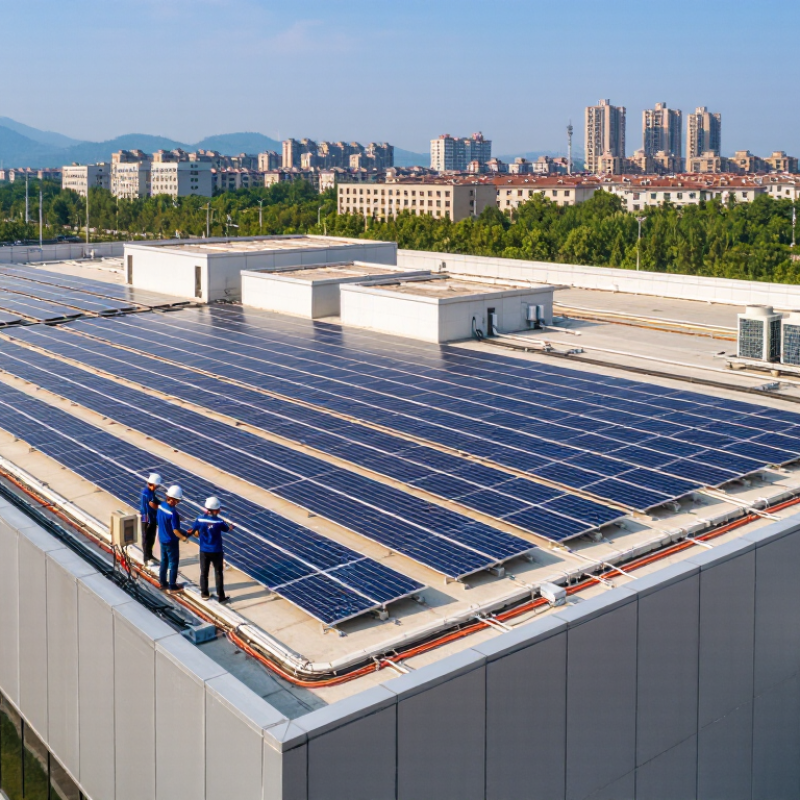
How to Choose the Right Solar Modules for Your Business?

Define Your Business’s Energy Needs and Usage Patterns

How to Choose the Right Solar Modules for Your Business?

Define Your Business’s Energy Needs and Usage Patterns

Choosing solar modules should begin with your electricity behavior, not your available roof space. Review at least twelve months of utility bills, including demand charges and seasonal changes. A single monthly bill rarely shows the full picture.

List major loads such as refrigeration, pumps, Servers, heating systems, and production equipment. Note when each system operates. A warehouse may use little power overnight, while a factory may run continuously. This difference affects system size, battery value, and module performance requirements.

Use interval meter data when available. It can reveal short demand peaks that ordinary bills hide. Those peaks may influence your solar design more than your average daily consumption. Check weekends, holidays, and planned expansion. A business adding machinery next year should not design only for today.

Be specific.

An energy audit can identify idle equipment and inefficient schedules before installation. Reducing waste may lower the required solar capacity, although this step is sometimes overlooked. I have seen preliminary estimates become inaccurate because heating loads were treated as constant. They were not. Weather, occupancy, and operating hours changed the result.

Compare your daytime usage with expected solar production. If most electricity is consumed during daylight, direct solar use may be strong. If usage rises after sunset, storage or a different operating schedule may deserve evaluation. Module efficiency, temperature performance, degradation, and available roof area can then be assessed against measured needs, rather than guesswork.

Assess Your Site’s Solar Potential and Installation Constraints

Choosing Modules starts with site evidence, not a catalogue. Walk the roof at 9 a.m. and 3 p.m. Note parapets, vents, trees, and safe access routes. A clean roof can still lose output when shadows move across it. NREL’s PVWatts model considers irradiance, tilt, azimuth, temperature, and system losses. Its standard assumptions include roughly 14% losses before site-specific refinement. Treat that figure as a starting point, not a promise. Use twelve months of utility bills and compare them with hourly load data. A warehouse may have high daytime demand, while an office peaks later. That mismatch changes the useful size of your Modules.

Measure usable area after fire setbacks, drainage paths, structural exclusions, and maintenance corridors. Test roof loading, wind exposure, snow conditions, and cable routes with qualified engineers. The IEA PVPS Trends in Photovoltaic Applications 2024 report recorded more than 400 GW of new solar capacity worldwide in 2023. Global growth does not remove local constraints. In practice, drawings often miss one shaded exhaust stack. That small error can distort yield estimates and string design. Ask installers to show monthly production, clipping, degradation, and curtailment assumptions. Compare their results with the Global Solar Atlas resource map and an on-site shade survey. I would revisit the layout after one real inspection. Software is helpful. Roofs are less cooperative.

How to Choose the Right Solar Modules for Your Business? - Assess Your Site’s Solar Potential and Installation Constraints

Site Area or Assessment Factor Typical Real-World Condition Solar Potential or Constraint Recommended Module Characteristics Planning Guidance Priority
Large, unobstructed flat roof Commercial roof with sufficient structural capacity and clear access routes Good potential when the roof receives approximately 4–6 peak sun hours per day and has limited shading High-efficiency modules, typically 20%–23% module efficiency; durable frames; low-light performance Use a ballasted or mechanically attached mounting system after confirming roof loading, waterproofing, and wind requirements High
South-facing pitched roof Roof orientation close to true south in the Northern Hemisphere, with a moderate pitch Usually favorable annual energy production; output depends on local climate, tilt, temperature, and shading Standard monocrystalline modules with a temperature coefficient close to −0.30% to −0.35% per °C Check roof age, rafters, fire setbacks, drainage paths, and safe maintenance access before installation High
East- or west-facing roof Roof planes receive stronger morning or afternoon sunlight rather than evenly distributed sunlight Annual yield may be lower than an optimally oriented roof, but production can align well with morning or afternoon business demand Modules with strong low-irradiance performance; consider separate maximum power point tracking for different roof orientations Compare annual yield with the business load profile instead of selecting modules based only on orientation Medium
Roof with recurring partial shade Shading from neighboring buildings, HVAC equipment, parapets, vents, trees, or seasonal obstructions Partial shade can reduce string output and may cause mismatch losses, especially when shaded modules are connected in the same electrical string Modules with half-cut cells and robust bypass-diode design; module-level power electronics may be considered where shade is unavoidable Complete a shade analysis for different times of day and seasons; remove manageable obstructions where permitted Medium
Limited roof area High electricity demand but insufficient usable area for the desired system size Available area is the main constraint; walkways, setbacks, fire access, equipment, and roof edges reduce usable space High-power, high-efficiency modules, commonly around 430–600 W per module depending on physical dimensions and design Prioritize watts per square meter, service clearances, and total installed cost rather than rated power alone High
Older or lightweight roof Roof membrane or structure is near the end of its service life, or available load capacity is uncertain Installation may be delayed by reinforcement, reroofing, attachment restrictions, or wind-uplift concerns Lightweight module and mounting options, subject to engineering approval; prioritize corrosion resistance and secure attachment Obtain a structural assessment before procurement and coordinate solar work with planned roof replacement Low
Hot commercial or industrial environment High ambient temperature, dark roofing, limited airflow, or heat from industrial processes Module power generally decreases as cell temperature rises above the rated test condition of 25°C Modules with a low temperature coefficient, commonly around −0.29% to −0.35% per °C, and reliable ventilation beneath the array Compare temperature-adjusted energy estimates rather than relying only on the nameplate wattage High
Coastal or corrosive environment Exposure to salt mist, high humidity, wind-driven rain, or industrial pollutants Corrosion may affect frames, fasteners, connectors, and mounting components if materials are not properly selected Certified corrosion-resistant construction, suitable encapsulation, sealed connectors, and mounting hardware appropriate for the site environment Confirm environmental certifications, installation practices, drainage, and a practical inspection schedule High
Snow- or high-wind region Seasonal snow loads, strong wind, hurricanes, or severe weather exposure Structural loading and wind uplift can determine the allowable module layout and attachment method Modules with suitable mechanical load ratings and mounting systems engineered for local snow and wind conditions Use site-specific structural calculations; do not select modules solely by electrical specifications High
Ground-mounted business site Available land with easier maintenance access and fewer roof-related limitations Potentially flexible orientation and tilt, but land use, grading, drainage, fencing, access, and permitting become important Bifacial modules may be considered where rear-side irradiance and ground reflectivity are favorable; use robust frames and foundations Evaluate land-use constraints, soil conditions, vegetation control, stormwater management, and security requirements Medium
Building with high daytime electricity use Loads from offices, refrigeration, manufacturing, pumps, or air-conditioning occur mainly during daylight hours Self-consumption potential can be strong, reducing dependence on export compensation or battery storage Modules selected for dependable daytime production; prioritize system sizing based on interval load data Review at least 12 months of electricity bills and, ideally, 15-minute or 30-minute demand data High
Site with strict fire or access requirements Fire lanes, rooftop equipment, emergency access paths, or local setback rules reduce array layout options Usable module area may be substantially lower than the total roof area Modules that fit the approved layout; prioritize dimensions, clearances, cable management, and certified mounting components Confirm local fire, electrical, building, and utility requirements before finalizing module quantity or system design High

Planning note: Actual energy production depends on local solar irradiation, orientation, tilt, temperature, shading, soiling, system losses, grid conditions, and maintenance. Final module selection should be verified through a site survey, structural review, electrical design, and local permitting requirements.

Compare Solar Module Types, Efficiency, and Performance

Choosing solar modules for a business requires more than comparing peak wattage. Monocrystalline modules usually deliver higher efficiency and need less roof space. Polycrystalline options may cost less, but they often produce slightly less power. Thin-film modules perform well on large surfaces and can handle some low-light conditions. Bifacial modules may gain additional energy from reflected light, especially above bright roofing or gravel.

Efficiency is only one part of performance. Check the temperature coefficient, annual degradation rate, mechanical load rating, and low-light output. A module rated at 22% efficiency may underperform in a hot environment if its temperature response is weak. Review independent test data, safety certifications, and warranty terms from reliable documentation. Site measurements matter too. Nearby shade, dust, roof direction, and inverter matching can change real production. IKW30N60T Modules IGBT Transistor refers to power electronics, not photovoltaic modules, so do not confuse it with a solar panel specification.

Tips: Request production estimates based on your actual roof and local weather records. Compare expected energy yield, not only purchase price. Leave space for safe maintenance access. Check sample modules under harsh sunlight, if possible. A higher rating is not always better. Our first comparison may miss winter shadows or cleaning costs, and that mistake can affect the payback period.

Evaluate Durability, Warranties, and Manufacturer Reliability

A commercial solar array must withstand years of heat, wind, rain, and rooftop movement. Durability begins with the module’s construction: inspect frame strength, glass type, junction-box protection, and documented resistance to environmental stress. Ask for independent test certificates, not just a sales sheet. The National Renewable Energy Laboratory’s review of field studies found a median module degradation rate of about 0.5% per year. That is a useful benchmark, not a promise for every site. Dust, shade, poor installation, and high temperatures can change the outcome. Small details matter.

Read both product and performance warranties, and check what each actually covers. A long warranty is only as useful as the company’s ability to honor it. Review exclusions, claim procedures, shipping responsibilities, and the remedy offered if output falls short. The International Energy Agency Photovoltaic Power Systems Programme has documented reliability concerns and failure modes across photovoltaic systems; its work underscores why testing and field performance deserve attention alongside warranty length. Ask manufacturers for serial-level traceability, quality-control procedures, and evidence of long-term production capacity. Check whether warranty obligations remain clear if ownership changes. I’d also ask what happens after a discontinued model needs replacement. That answer can be awkward, but it matters. When comparing suppliers, weigh service responsiveness and financial stability—not just price or headline efficiency.

Estimate Project Costs, Incentives, and Long-Term Savings

Choosing solar modules for a business starts with the project budget, not the panel catalogue. Ask an experienced installer for a line-by-line estimate. It should include modules, inverters, mounting hardware, electrical work, permits, monitoring, and maintenance. Request at least three comparable quotes. Small omissions can distort the payback period.

Calculate expected annual production using roof direction, shading, local weather, and system losses. Then compare that output with your daytime electricity demand. Review available tax credits, rebates, accelerated depreciation, and local utility programs. Their rules and deadlines can change, so confirm details with an official authority or qualified adviser. Do not count an incentive until eligibility is documented.

Look beyond the purchase price. A module with stronger heat performance and lower degradation may produce more electricity after fifteen years. Check warranty terms, service response times, replacement costs, and the installer’s completed commercial projects. Ask how production will be measured after commissioning. Numbers matter.

Keep equipment categories separate. 6ES7288-1ST40-0AA1 Modules are industrial control components, not photovoltaic panels, and should not appear in a solar generation quote. My first cost estimate was too optimistic because I ignored roof reinforcement and shutdown time. That mistake changed the payback model. Leave room for uncertainty, especially when electricity prices, financing rates, or construction conditions may shift. A spreadsheet is useful, but it is not proof.

Select Modules That Meet Your Business Goals and Budget

Selecting solar modules is a budget decision, but the cheapest panel is not always the lowest-cost choice. Compare installed cost, expected output, roof space, and the value of electricity your business uses during daylight.

The International Renewable Energy Agency reported that the global weighted-average cost of electricity from utility-scale solar fell 12% in 2023, to US$0.044 per kilowatt-hour. That benchmark is useful context, not a quote for your project. Site conditions and installation costs matter.

Ask suppliers for performance data, warranty terms, and modeled annual output using your roof’s orientation and shading. The National Renewable Energy Laboratory’s Photovoltaic System Performance Model data and research describe module degradation as a factor in long-term yield; even small annual losses affect lifetime returns. Compare the projected cost per kilowatt-hour over the system’s expected life, not just the purchase price.

Check whether higher-efficiency modules are worth their premium when roof area is limited. They may not be.

A terminology check can prevent confusion: “6ES7288-1SR20-0AA1 Siemens Modules” refers to industrial control equipment, not a solar-module specification.

Get proposals based on your actual load profile, then test their assumptions. I would revisit the forecast before signing; estimates can look precise while relying on optimistic inputs.

IKW30N60T TO-247 IGBT Modules: High-Power Inverter Welding Machine Applications and Selection Guide

High-power inverter welding machines rely on fast, controlled switching to convert the input supply into stable welding current. An IGBT rated at 600 V can serve as a switching device in the inverter stage, while its 30 A current rating provides a starting point for designs with suitable operating margins. The IKW30N60T is specified as a 30 A, 600 V IGBT in a TO-247AC-3 package. In a welding power supply, the actual suitability of this device depends on factors such as switching frequency, peak current, cooling, and the electrical characteristics of the complete circuit—not just its nominal ratings.

Industrial automation also makes dependable welding power conversion increasingly important. The International Federation of Robotics’ *World Robotics 2024* report recorded 541,302 industrial robot installations worldwide in 2023, reflecting the scale of automated manufacturing where welding is commonly used. For selection, engineers should compare the IGBT’s switching and conduction losses against the intended operating conditions, then verify thermal performance using the package’s mounting and heatsinking arrangement. The TO-247AC-3 format supports installation in power circuits, but insulation, gate-drive requirements, transient voltage protection, and adequate derating should be checked as part of the design.

FAQS

Why should a business review electricity usage before choosing solar modules?

Solar planning should begin with actual electricity behavior, not roof size. Review at least twelve months of bills. Include seasonal changes and demand charges. One bill is not enough.

What equipment should a business include in its energy review?

List refrigeration, pumps, servers, heating systems, and production equipment. Record when each system operates. A warehouse may be quiet overnight. A factory may run continuously.

Why is interval meter data useful?

It reveals short demand peaks hidden by ordinary bills. These peaks can influence system size more than average daily consumption. Check weekends, holidays, and planned expansion.

Should a business complete an energy audit before installation?

An audit can identify idle equipment and inefficient schedules. Reducing waste may lower the required solar capacity. This step is often overlooked. I would not skip it.

How can daytime electricity use affect solar module selection?

Compare daytime consumption with expected solar production. Strong daytime use may allow direct solar consumption. Evening-heavy operations may need storage or schedule changes. Not every site needs batteries.

Which durability details should businesses inspect?

Check frame strength, glass type, junction-box protection, and environmental testing. Modules must withstand heat, wind, rain, and rooftop movement. Small details matter.

What should a business examine in solar warranties?

Read product and performance warranties separately. Check exclusions, claim procedures, shipping duties, and replacement remedies. Ask about discontinued models. The answer may be uncomfortable, but it matters.

Is the cheapest solar module usually the best choice?

Not always. Compare installed cost, expected output, roof space, degradation, and daylight electricity value. A cheaper module may require more roof area. The lowest price can mislead.

When are high-efficiency modules worth their higher price?

They may help when roof space is limited. Compare their extra cost with projected lifetime production. Use site orientation, shading, and temperature conditions. Do not trust efficiency alone.

How can a business test a solar proposal?

Request modeled annual output using the actual roof and load profile. Review assumptions about shading, weather, operating hours, and future machinery. Forecasts look precise sometimes. They can still be wrong.

Conclusion

Choosing the right solar modules for your business begins with understanding how much energy your operations consume and when demand is highest. Review historical electricity bills, daily usage patterns, seasonal changes, and future expansion plans to determine the system capacity you need. Next, assess your property’s solar potential by examining roof or ground space, sunlight exposure, shading, structural conditions, local weather, and installation requirements. These factors will help identify practical system sizes and suitable installation methods.

When comparing Modules, consider efficiency, power output, temperature performance, and expected energy production rather than focusing on one specification alone. Durability, product and performance warranties, service support, and manufacturer reliability are also essential for long-term confidence. Finally, estimate equipment, installation, maintenance, and financing costs while accounting for available incentives and projected electricity savings. The best choice is a balanced solution that supports your business goals, fits your site, provides dependable performance, and remains within your budget.
Amara

Amara

Amara is a dedicated marketing professional at Huasheng Boye (Shenzhen) Technology Co., Ltd., where she plays a crucial role in enhancing the company’s brand presence. With a deep understanding of the technology sector, Amara excels in articulating the unique advantages and innovative solutions......
Previous What Is a Sensor and How Does It Work?