
- Server
- Components
- Carbon Fibre
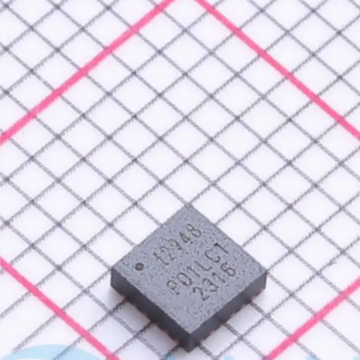
- Analog to digital conversion chip
- power management IC
- storage
- H3C router
- H3C server
- Inspur server
- hard disk
- HART Loop Converter Analog Input
- reader
- Ethernet module
- EDGE Guardmaster
- MAT Guardmaster
- MatGuard Mat Manager
- relay
- power control
- switch
- servo drive
- I/O module
- Bridge connector (jumper plug)
- Human Machine Interface (HMI)
- power monitor
- 1420 power monitor
- 1411 current transformer
- socket
- system
- electric relay
- frequency converter
- Install the GND connector on the board
- transceiver
- Module Option Card
- module


0102030405

2288H V8
product detail
1. Calculation and Memory
CPU: 2xIntel ? xeon ? 6-processor (Diamond/Granite Rapids), with a maximum of 144 cores per 500W, and a total of 288 cores for the entire machine; 3×UPI 20GT/s
Memory: 24 x DDR5-6400 RDIMM, maximum 9TB; supports ECC, memory mirroring, CXL 2.0 expansion memory pool; Single bandwidth increased by 50% compared to DDR4
2. Local storage
Disk position: 12 × 3.5 "SAS/SATA+4 × NVMe U.2; Or 24 × 2.5 "full NVMe; Optional 32 × E1. S/16 × E3. S; Dual M.2 NVMe RAID1
RAID: PERC 12 (H965i, etc.) 0/1/10/5/50/6/60, supercapacitor cache protection
3. Expansion and Networking
PCIe: 10 x PCIe 5.0 (x16/x8)+2 x OCP 3.0 dedicated slots for network cards, all supporting hot swapping; Can accommodate 4 x dual width 300W GPUs or 8 x single width GPUs to meet AI training/inference needs
Network: Onboard 2 × 1GbE; OCP optional 25/100/200/400 GbE, NDK smart network card
4. Heat dissipation and power supply
Fan: 6 hot swappable counter rotating fans, N+1 redundancy; Adopting the "lowest total power consumption algorithm for fans and CPUs", the whole machine can save 8% energy; 35 ℃ long-term full frequency without derating
Power supply: 900W-2000W titanium/platinum 1+1 redundancy, supports AC&HVDC&-48V DC, 80Plus titanium efficiency of 96%
5. Intelligent management and security
IBMC: Integrated 1GbE management port, supporting Redfish/IPMI/HTML5 KVM; FusionDirector can be selected to achieve fault prediction, firmware batch upgrade, and dynamic energy optimization, reducing downtime risk by 66%
Security: TPM 2.0, secure boot, signed firmware, lid opening detection, secure erasure, meeting the requirements of ISO 3.0/national security